Creative Biolabs is offering the most comprehensive services for antibody development projects. With strict regulation and effective execution, we are dedicated to providing the most valuable solutions to complete your projects.
HighlightsCreative Biolabs is offering the most comprehensive services for antibody development projects. With strict regulation and effective execution, we are dedicated to providing the most valuable solutions to complete your projects.
HighlightsCreative Biolabs has established a broad range of platforms for developing novel antibodies or equivalents. These cutting-edge technologies enable our scientists to meet your demands from different aspects and tailor the most appropriate solution that contributes to the success of your projects.
HighlightsWith deep understanding in antibody-related realms and extensive project experience, Creative Biolabs offers a variety of references to help you learn more about our capacities and achievements, including infographic, flyer, case study, peer-reviewed publications, and all kinds of knowledge that can assist your projects. You are also welcome to contact us directly for more specific solutions.
HighlightsGet a real taste of Creative Biolabs, one of the most professional custom service providers in the world. We are committed to providing highly customized comprehensive solutions with the best quality to advance your projects.
HighlightsCreative Biolabs provides cutting-edge FACS-Positive Antibody Discovery services, specializing in the rapid and precise identification of monoclonal antibodies. We leverage advanced flow cytometry and hybridoma technology. Our strengths lie in our high-throughput screening capabilities, experienced team, and commitment to delivering tailored solutions. Clients can expect high-quality, application-specific antibodies to accelerate their research and development.
Flow cytometry (FACS) is a robust technique that enables detailed, multi-parameter analysis of cells or particles. This technology allows scientists to examine a wide array of cellular characteristics, including surface and intracellular proteins, DNA, and RNA. FACS's ability to analyze multiple parameters simultaneously makes it a powerful tool in biological research and clinical diagnostics.
FACS antibodies are crucial components in this process, allowing particular targets to be identified. These antibodies, often conjugated with fluorescent dyes such as FITC, PE, and APC, enable researchers to identify and quantify cells of interest. Both direct and indirect detection methods are employed. The specificity, sensitivity, and reproducibility of FACS antibodies are essential for accurate and reliable results. To ensure the reliability of FACS data, antibodies undergo rigorous validation, including testing across multiple cell lines, antigen blocking assays, and unconjugated antibody blocking. Furthermore, the stability of these antibodies during storage is a key factor in maintaining their performance.
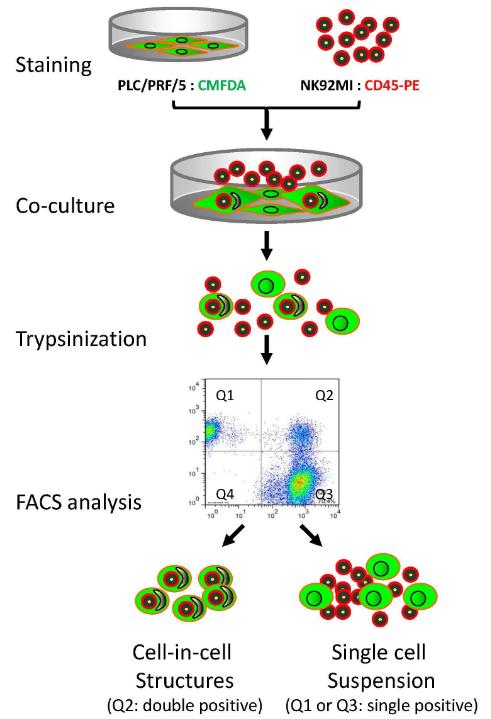 Fig.1 Procedures for FACS analysis of heterotypic CICs.1, 3
We offer a specialized antibody discovery service that leverages the power of FACS in conjunction with hybridoma technology. This integrated approach allows us to harness the unique advantages of both methodologies, providing a highly effective solution for monoclonal antibody generation.
The cornerstone of our service is the meticulous design and preparation of the antigen. This stage is pivotal, as the antigen's quality and characteristics directly influence the specificity and affinity of the resulting antibodies. Our team excels in designing and synthesizing a broad spectrum of antigens, including recombinant proteins, peptides, and cell surface molecules. Furthermore, we develop tailored immunization strategies to maximize the immune response and the yield of high-affinity antibodies.
The process advances with hybridoma generation, a fundamental step in monoclonal antibody production. Specifically, this involves the fusion of B lymphocytes, which are responsible for antibody production, with myeloma cells. This fusion creates hybridoma cell lines, each capable of continuous antibody secretion.
Following hybridoma generation, the next critical step involves screening these hybridomas for their ability to produce antibodies that specifically target the antigen of interest. To achieve this, we employ FACS. This advanced technique allows us to efficiently and accurately identify hybridoma clones that exhibit the desired antigen specificity.
We employ a suite of assays, including FACS, ELISA, and WB, to confirm the specificity, affinity, and functionality of the generated antibodies. This validation process guarantees that the antibodies fulfill the strict quality criteria necessary for their intended uses.
To satisfy your unique demands, we offer flexible production scales and purification choices. Whether you require small quantities for research purposes or larger scales for preclinical studies or other applications, we can deliver high-quality antibodies in the format and quantity you require.
Screening hybridomas presents a complex and demanding task. However, the development of high-throughput technologies, such as FACS, has revolutionized the process of identifying target hybridomas. FACS technology is particularly well-suited for the in vitro screening of positive hybridomas. We have developed an advanced High-throughput FACS Hybridoma Screening Platform that enables the rapid and highly sensitive screening of numerous candidate clones. To isolate FACS-positive hybridoma clones, we employ a multi-stage approach, including specific screening of clones, specific screening of sub-clones, and final antibody verification. Our experienced experts provide tailored screening solutions to ensure the success of your project.
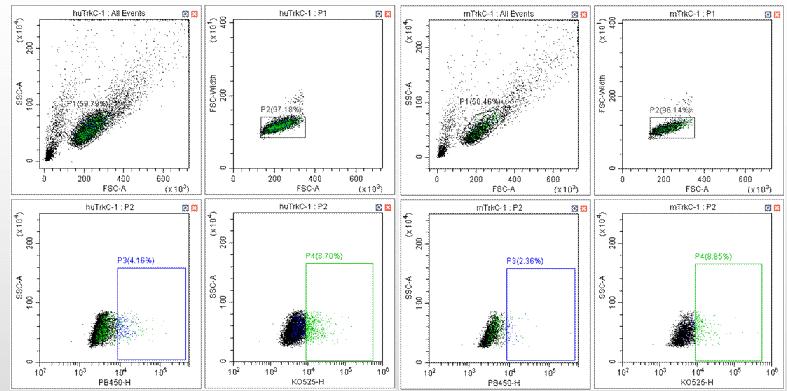 Fig.2 Specific screening of hybridoma clones by FACS.
Specificity Confirmation: FACS allows for the precise confirmation of antibody specificity, ensuring that the selected antibodies bind to the intended target antigen.
Sensitivity Assessment: The technique enables the assessment of antibody sensitivity, determining the lowest concentration at which the antibody can effectively detect the target.
High-Throughput Analysis: FACS facilitates high-throughput screening, allowing for the rapid analysis of a large number of samples and accelerating the discovery process.
Quantitative Measurement: It provides quantitative data on antibody binding, offering more detailed information than qualitative methods.
Functional Validation: Beyond simple binding, FACS can be used to assess if the antibody binds to the target on the cell surface in a native setting.
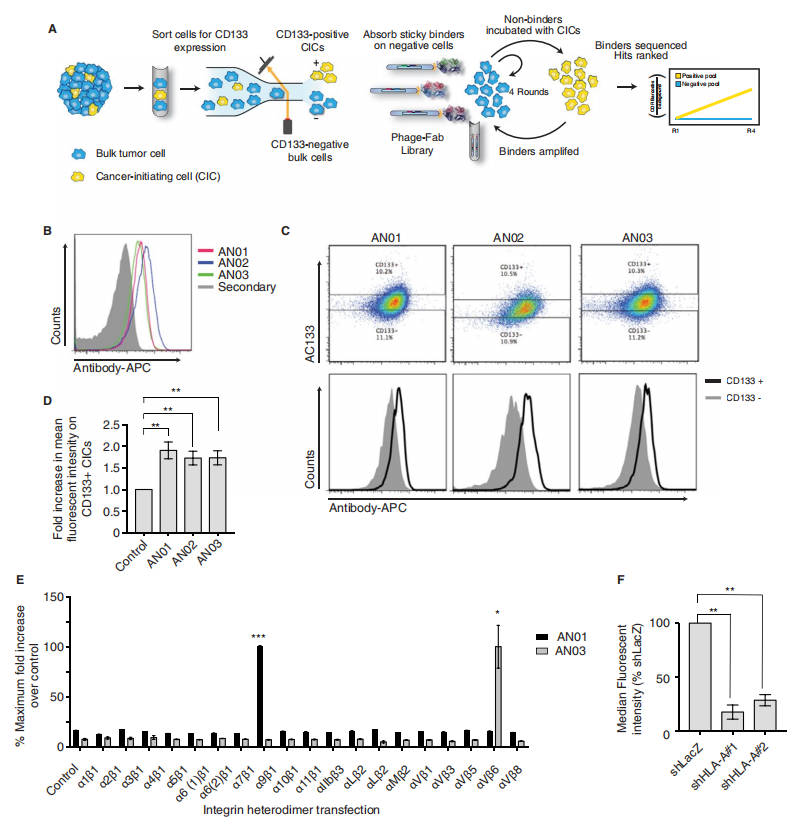 Fig.3 CellectAb antibody screening methodology and antigen identifcation.2, 3
Cell surface antigen discovery captivates the interest of biomedical researchers, particularly when it comes to isolating rare cell populations and therapeutic targeting. Nixon, Allison ML, et al. utilized AC133 cell populations to screen for potential markers of colorectal cancer-initiating cells (CICs).2,3 Their objective was to merge unbiased target and antibody discovery with a functional subset of cancer cells, with the ultimate goal of identifying antibodies that could label and potentially treat these cells. They utilized a colorectal cancer (CRC) spheroid model that preserves cellular heterogeneity and stem-like characteristics. By utilizing the AC133 epitope, they enriched for functional CICs. To segregate the CIC population, the spheroids were initially broken down into a suspension of individual cells and then labeled with AC133. Subsequently, they employed FACS to separate the cells into two populations: CD133-high presumptive CICs and a CD133-low bulk cell population. During the antibody selection process, they used live cells to generate antibodies against native antigens. Over an eight-hour period and under controlled low flow pressure conditions, they successfully isolated cells using FACS.
Our team is an expert in hybridoma screening, resulting in a final product that is highly specific for your FACS experiments.
Our validated FACS hybridoma screening strategy significantly improves the feasibility of antibodies for FACS applications.
We can complete FACS-positive hybridoma screening in a shorter time with a complete experimental report.
A: We employ rigorous screening and validation processes, including FACS, to ensure high specificity and affinity. Our goal is to deliver antibodies that align with or surpass your specific application needs. We perform several validation steps to minimize off-target binding.
A: You will receive a comprehensive project report, including detailed FACS data, hybridoma characterization, and purified antibody. We provide all the necessary information for you to fully understand the results and utilize the antibodies in your research.
A: Yes, we offer flexibility in antibody formats. We can deliver antibodies in various forms, including IgG, Fab fragments, and single-chain variable fragments (scFvs), to suit your specific application needs.
A: We adhere to strict quality control protocols throughout the entire process. This includes regular monitoring of cell culture conditions, antibody purification, and final product testing to ensure the highest quality and consistency.
A: We attach great importance to confidentiality. All project-related information, including antibody sequences, is treated with the utmost discretion and protected under strict confidentiality agreements.
A: FACS offers several advantages, including higher throughput, the ability to analyze antibodies binding to cell-surface antigens in their native conformation, and quantitative data. This leads to more accurate and efficient selection of high-quality antibodies.
A: We provide ongoing support to our clients, including assistance with data interpretation, antibody handling, and troubleshooting. Our group is available to resolve your concerns and assure your total pleasure.
Creative Biolabs has been committed to providing suitable hybridoma development services to customers in more than 30 countries and regions around the world. Based on our rich experience and expertise in hybridoma antibody production, we are willing to provide you with a cost-effective FACS-positive hybridoma screening service. If you are looking for custom antibodies for FACS use, please contact us for more details about customization services.
All listed services and products are For Research Use Only. Do Not use in any diagnostic or therapeutic applications.