Creative Biolabs is offering the most comprehensive services for antibody development projects. With strict regulation and effective execution, we are dedicated to providing the most valuable solutions to complete your projects.
HighlightsCreative Biolabs is offering the most comprehensive services for antibody development projects. With strict regulation and effective execution, we are dedicated to providing the most valuable solutions to complete your projects.
HighlightsCreative Biolabs has established a broad range of platforms for developing novel antibodies or equivalents. These cutting-edge technologies enable our scientists to meet your demands from different aspects and tailor the most appropriate solution that contributes to the success of your projects.
HighlightsWith deep understanding in antibody-related realms and extensive project experience, Creative Biolabs offers a variety of references to help you learn more about our capacities and achievements, including infographic, flyer, case study, peer-reviewed publications, and all kinds of knowledge that can assist your projects. You are also welcome to contact us directly for more specific solutions.
HighlightsGet a real taste of Creative Biolabs, one of the most professional custom service providers in the world. We are committed to providing highly customized comprehensive solutions with the best quality to advance your projects.
HighlightsAs a pioneering institution with over two decades of expertise in molecular biology, Creative Biolabs stands at the forefront of protein-protein interaction (PPI) analysis. We are proud to offer our advanced Mammalian Two-Hybrid (M2H) Service, a powerful platform designed to dissect complex PPI networks directly within the context of mammalian cells. Our service provides a physiologically authentic environment for your research, overcoming the limitations of traditional yeast-based systems and delivering data with unparalleled accuracy and relevance.
The M2H system is an elegant and powerful adaptation of the classic yeast two-hybrid (Y2H) method. It relies on the modular nature of eukaryotic transcription factors, which typically consist of a DNA-binding domain (BD) and a transcription-activation domain (AD). Neither domain can activate transcription on its own.
The M2H system co-expresses two fusion proteins in a mammalian host cell line:
If Protein X and Protein Y interact, the BD and AD are brought into close proximity, reconstituting a functional transcription factor. This complex then binds to upstream activator sequences (UAS) integrated into the cell's genome, driving the expression of a quantifiable reporter gene.
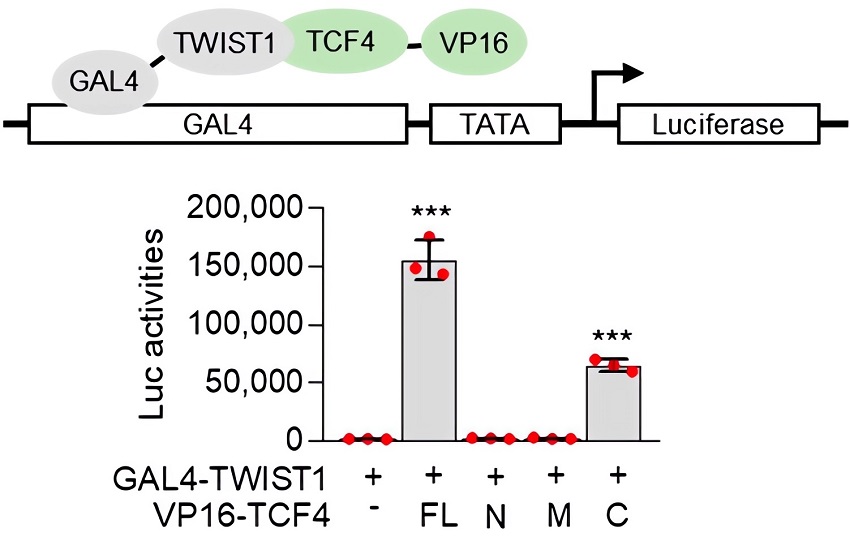 Fig. 1 Mammalian two-hybrid system for identification of natural compounds targeting TCF4-TWIST1 interaction.1
To ensure we offer the most robust Mammalian Two-Hybrid (M2H) for analysis of protein-protein interactions, we have integrated cutting-edge technologies into our workflow.
We offer a suite of sensitive reporter genes to match your specific experimental needs, including:
We utilize high-expression vectors and have mastered various delivery methods, including advanced lentiviral delivery systems, to ensure efficient co-transfection even in historically "difficult-to-transfect" cell lines like primary cells and neurons.
Our platform is fully automated and optimized for large-scale screening projects. We can efficiently screen your protein of interest against cDNA libraries or arrays of potential binding partners to identify novel interactors.
Don't see your cell line of choice on our list? Our team can develop stable reporter cell lines tailored to your specific research model, ensuring the most relevant biological context.
We have refined our project workflow to be transparent, efficient, and collaborative, ensuring you are informed at every step.
M2H platform is engineered to provide superior results by addressing the shortcomings of other PPI analysis methods.
| Feature | Mammalian Two-Hybrid (M2H) | Traditional Yeast Two-Hybrid (Y2H) | In Vitro Methods (e.g., Co-IP) |
| Physiological Context | Excellent: Occurs in mammalian cells, ensuring native protein environment. | Poor: Yeast environment lacks mammalian-specific factors and PTMs. | Moderate to Poor: Lacks cellular context and subcellular compartmentalization. |
| Post-Translational Mods (PTMs) | Fully Supported: Glycosylation, phosphorylation, etc., occur naturally. | Limited/Absent: Yeast PTM machinery is fundamentally different. | Absent: Requires addition of exogenous enzymes, often incomplete. |
| False Positives | Significantly Reduced: Higher stringency and less "sticky" proteins. | High: Prone to non-specific interactions and auto-activation. | High: Prone to non-specific binding to beads or antibodies. |
| Detection of Weak Interactions | High Sensitivity: Capable of detecting transient or low-affinity interactions. | Moderate: Often misses weaker, biologically relevant interactions. | Low: Weak interactions are often lost during wash steps. |
| Protein Localization | Native: Proteins are correctly trafficked to their proper subcellular locations. | Artificial: Proteins are forced into the yeast nucleus. | Not Applicable: No cellular structure. |
| Small Molecule Screening | Ideal: Perfect for screening compound effects on PPIs in a cellular context. | Not Suitable: Yeast cell wall is impermeable to many compounds. | Possible, but lacks cell-based context. |
Unmatched Expertise: Over 20 years of dedicated experience in recombinant protein expression and interaction analysis.
The insights gained from our M2H service can be powerfully complemented by our other offerings. Explore our full range of PPI services here: Protein-Protein Interaction (PPI) Assay Services
Ready to uncover the critical protein interactions in your research? Contact us today to discuss your project with our experts and receive a no-obligation quote.
Q: What is the primary difference between M2H and Y2H?
A: The main difference is the host system. M2H uses mammalian cells, while Y2H uses yeast. This makes M2H far more suitable for studying interactions involving mammalian proteins, as it provides the correct environment for protein folding, modification, and localization, thereby reducing false negatives and positives.
Q: What materials do I need to provide?
A: Typically, all we need are the sequences or plasmids for your proteins of interest. Our team will handle all subsequent steps, from gene synthesis and cloning to final data analysis.
Q: What cell lines are available for the M2H service?
A: We have a wide range of commonly used cell lines, including HEK293, CHO, HeLa, and more. We can also work with a customer-specified cell line or develop a new stable cell line for your project.
Q: What are the final deliverables?
A: You will receive a comprehensive report that includes a detailed methods section, all raw and processed data, graphical representations of the results, and a summary of the findings interpreted by our expert scientists.
All listed services and products are For Research Use Only. Do Not use in any diagnostic or therapeutic applications.