Creative Biolabs is offering the most comprehensive services for antibody development projects. With strict regulation and effective execution, we are dedicated to providing the most valuable solutions to complete your projects.
HighlightsCreative Biolabs is offering the most comprehensive services for antibody development projects. With strict regulation and effective execution, we are dedicated to providing the most valuable solutions to complete your projects.
HighlightsCreative Biolabs has established a broad range of platforms for developing novel antibodies or equivalents. These cutting-edge technologies enable our scientists to meet your demands from different aspects and tailor the most appropriate solution that contributes to the success of your projects.
HighlightsWith deep understanding in antibody-related realms and extensive project experience, Creative Biolabs offers a variety of references to help you learn more about our capacities and achievements, including infographic, flyer, case study, peer-reviewed publications, and all kinds of knowledge that can assist your projects. You are also welcome to contact us directly for more specific solutions.
HighlightsGet a real taste of Creative Biolabs, one of the most professional custom service providers in the world. We are committed to providing highly customized comprehensive solutions with the best quality to advance your projects.
HighlightsCreative Biolabs, a distinguished leader in biotechnology and drug discovery services for over two decades, unveils its enhanced Mammalian Protein-Protein Interaction Trap (MAPPIT) Service. This cutting-edge platform offers researchers an unparalleled tool to investigate protein-protein interactions (PPIs) directly within the physiological context of living mammalian cells. By leveraging the latest advancements in MAPPIT technology, including high-throughput array screening and inhibitor analysis, Creative Biolabs empowers scientists to unravel complex cellular networks, validate novel drug targets, and accelerate therapeutic development.
The MAPPIT system is elegantly designed to convert a protein-protein interaction event into a measurable reporter gene signal. The core components are:
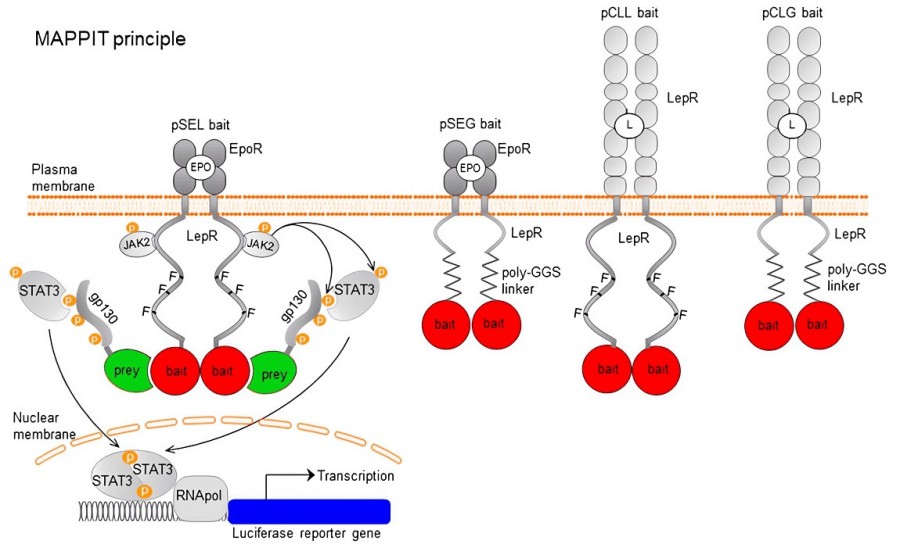 Fig. 1 Mammalian Protein Protein Interaction Trap (MAPPIT).1
Creative Biolabs has developed a suite of MAPPIT services to address a wide range of research needs, from one-on-one validation to genome-wide discovery.
Perfect for validating a hypothesized interaction between two specific proteins. This focused service provides robust, quantitative data to confirm or refute a direct binding event within the complex environment of the mammalian cell.
Unlock new discoveries with our powerful Array MAPPIT platform. We screen your "bait" protein against our extensive, pre-arrayed cDNA or ORFeome libraries containing thousands of "prey" proteins. This is an ideal strategy for identifying novel binding partners and building out entire interaction networks.
A game-changer for drug discovery. The Reverse MAPPIT system is designed to identify molecules or peptides that disrupt a known protein-protein interaction. In this setup, the interaction between bait and prey suppresses a reporter gene. A successful inhibitor will disrupt this interaction, leading to a positive, "turn-on" signal.
The versatility of the MAPPIT platform opens doors to a vast array of research areas:
| Feature | Creative Biolabs' Advantage | The Scientific Impact |
| Physiological Relevance | All assays are performed in living human/mammalian cell lines (e.g., HEK293T, CHO). | Data reflects interactions in a native cellular context, accounting for PTMs and protein folding, leading to more reliable, actionable results. |
| High Signal-to-Noise Ratio | The cytokine-based system provides a robust and tightly regulated signaling pathway, resulting in a very low background and high sensitivity. | Confidently detect both strong and transient or weak interactions that might be missed by other systems. |
| Unmatched Expertise | Over 20 years of experience in protein engineering, molecular biology, and cell-based assay development. | Our expert scientists provide comprehensive consultation, customized project design, and in-depth data interpretation. |
| Advanced Technology | State-of-the-art platforms for high-throughput Array MAPPIT and Reverse MAPPIT screening. | Accelerate your research from single interaction validation to druggable PPI target discovery on a massive scale. |
| Versatility & Scalability | From one-on-one analysis to large-scale library screens, our services are tailored to your project's specific goals and budget. | A flexible and cost-effective solution for academic labs, biotech startups, and large pharmaceutical companies. |
| Comprehensive Reporting | We provide a detailed report including raw data, statistical analysis, hit lists, and validation strategies. | Publishable-quality data and clear, concise reporting that facilitates your next research steps. |
Creative Biolabs offers a full spectrum of protein interaction analysis tools to complement your MAPPIT studies. Explore our full range of PPI services here: Protein-Protein Interaction (PPI) Assay Services
Contact Us Today to propel your research forward. Discover the true interactome with the precision and physiological relevance that only a mammalian system can provide. Partner with Creative Biolabs for your MAPPIT project.
Q: How is MAPPIT different from the traditional Yeast Two-Hybrid (Y2H) system?
A: The primary and most critical difference is the experimental environment. MAPPIT is a mammalian two-hybrid system, meaning the interaction analysis occurs inside living mammalian cells (like human HEK293T cells). This is crucial because mammalian proteins often require specific post-translational modifications (e.g., phosphorylation, glycosylation, ubiquitination) and cellular machinery for proper folding and function, which are absent or different in yeast cells. This physiological relevance makes MAPPIT data highly reliable and reduces the rate of false positives/negatives often seen with Y2H, especially for complex mammalian proteins.
Q: What types of protein-protein interactions can MAPPIT detect?
A: MAPPIT is a versatile system capable of detecting a wide range of interactions. It is particularly effective for stable, direct interactions but is also sensitive enough to capture transient or weak interactions due to the signal amplification inherent in the JAK/STAT pathway. It is suitable for studying interactions between nuclear, cytoplasmic, and some membrane-associated proteins.
Q: My protein of interest is a transmembrane protein. Can I use the MAPPIT service?
A: Yes, MAPPIT is well-suited for studying interactions involving certain types of transmembrane proteins. The bait and prey constructs themselves are tethered to the cell membrane. This makes it an excellent system for analyzing interactions between the intracellular domains of receptor proteins or interactions between a transmembrane protein and a cytosolic partner. Please contact our scientific team to discuss the specific topology of your protein for an expert assessment.
Q: What material do I need to provide to start a MAPPIT project?
A: To get started, you typically need to provide the sequence information or plasmids containing the coding sequence for your "bait" protein and any specific "prey" proteins you wish to test in a one-on-one validation assay. For a library screen, you only need to provide the "bait" protein information. Our team handles all subsequent steps, including gene synthesis, cloning into our MAPPIT vectors, and all downstream assay work.
Q: Can MAPPIT quantify the binding affinity of an interaction?
A: MAPPIT is a semi-quantitative assay. It provides a strong indication of the interaction strength based on the intensity of the reporter signal (a higher signal generally implies a stronger or more stable interaction). However, it does not provide precise biophysical constants like the dissociation constant. For quantitative affinity measurements, we recommend follow-up studies using our Surface Plasmon Resonance (SPR) or Bio-Layer Interferometry (BLI) services.
Q: What cell lines do you use for the MAPPIT service?
A: Standard and highly optimized cell line for MAPPIT assays is the human embryonic kidney cell line HEK293T. These cells are robust, highly transfectable, and have low endogenous signaling pathway activity, providing an excellent signal-to-noise ratio. If your project requires a different mammalian cell line, please discuss your needs with our technical team to explore custom assay development options.
All listed services and products are For Research Use Only. Do Not use in any diagnostic or therapeutic applications.