Creative Biolabs is offering the most comprehensive services for antibody development projects. With strict regulation and effective execution, we are dedicated to providing the most valuable solutions to complete your projects.
HighlightsCreative Biolabs is offering the most comprehensive services for antibody development projects. With strict regulation and effective execution, we are dedicated to providing the most valuable solutions to complete your projects.
HighlightsCreative Biolabs has established a broad range of platforms for developing novel antibodies or equivalents. These cutting-edge technologies enable our scientists to meet your demands from different aspects and tailor the most appropriate solution that contributes to the success of your projects.
HighlightsWith deep understanding in antibody-related realms and extensive project experience, Creative Biolabs offers a variety of references to help you learn more about our capacities and achievements, including infographic, flyer, case study, peer-reviewed publications, and all kinds of knowledge that can assist your projects. You are also welcome to contact us directly for more specific solutions.
HighlightsGet a real taste of Creative Biolabs, one of the most professional custom service providers in the world. We are committed to providing highly customized comprehensive solutions with the best quality to advance your projects.
HighlightsFor over two decades, Creative Biolabs has been at the forefront of protein interaction analysis. Our Reverse Yeast Two-Hybrid (rY2H) Service is a powerful, validated platform engineered to identify specific molecules—small molecules, peptides, or biologics—that can effectively dissociate a target protein complex. By leveraging a sophisticated counter-selection strategy, our rY2H system directly links the disruption of a specific PPI to cell survival, enabling robust, large-scale screening campaigns. Partner with us to accelerate your research from target validation to lead identification with unparalleled precision and efficiency.
The Reverse Yeast Two-Hybrid (rY2H) system is a powerful genetic method ingeniously adapted from the conventional Yeast Two-Hybrid (Y2H) assay. While Y2H is designed to identify interacting protein partners, the rY2H system is specifically engineered to screen for molecules or mutations that disrupt a known protein-protein interaction.
The core principle relies on a dual-reporter system. First, a positive reporter (e.g., HIS3) confirms the baseline interaction between your "bait" and "prey" proteins, allowing yeast to grow on selective media. Critically, the interaction also activates a counter-selectable reporter gene (e.g., URA3 or CYH2). The expression of this gene product is toxic to the yeast under specific conditions (e.g., in the presence of 5-FOA for URA3).
This elegant survival-based selection makes rY2H an ideal platform for high-throughput screening (HTS) of vast compound libraries to find your next lead candidate.
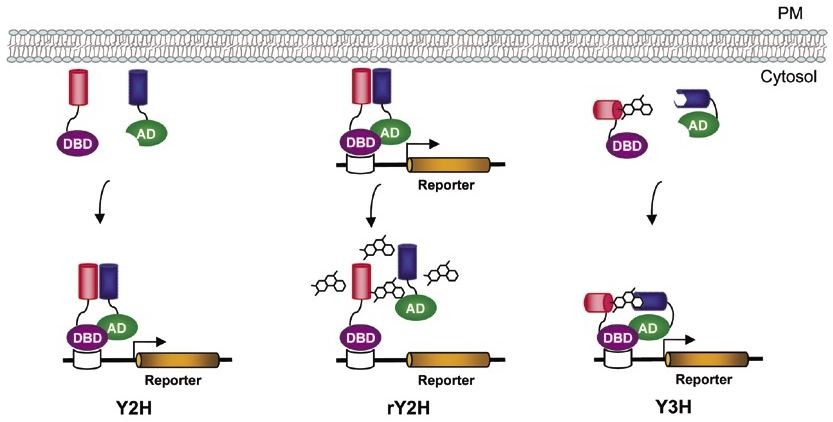 Fig. 1 Reverse yeast two-hybrid (rY2H) for drug screening.1
We follow a meticulous, milestone-driven process to ensure the success of your project.
Step 1: Project Consultation & Design
Step 2: Bait & Prey Plasmid Construction
Step 3: Assay Feasibility & Optimization
Step 4: High-Throughput Screening (HTS)
Step 5: Hit Identification & Confirmation
Step 6: (Optional) Downstream Validation & Analysis
Step 7: Comprehensive Data & Reporting
Our rY2H platform is versatile and can be applied across various stages of the therapeutic development pipeline.
Choosing Creative Biolabs gives you access to a state-of-the-art platform refined by decades of expertise.
Leverage our full suite of protein interaction and drug discovery services to advance your research. Explore our full range of PPI services here: Protein-Protein Interaction (PPI) Assay Services
Connect with our team of Ph.D.-level experts to discuss your project. We will provide a customized strategy tailored to your specific research goals.
Q: What is the main difference between Y2H and rY2H?
A: Y2H is a discovery tool used to find unknown protein partners ("what does my protein bind to?"). rY2H is a screening tool used to find molecules that disrupt a known protein interaction ("what compound can break this specific protein pair apart?").
Q: What types of protein interactions are suitable for the rY2H system?
A: The rY2H system is ideal for studying binary interactions that can be reconstituted in the yeast nucleus. It is compatible with proteins from various organisms and subcellular locations, though some modifications may be required for membrane or secreted proteins.
Q: How do you handle false positives in the rY2H screen?
A: We employ a rigorous, multi-tiered validation strategy. This includes re-testing hits, performing counter-screens to identify compounds that are generally toxic to yeast or inhibit transcription/translation, and running dependency assays to ensure the effect is specific to the bait-prey interaction.
Q: Can I screen my own compound library?
A: Absolutely. We are happy to work with our clients to screen their proprietary in-house libraries. Please contact us to discuss the logistics and formatting requirements.
All listed services and products are For Research Use Only. Do Not use in any diagnostic or therapeutic applications.