Creative Biolabs is offering the most comprehensive services for antibody development projects. With strict regulation and effective execution, we are dedicated to providing the most valuable solutions to complete your projects.
HighlightsCreative Biolabs is offering the most comprehensive services for antibody development projects. With strict regulation and effective execution, we are dedicated to providing the most valuable solutions to complete your projects.
HighlightsCreative Biolabs has established a broad range of platforms for developing novel antibodies or equivalents. These cutting-edge technologies enable our scientists to meet your demands from different aspects and tailor the most appropriate solution that contributes to the success of your projects.
HighlightsWith deep understanding in antibody-related realms and extensive project experience, Creative Biolabs offers a variety of references to help you learn more about our capacities and achievements, including infographic, flyer, case study, peer-reviewed publications, and all kinds of knowledge that can assist your projects. You are also welcome to contact us directly for more specific solutions.
HighlightsGet a real taste of Creative Biolabs, one of the most professional custom service providers in the world. We are committed to providing highly customized comprehensive solutions with the best quality to advance your projects.
Highlights Loading...
All listed services and products are For Research Use Only. Do Not use in any diagnostic or therapeutic applications.
C-C motif chemokine receptor 1 (CCR1) is a rhodopsin-like G protein-coupled receptor, which is expressed at the surface of monocytes, macrophages, immature dendritic cells (DCs), neutrophils, and effector T lymphocytes as an important navigation sensor for several inflammatory chemokines. As a receptor for chemokine, CCR1 primarily couples to heterotrimeric Gi/o proteins upon agonist binding which initiates intracellular signaling pathways including mobilization of calcium and phospholipase C activation, leading to ERK phosphorylation. These events result in directed leukocyte chemotaxis, degranulation and integrin activation. In homeostasis, this CCR1-mediated trafficking promotes rapid recruitment of immune cells to sites of infection as well as orchestrating the resolution phase during acute inflammation. In contrast, continuous CCR1 signaling in chronic disease states continues tissue destruction and induces end-organ damage as seen in rheumatoid arthritis, mononuclear infiltration into multiple sclerosis lesions66 (discussed below), and metastatic seeding of hepatocellular and breast carcinomas. The potential utility of CCR1 as a druggable target—supported by the conduct of Phase II trials for small-molecule antagonists toward autoimmune indications—is driving demand for structurally authentic receptor preparations, pharmacologically faithful cell lines and conformation-specific antibodies to facilitate modern approaches in drug discovery.
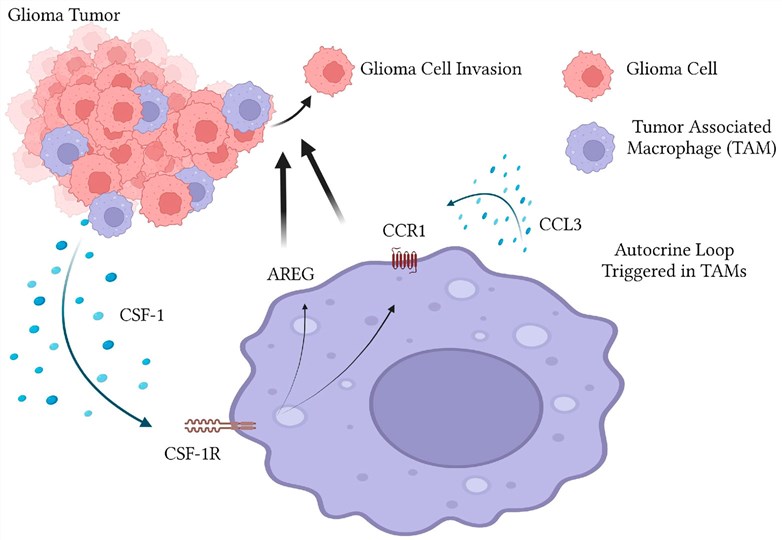 Fig.1 Model of microglia-stimulation of glioma invasion.1
Instead of merely acting as a classic chemotactic sensor, CCR1 orchestrates multiple immunological programs:
Here we present an unparalleled set of CCR1 membrane proteins containing conformationally authentic glycosylation states, designed to navigate the difficult biochemistry that is intrinsic to 'three-dimensional' receptors such as GPCRs. We present mammalian expression systems that integrate advanced technologies such as glycoengineering to yield proteins with authentic native N-linked glycosylation at the N-terminus and extracellular loops, detergent-free membrane mimetic technology [e.g. for nanomin s or amphipol suspension], robust thermostabilizing formulation buffers emphasizing retaining seven-transmembrane topology whilst preserving ligand-binding pocket integrity are indispensable in facilitating high-affinity chemokine engagement - leading subsequently to G protein activation. These various studies range from quantitative radioligand binding to structural elucidation of receptor-ligand complexes, as well as high-throughput screening of both orthosteric and allosteric modulators. Comprehensive quality assurance of each protein preparation will include glycosylation profiling, assessments of thermal stability, and functional assays using reporter-cell complementation systems quantifying G protein coupling and β-arrestin recruitment.
Not finding the membrane protein product you need? Contact us to start your one-stop custom service!
The development of physiologically relevant cellular platforms is essential for better understanding of CCR1-mediated immune signaling pathways and therapeutic agents. As a resource for the scientific community, we present stable CCR1 cell lines that preserve their native plasma membrane localization and glycosylation but possess an agonist-dependent functional response through development of integrated lentivirus- and transposon-based delivery systems simultaneously. Our platforms include G protein-dependent and β-arrestin-based reporter systems with wild-type CCR1, disease-relevant mutant variants and a negative control for mechanistic evaluation. These platforms provide highly reproducible and scalable resources to the scientific community for studying autoimmune disease processes, screening small molecule modulators and developing biopharmaceuticals that target leukocyte chemotaxis.
Not finding the stable cell line product you need? Contact us to start your one-stop custom service!
For the topology of this transmembrane receptor, our catalog of high-affinity, sequence-defined monoclonal antibodies is purpose-built to customize your CCR1 research. Pre-validated for: CCR1 Western Blotting (reducing and non-reducing), ligand competition Direct ELISA, Flow cytometry of live immune cells, High resolution immunofluorescence & confocal microscopy membrane ruffles They are used for performing immunohistochemistry on paraffin-embedded tissues and in functional receptor blocking studies. This data aids in assessing CCR1-expression within distinct immune cell populations, the internalization kinetics of CCR1 and designing therapeutic antibodies for inflammatory disorders.
Not finding the recombinant antibody product you need? Contact us to start your one-stop custom service!
In addition to our catalogue products, we also offer integrated end-to-end protein design and engineering services for difficult G protein-coupled receptors such as CCR1:
Absolutely. We have created constitutively active mutants and naturally occurring polymorphisms linked to altered ligand binding and G protein coupling. These variants are provided as either recombinant membrane proteins or as stable cell lines.
Our CCR1 products are designed to remain in the plasma membrane and therefore, only respond to chemokine ligands in a physiologically relevant manner.
Our products will contain the necessities for glycosylation and disulfide bond formation to sustain proper folding and ligand recognition.
We provide deletions of the N-terminal domain, as well as truncations of the third extracellular loop, to enable extensive structure-function studies and generation of dominant-negatives.