
Hyaluronic Acid based Targeted Drug Delivery Solution
Hyaluronic acid (HA) has become a cornerstone material in targeted drug delivery, valued for its natural biocompatibility and ability to bind to CD44 receptors overexpressed in many cell types. Acting as a biological targeting ligand, HA enables precise payload delivery while improving solubility and stability. With its adaptable structure, HA supports a wide range of delivery platforms—from nanoparticles to hydrogels—making it one of the most versatile tools in modern formulation science. Creative Biolabs leverages HA-based delivery systems to help researchers design smarter, more efficient targeted delivery solutions.
Introduction to Hyaluronic Acid-Based Targeted Delivery
Hyaluronic acid (HA), a linear, non-sulfated glycosaminoglycan composed of repeating D-glucuronic acid and N-acetyl-D-glucosamine units linked by β-1,3 and β-1,4 bonds, has emerged as a pivotal material in targeted drug delivery, especially for cancer therapy. Its unique biological and physicochemical properties, including inherent biocompatibility, biodegradability, non-immunogenicity, and abundant modification sites (carboxyl, hydroxyl, and amide groups), enable the versatile design of delivery systems while minimizing off-target toxicity.
A core advantage of HA lies in its ligand-receptor targeting capability. HA can bind specifically to receptors overexpressed on cancer cells and tumor-associated cells, such as Cluster of Differentiation 44 (CD44), Hyaluronan-Mediated Motility Receptor (RHAMM), and Lymphatic Vessel Endothelial Hyaluronan Receptor-1 (LYVE-1). Among these, CD44 is a key target, as it is highly expressed in diverse cancers (e.g., breast, lung, glioblastoma) and correlates with epithelial-to-mesenchymal transition (EMT), a process driving tumor invasion and chemoresistance. This receptor specificity allows HA-based systems to bypass healthy cells and accumulate at tumor sites via receptor-mediated endocytosis, enhancing drug efficacy. Additionally, HA's molecular weight (MW) can further tune its functionality. High-MW HA (HMW-HA, >1000 kDa) exhibits anti-inflammatory effects and structural stability, and is ideal for hydrogels or long-circulating carriers; low-MW HA (LMW-HA, <250 kDa) promotes pro-inflammatory responses and is better suited for targeting immune cells or penetrating tumor tissue.
By leveraging HA's stealth properties (reducing reticuloendothelial system clearance) and stimuli responsiveness (e.g., pH, enzyme-triggered drug release in the tumor microenvironment), HA-based targeted delivery systems span diverse formulations. These formulations include polymer-drug conjugates (e.g., HA-paclitaxel, HA-doxorubicin), nanoparticles (liposomes, micelles, inorganic composites like HA-gold NPs), and hydrogels. Compared with conventional drugs, these systems address critical limitations, such as poor solubility, short circulation, and non-specific toxicity. As illustrated in Figure 1, HA's synthesis by hyaluronan synthases (HAS1–3) and degradation into LMW-HA via hyaluronidases or reactive oxygen species (ROS) underscores its dynamic role in the tumor microenvironment, linking its physiological functions to delivery system design. With preclinical success (e.g., HA-irinotecan improving progression-free survival in colorectal cancer) and ongoing clinical trials, HA-based targeted delivery is poised to advance precision cancer therapy.
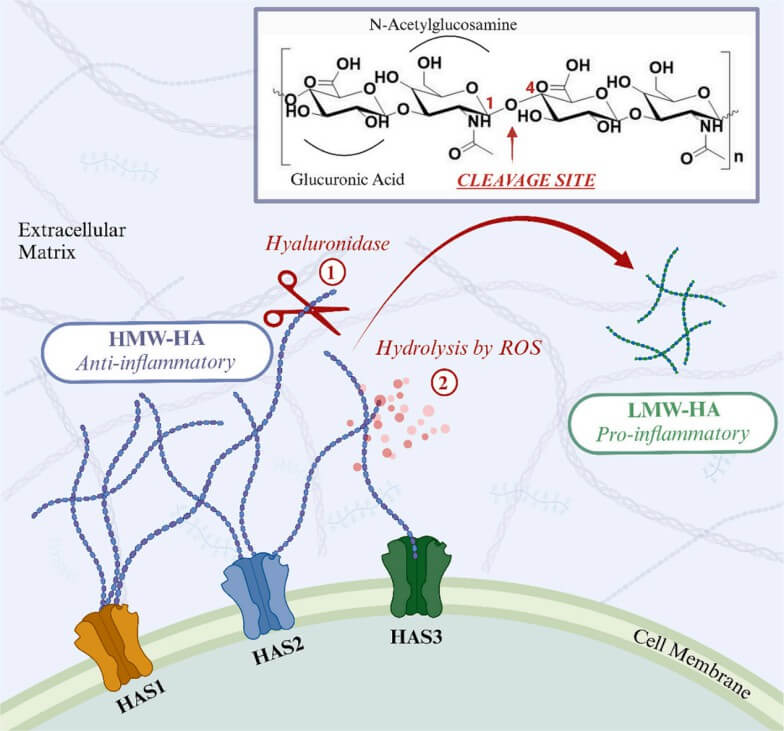 Fig.1
Synthesis and Degradation of Hyaluronic Acid. 5
Fig.1
Synthesis and Degradation of Hyaluronic Acid. 5
Advantages of Using Hyaluronic Acid for Targeted Delivery
HA is one of the best materials available for targeted delivery, having several key advantages that help to overcome the main issues in drug delivery design. The following are some of the key advantages of HA. In each of these features is precisely matched to the delivery goal to improve efficacy and safety:
Exceptional Biocompatibility and Biodegradability
HA is non-toxic, non-immunogenic, and naturally degraded by endogenous hyaluronidases in the body. This avoids systemic accumulation and reduces off-target toxicity, making it safe for long-term or repeated use in targeted therapies.
Receptor-Specific Active Targeting
HA can specifically bind to various receptors that are overexpressed on target cells (e.g., CD44/RHAMM on cancer cells, LYVE-1 on lymphatic cells) via receptor-mediated endocytosis (Figure 2). This ensures selective accumulation at tumor or lymphoid tissues, minimizing healthy cell exposure.
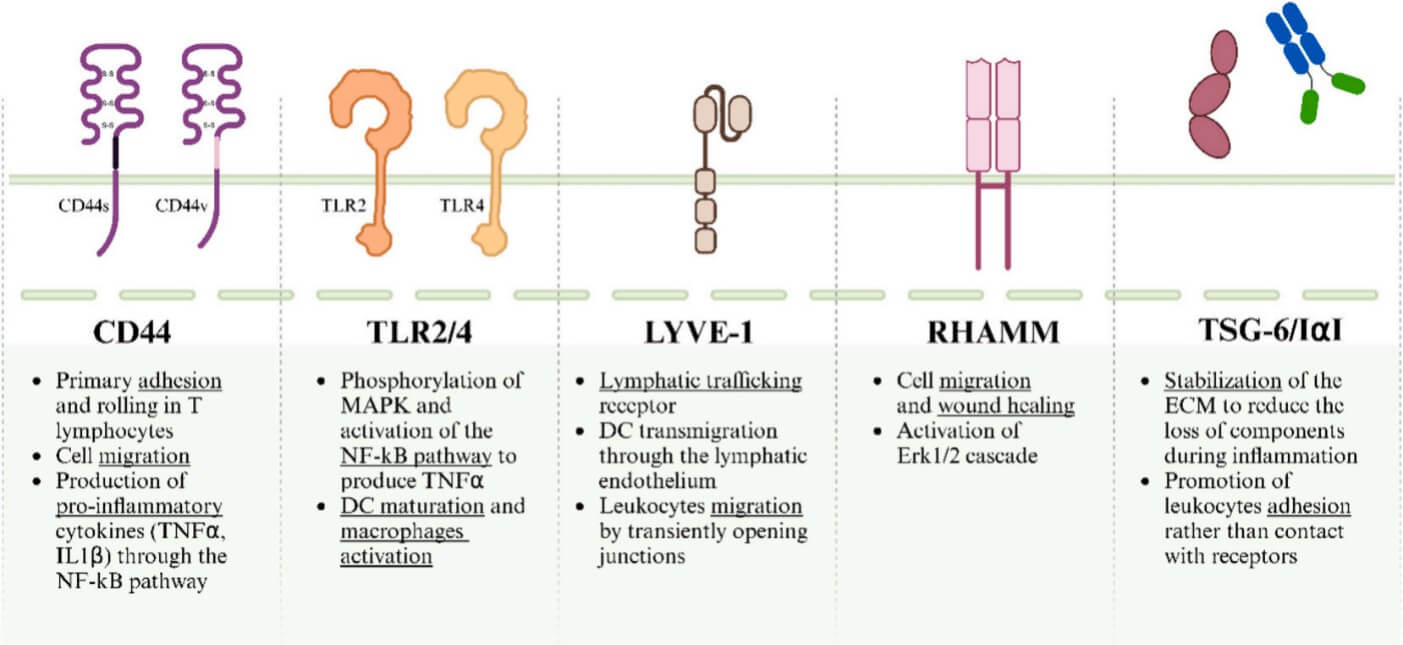 Fig.2
The function of HA-binding proteins in immune-related processes. 5
Fig.2
The function of HA-binding proteins in immune-related processes. 5
Molecular Weight-Tunable Functionality
High-MW HA (>1000 kDa) is associated with structural stability, providing extended drug release profiles and potential anti-inflammatory effects. In contrast, low-MW HA (<250 kDa) has been linked to pro-inflammatory responses, actively recruiting and targeting immune cells, offering adaptability to different delivery objectives.
Tip: Consider the molecular weight of HA as a tool to leverage:
- Lower MW can increase penetration.
- Higher MW can increase residence time and binding affinity
- Striking the right balance is crucial.
Versatile Chemical Modifiability
HA's carboxyl, hydroxyl, and amide groups enable conjugation to drugs (e.g., HA-doxorubicin) or surface decoration of nanocarriers. This supports the design of multi-functional systems, such as stimuli-responsive or multi-drug-loaded carriers.
Stealth Effects and Colloidal Stability
HA can harness the reticuloendothelial system to reduce clearance, thus prolonging in vivo circulation. It also shields nanoparticles from protein corona formation, maintaining stability in serum-rich environments critical for systemic delivery.
These advantages collectively make HA a flexible, safe, and effective platform for advancing targeted delivery strategies in cancer and other diseases.
See our HA-based delivery systems for more design details and service information.
Innovative HA-Based Delivery Platforms
Hyaluronic acid (HA)'s versatility enables the development of diverse, innovative delivery platforms tailored to address unmet needs in targeted therapy, from systemic drug delivery to localized release. Supported by validated preclinical and clinical potential in recent research, these platforms leverage HA's biocompatibility, receptor specificity, and modifiability. Below are key innovative HA-based delivery platforms, each of which boasts unique advantages.
HA-Drug Conjugates
HA-drug conjugates covalently link HA (typically 10–200 kDa) to therapeutic agents (e.g., doxorubicin [DOX], paclitaxel [PTX], camptothecin [CPT]) via stimuli-responsive linkers (ester, amide, disulfide bonds) (Figure 3). This design improves the solubility of hydrophobic drugs (e.g., PTX solubility increases by ~500x in HA-PTX conjugates) and enables targeted release in the tumor microenvironment (e.g., pH-sensitive linkers break down in acidic tumors). For example, HA-DOX conjugates can reduce DOX's cardiotoxicity while enhancing accumulation in CD44+ colon cancer cells, and HA-CPT conjugates can prolong drug retention in liver cancer cells by fourfold compared to free CPT. Currently, they have been considered as a core platform for tumor targeting, with advantages including reduced off-target toxicity, controlled release, and high receptor-mediated uptake.
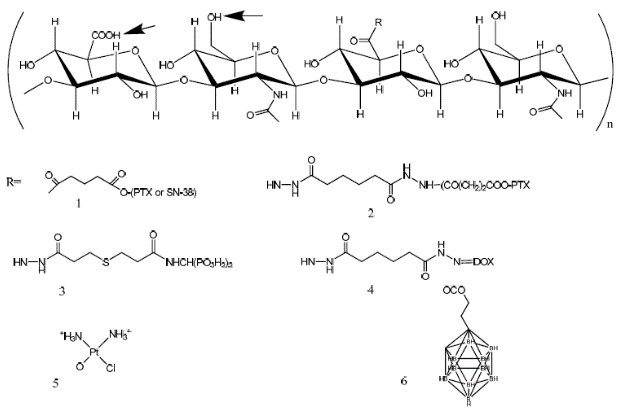 Fig.3
HA and small molecule conjugates. 4
Fig.3
HA and small molecule conjugates. 4
HA-Modified Inorganic Nanoparticles
HA-modified inorganic nanoparticles (e.g., gold NPs, quantum dots, mesoporous silica NPs) combine HA's targeting ability with the unique properties of inorganic materials (e.g., photothermal effects of gold NPs, imaging capabilities of quantum dots). HA is coated on nanoparticle surfaces via electrostatic adsorption or thiol-gold bonding. As a result, the biocompatibility and specificity of HA-Modified Inorganic NPs are enhanced, and NPs are shielded from protein corona formation. For instance, HA-gold NPs loaded with pheophorbide-A enable dual photodynamic/photothermal therapy, with a twofold higher tumor accumulation than unmodified gold NPs. HA-quantum dot conjugates improve fluorescence stability and target CD44+ breast cancer cells without cytotoxicity, serving as safe imaging-guided delivery tools.
HA-Based Micelles
HA-based micelles self-assemble from amphiphilic HA derivatives (e.g., HA-deoxycholic acid, HA-poly(lactic-co-glycolic acid)) in aqueous solutions, forming a core-shell structure: hydrophobic cores load drugs (e.g., PTX, DOX), while hydrophilic HA shells enable CD44 targeting and reduced reticuloendothelial system clearance. Many HA-micelles are stimuli-responsive. For instance, redox-sensitive HA-deoxycholic acid micelles disassemble in high-glutathione tumor environments to release PTX, achieving three times higher cytotoxicity against breast cancer cells than free PTX. HA-poly(l-histidine) micelles can respond to acidic endosomal pH, thus facilitating endosomal escape of siRNA for gene therapy.
HA Hydrogels
HA hydrogels are 3D crosslinked networks (via enzymatic, chemical, or physical crosslinking) that absorb large volumes of water, making them ideal for localized, sustained release. Injectable HA-tyramine hydrogels, crosslinked by horseradish peroxidase, can encapsulate proteins (e.g., interferon-α2a) or chemotherapeutics and release payloads over weeks in tumor sites. pH-sensitive HA hydrogels, crosslinked via acid-labile hydrazone bonds, can release DOX selectively in acidic tumors, thereby reducing healthy tissue exposure. HA hydrogels are widely used in surgery and wound healing, with advantages including excellent tissue adhesion, biodegradability (degraded by hyaluronidases), and the ability to match tumor microenvironment properties for personalized release.
HA-Surface Modified Liposomes
HA-surface modified liposomes can overcome liposomes' limitations of poor targeting and fast clearance by coating traditional lipid bilayers with HA. HA binds to CD44 on tumor cells, guiding liposomes to target sites, while the HA shell reduces opsonization by serum proteins. A typical example is the HA-modified DOTAP/DOPE liposomes, which deliver anti-telomerase siRNA to CD44+ lung cancer cells, resulting in increased siRNA conjugation efficiency by 40% and reduced off-target gene silencing. Dual-functional HA-liposomes, combined with pH-responsive cell-penetrating peptides, can further enhance cellular uptake after HA-mediated targeting. Moreover, the advantages of dual loading of hydrophilic/hydrophobic drugs include low immunogenicity and compatibility with clinical liposome formulations.
Industry Applications of HA-based Delivery Systems
HA-based delivery systems are being applied in many aspects. Table 1 below summarizes HA-based delivery systems' key applications in oncology, dermatology, and ophthalmology, with details on system types and functions.
Table 1 Comparison of different vitamin delivery platforms.
| General Category | HA-based Delivery System Type | Application Description |
|---|---|---|
| Oncology Research | HA-drug conjugates | HA (8–200 kDa) can conjugate with chemotherapeutics (DOX, PTX, CPT) via pH/redox-sensitive linkers to enhance specificity, solubility, and drug retention. For example, HA-DOX can reduce cardiotoxicity while enhancing CD44+ tumor accumulation; HA-PTX can achieve 45% complete response in BCG-unresponsive bladder cancer; HA-CPT can boost solubility to 620 µg/mL and prolongs drug retention in liver cancer cells. |
| HA-coated nanoparticles | HA can modify gold NPs, superparamagnetic iron oxide NPs (SPIONs), and mesoporous silica NPs (MSNs) to enhance drug efficacy in glioblastoma, liver, and colon cancer. HA-AuNPs enable photothermal therapy and activate CD8+ T cells; HA-SPIONs support MRI imaging and targeted hyperthermia; HA-MSNs can load DOX for pH-responsive release. | |
| Dermatology & Wound Models | HA-hydrogels | Injectable HA-tyramine hydrogels can load IFN-α2a and release it sustainably to inhibit tumor angiogenesis; HA-gelatin hydrogels with CpG/MAGE5 can activate DCs and macrophages, thereby reducing melanoma growth; HA-chitosan hydrogels can maintain a moist wound environment, promote M2 macrophage polarization, and accelerate burn/wound closure by reducing inflammation. |
| Ophthalmic Delivery Research | HA-modified liposomes/nanoparticles |
HA-coated liposomes/NPs (8–50 kDa) can target LYVE-1+ ocular cells, deliver anti-VEGF
drugs/siRNA for age-related macular degeneration, enhancing intraocular retention and lowering
systemic exposure. HA-coated liposomes can deliver anti-VEGF siRNA to LYVE-1+ ocular cells, enhancing intraocular retention for age-related macular degeneration; HA-porous silica NPs can embed Ag2S quantum dots for fluorescence imaging and drug release, thereby improving targeting and reducing systemic toxicity in choroidal melanoma. |
| HA-viscous formulations | High-MW HA (>1000 kDa) viscous formulations can act as lubricants for dry eye, protecting ocular surfaces from oxidative damage; HA-deoxycholic acid nanomicelles can load photosensitizers for enhanced drug efficacy for ocular tumors while maintaining biocompatibility and reducing irritation to corneal tissues. |
Regulatory and Safety Considerations for HA-Based Therapeutics
While HA is generally recognized as biocompatible, research programs should still:
HA's hydration and biocompatibility benefit ocular and wound systems, but its targeted delivery faces unavoidable trade-offs that demand proactive planning.
- Verify source quality, endotoxin, and residual solvents.
- Characterize particle size, zeta potential, PDI, and drug loading.
- Assess in vitro safety with panel assays (viability, hemolysis, cytokine readouts).
- Document materials, linkers, and process steps for traceability.
Note:
Creative Biolabs supports research-use development and characterization only. For Research Use, please visit HA-based delivery systems for more design details and service information.
Challenges and Limitations in HA-Based Targeted Delivery
HA's hydration and biocompatibility benefit ocular and wound systems, but its targeted delivery faces unavoidable trade-offs that demand proactive planning.
Molecular Weight (MW) Heterogeneity and Polydispersity
HA MW dictates receptor binding, tissue diffusion, and clearance. HMW HA (>1000 kDa) boosts CD44 avidity but hinders tumor penetration, while LMW HA (<250 kDa) diffuses better but has weak targeting. Therefore, batch-to-batch MW variation (e.g., 8–100 kDa in HA-CPT) can lead to disruption of consistent cell uptake.
Premature Enzymatic Degradation by Hyaluronidases
Tumors overexpress hyaluronidases (Hyal1–6) that cleave HA's β-1,4 linkages. Though useful for stimulus release, Hyals can degrade HA-DOX conjugates by 30% in 48 h in glioblastoma, reducing drug accumulation.
Batch-to-Batch Consistency Risks
HA from animal sources (e.g., rooster combs) has MW fluctuations; microbial HA may have endotoxins (>0.5 EU/mL) that activate TLR4, thereby interfering with immunotherapy. Impurities like nucleic acids can also compromise biocompatibility.
Scale-Up Reproducibility Issues
When scaling up the production of HA-coated nanoparticles (from 100 mL to 10 L), the efficiency of HA adsorption onto the nanoparticle surface decreases by 25%, which leads to inconsistent CD44-targeting performance. Additionally, during streptococcal fermentation for HA synthesis, when HA concentration exceeds 6 g/L, oxygen transfer in the fermentation system is impaired, ultimately causing changes in HA molecular weight distribution.
Off-Target Receptor Binding
Except for tumor cells, Hyaluronic acid (HA) can bind to lymphatic vessel endothelial hyaluronan receptor-1 (LYVE-1) in lymph nodes and hyaluronan receptor for endocytosis (HARE) in the liver, which results in the accumulation of HA-based delivery systems in non-tumor tissues. For instance, HA-modified superparamagnetic iron oxide nanoparticles (HA-SPIONs) exhibit 40% uptake by the liver, diverting them away from CD44-overexpressing tumor cells and reducing targeted delivery efficacy.
These challenges highlight the need for tailored HA engineering to maximize targeted delivery efficacy. To tackle these problems, practical fixes include early Design of Experiments (DoE) to optimize HA MW, linker type, conjugation conditions, and production conditions.
Why Partner with Creative Biolabs
"From concept to data you can trust."
Creative Biolabs brings end-to-end targeted delivery capabilities to your HA research:
Rational carrier design: HA MW selection, density tuning, and linker chemistry.
Versatile formats: Nanoparticles, micelles, conjugates, hydrogels, liposomes, and hybrids.
Assay depth: Uptake kinetics, release profiling, stability, and safety readouts.
Scale-aware process: Reproducible surface chemistry and QC documentation.
Explore our dedicated HA page: HA-based delivery systems, and our broader Targeted Delivery capabilities.
Related Services You May Be Interested in
FAQs
What makes hyaluronic acid ideal for targeted delivery?
Hyaluronic acid binds to CD44 and related receptors, which are often overexpressed in disease-related cell lines used in research. This receptor affinity helps carriers reach the right cells and lowers off-target exposure.
How do HA nanoparticles improve selectivity?
By placing HA on the surface, nanoparticles can engage CD44+ cells through receptor-mediated endocytosis. This increases the chance of payload uptake where it is needed most in a research model.
Is HA-based delivery safe for cells?
In general, HA is biocompatible and biodegradable. Even so, each platform should be validated with in vitro assays to confirm cell viability, cytokine response, and hemolysis profiles in the context of your study.
Which HA format should I choose first?
Start with your payload and target. Small molecules often fit HA-coated nanoparticles, peptides may suit HA conjugates, and HA hydrogels can benefit local delivery. We can help you screen the options.
How can I control release from HA carriers?
Use a cleavable linker (pH, enzyme, or redox) for a conjugate, or tune crosslink density in a hydrogel. Both methods allow you to time-release in response to biological cues.
Conclusion
Hyaluronic acid provides a clear, receptor-guided path to targeted delivery. Because it is biocompatible, hydrophilic, and versatile, HA can carry small molecules, peptides, and biologics across nanoparticles, conjugates, hydrogels, and liposomes. With careful control of molecular weight, linker chemistry, and surface density, researchers can tune uptake and release for reliable, repeatable results.
At Creative Biolabs, we help you plan, build, and validate HA platforms, from design screening to in-depth characterization, so that you can move faster with confidence.
Ready to accelerate your HA-based targeted delivery program?
Talk to our targeted delivery experts | See HA delivery formats we support
References
- Fu, C. P. et al. "Hyaluronic Acid-Based Nanocarriers for Anticancer Drug Delivery." Polymers 15, 2317 (2023). https://www.mdpi.com/2073-4360/15/10/2317.
- Isert, L. et al. "Upholding hyaluronic acid's multi-functionality for nucleic acid drug delivery to target EMT in breast cancer." Nanoscale 17, 16256–16273 (2025). https://xlink.rsc.org/?DOI=D5NR00808E.
- Lee, S. Y., Kang, M. S., Jeong, W. Y., Han, D.W. & Kim, K. S. "Hyaluronic Acid-Based Theranostic Nanomedicines for Targeted Cancer Therapy." Cancers 12, 940 (2020). https://www.mdpi.com/2072-6694/12/4/940.
- Pashkina, E., Bykova, M., Berishvili, M., Lazarev, Y. & Kozlov, V. "Hyaluronic Acid-Based Drug Delivery Systems for Cancer Therapy." Cells 14, 61 (2025). https://www.mdpi.com/2073-4409/14/2/61.
- Rodella, G., Préat, V., Gallez, B. & Malfanti, A. "Design Strategies for Hyaluronic Acid-based Drug Delivery Systems in Cancer Immunotherapy." Journal of Controlled Release 383, 113784 (2025). https://linkinghub.elsevier.com/retrieve/pii/S0168365925004043. Distributed under Open Access license CC BY 4.0, without modification.
- Umar, A. K. et al. "Complexed hyaluronic acid-based nanoparticles in cancer therapy and diagnosis: Research trends by natural language processing." Heliyon 11, e41246 (2025). https://linkinghub.elsevier.com/retrieve/pii/S2405844024172775.