
Two-dimensional carbon sheets with an exceptionally high surface area, making them ideal for drug loading via π-π stacking and electrostatic interactions. GO is also noted for its potential in photothermal therapy (PTT).
Inorganic Delivery System Solutions for Targeted Delivery
The inorganic delivery system represents the future of nanomedicine, offering superior stability and precision over traditional organic carriers. Creative Biolabs provides specialized module delivery system development services, helping clients overcome formulation hurdles and architect customized, high-performance platforms for challenging therapeutic molecules.
Click Here to View more about our Services
Introduction to Inorganic Delivery System
The inorganic delivery system utilizes robust, highly engineerable materials like silica, gold, and iron oxide. Unlike organic carriers (liposomes, polymers) prone to rapid degradation and enzymatic breakdown, IDS platforms provide crystalline core stability. This structural advantage dramatically increases in vivo integrity, facilitates greater drug loading capacity, and enables programmable, on-demand drug release kinetics—a crucial shift toward achieving localized, precise therapeutic action.
Several inorganic nanoparticles (INPs) form the foundation of these sophisticated systems:
Gold Nanoparticles (AuNPs)
Known for their high biocompatibility and ease of surface functionalization. Their size and shape can be tuned for passive tumor targeting, and their strong Near-Infrared (NIR) light absorption is utilized for PTT applications.
Mesoporous Silica Nanoparticles (MSNPs)
Feature highly ordered, tunable internal channels (nanopores) that function as robust drug reservoirs. This unique structure provides unmatched drug loading capacity and is easily modified to integrate "smart" release gates.
Magnetic Nanoparticles (MNPs)
Primarily based on Iron oxide nanoparticles (IONPs), these materials are used for targeted drug delivery under an external magnetic field. Crucially, they serve a dual role in theranostics as both an MRI contrast agent and a therapeutic component.
Selenium Nanoparticles (SeNPs)
Primarily based on elemental selenium, these materials are used for targeted drug delivery. Crucially, they serve a dual role in theranostics as both a therapeutic agent and a CT contrast agent.
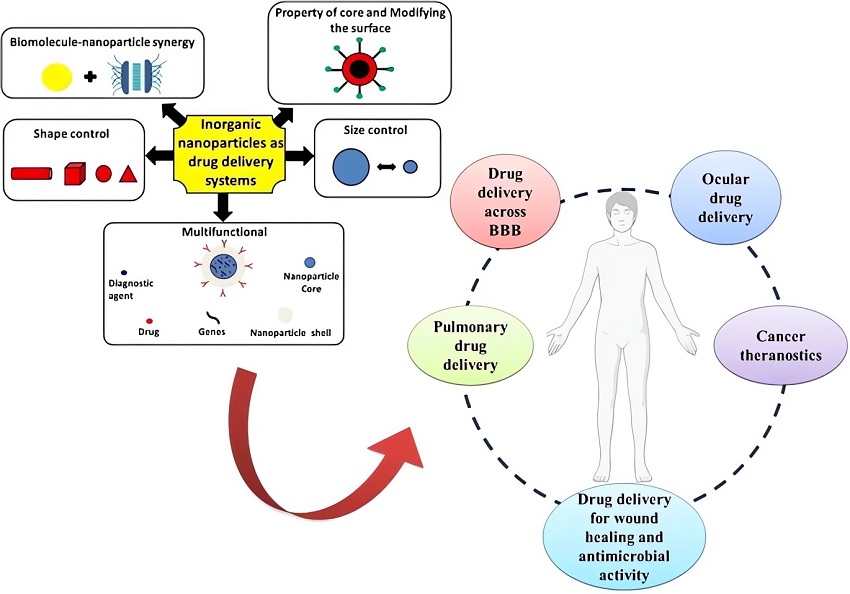 Fig.1 Overview of INPs in drug delivery.1
Advantages of Inorganic Delivery System
The inorganic delivery system platform offers several defining characteristics and advantages critical for next-generation therapeutics:
Architected Stability
The crystalline core structure ensures superior integrity against enzymatic and chemical degradation in vivo, leading to longer circulation times and predictable pharmacokinetics.
High Drug Loading
Unique porous structures (like in MSNPs) allow for significantly greater encapsulation of both hydrophobic and hydrophilic payloads compared to traditional organic systems.
Precision Tunability
Hyper-precise control over particle size (typically 10–100 nm) and surface chemistry allows optimization for passive tumor targeting (EPR effect) and reduced immunogenicity (e.g., PEGylation).
Stimuli-Responsiveness
Intrinsic material properties or engineered surface modifications enable conditional release based on internal triggers (pH, GSH) or external triggers (light, magnetic fields).
Applications of Inorganic Delivery System
Targeted Cancer Therapy
Inorganic delivery systems utilize the EPR effect for passive accumulation, often coupled with active targeting ligands, to minimize systemic toxicity and maximize drug concentration precisely at the tumor site.
Theranostics (Diagnosis + Therapy)
The intrinsic diagnostic features of materials like IONPs (MRI contrast) and AuNPs (imaging) allow for simultaneous visualization of the delivery system and real-time monitoring of therapeutic efficacy—a key advantage for personalized medicine.
Vaccine and Gene Delivery
Their high stability and engineerable surface charge make them excellent non-viral vectors for transporting sensitive nucleic acids (siRNA, mRNA) past biological barriers into target cells.
Localized Drug Depots
The robust stability of inorganic delivery systems allows them to function as long-term drug depots that release therapeutics slowly and predictably over extended periods.
Table.1 Examples of inorganic delivery systems.
| Application Area | Formulation | Key Function | Target/Benefit |
|---|---|---|---|
| Oncology | Mesoporous Silica Nanoparticles (MSNP) | pH-responsive drug release | Maximize cancer cell uptake in the acidic tumor environment; minimize systemic toxicity. |
| Diagnosis/Therapy | Iron Oxide Nanoparticles (IONP) | MRI Contrast & Magnetic Hyperthermia | Real-time treatment visualization and non-invasive, localized thermal therapy (Theranostics). |
| Infectious Diseases | Gold Nanoshells (AuNS) | Photothermal Therapy (PTT) | Non-invasive localized destruction of bacterial or viral pathogens via NIR light. |
| Gene Silencing | Graphene Oxide (GO) Scaffold | Non-viral siRNA carrier | Highly stable protection and efficient intracellular delivery of sensitive genetic material. |
Creative Biolabs provides end-to-end inorganic delivery system development services, integrating manufacturing and detailed regulatory navigation support. Leverage our validated platform and deep expertise to achieve superior performance for your therapeutic molecules. Contact our business development team today.
Reference
- Unnikrishnan, Gayathri, et al. "Exploration of inorganic nanoparticles for revolutionary drug delivery applications: a critical review." Discover Nano 18.1 (2023): 157. Distributed under Open Access license CC BY 4.0, without modification. https://doi.org/10.1186/s11671-023-03943-0.
Our services are For Research Use Only. We do not provide services to individuals.
Online Inquiry