Subcellular Organelle Targeting Module Development Services
Creative Biolabs' Subcellular Organelle Targeting Module Development service provides you with tailored solutions for precise drug delivery and bioimaging. We offer the design, development, and optimization of targeting modules to direct your therapeutic agents or imaging probes to specific subcellular locations.
Contact our team to get an inquiry now!
Overview
Therapeutic outcomes and safety profiles of pharmacological agents are governed by spatiotemporal bioavailability, particularly their biodistribution across specialized subcellular domains. Membrane-bound compartments (nucleoplasm, endolysosomal vesicles, mitochondrial matrix, ER cisternae) and non-membranous regions (ribonucleoprotein granules, lipid rafts) exhibit distinct biochemical microenvironments that mediate drug partitioning. Organellar substructures demonstrate differential partitioning of therapeutics based on hydrophobicity, molecular weight, and charge—critically modulating therapeutic indices. During oncogenesis, neoplastic transformations induce ultrastructural modifications in these domains, altering pharmacodynamic thresholds by >40% in chemotherapy resistance models. Effective pharmacotherapy now necessitates spatiotemporal delivery paradigms that synchronize tissue-level accumulation with subcellular addressing, enabling bioavailability optimization at pathological loci. Organelle-specific targeting has emerged as a strategic priority in precision medicine, leveraging compartmentalized biophysical signatures (e.g., lysosomal pH gradients, nuclear pore size exclusion limits) for therapeutic amplification. Structural modifications enabling site-directed trafficking (e.g., mitochondrial transit peptide fusion) maximize on-target bioactivity while circumventing off-organelle toxicity.
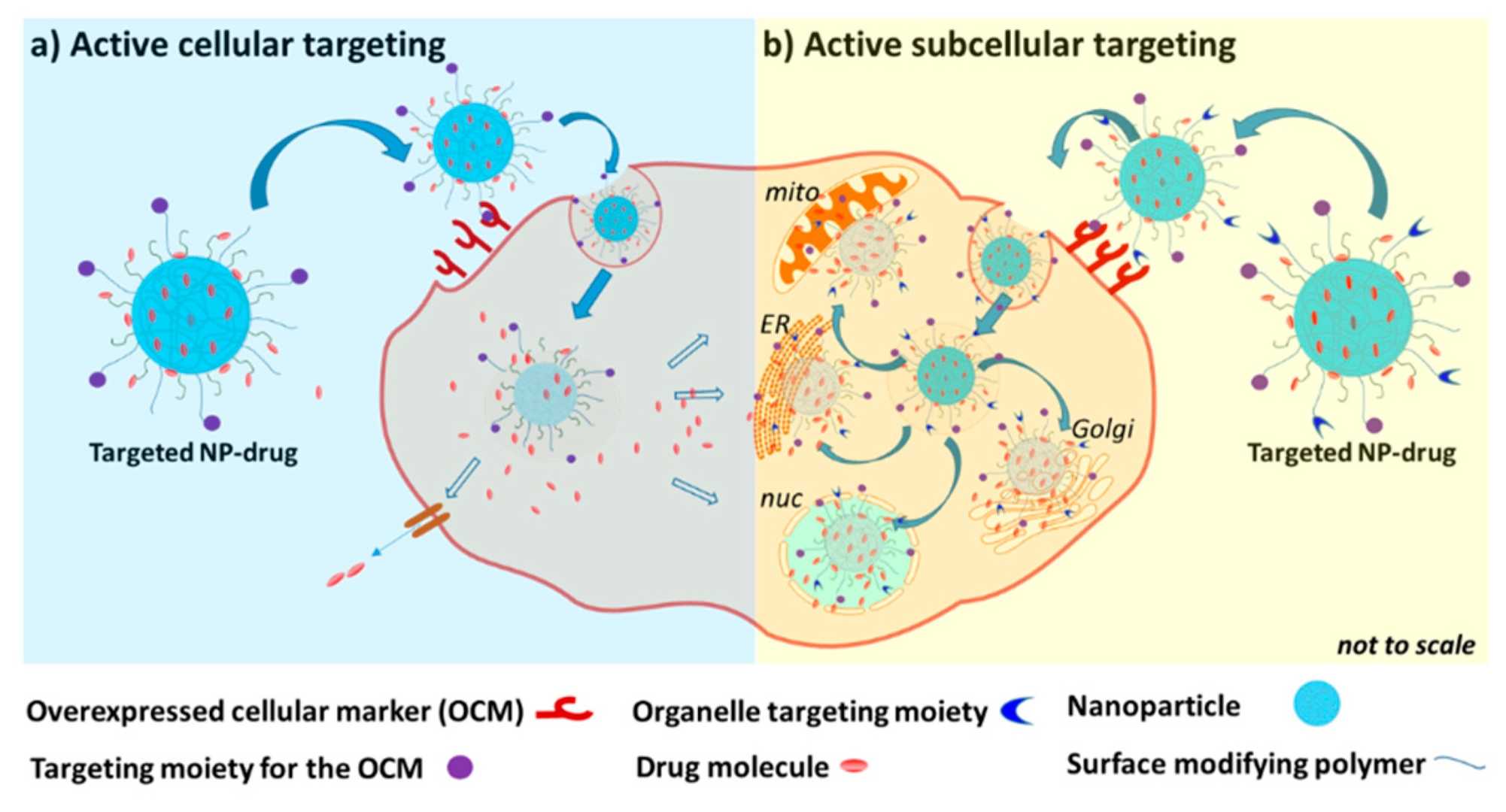 Fig.1 Schematic illustration showing active cellular (left) and subcellular (right) targeting of NP-drug formulations.1,3
Click the link to view more detailed Subcellular Organelle Targeting Module:
- Mitochondria Targeting Module Development
- Nucleus Targeting Module Development
- Cytosol Targeting Module Development
- Lysosome Targeting Module Development
- Golgi Targeting Module Development
Intracellular trafficking systems regulating compartmental dynamics enable targeted therapeutic strategies through biomolecular localization. Bioactive compounds achieving organelle-specific delivery require engineered targeting domains that maintain therapeutic potency while achieving spatiotemporal precision. Molecular modifications such as amphiphilic sorting peptides or lipid-based membrane tethers optimize bioavailability, transforming systemic agents into regionally confined therapeutics via compartmentalized action. Such modifications optimize bioavailability by restricting molecular diffusion, concentrating agents at intended sites.
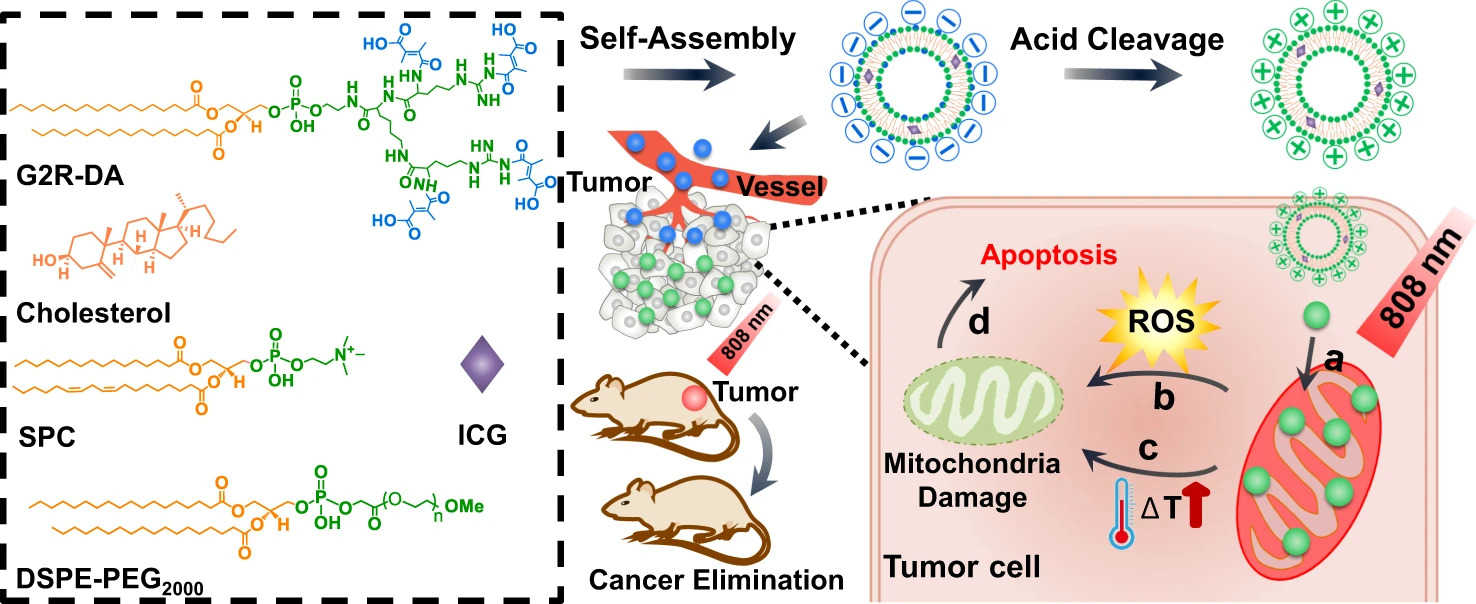 Fig.2 Schematic illustration of the mitochondrion-specific dendritic lipopeptide liposomes L-G2R-DA for cancer therapy.2,3
Advantages of Subcellular Organelle Targeting
Subcellular organelle targeting offers several key advantages over traditional drug delivery methods:
- Enhanced Drug Efficacy
- Reduced Off-Target Effects
- Improved Therapeutic Index
- Overcoming Drug Resistance
What We can Offer?
Creative Biolabs offers a comprehensive suite of services to support your subcellular organelle targeting needs. Our capabilities include:
- Design and Synthesis: We specialize in the design and synthesis of targeting modules, including peptides, small molecules, and other ligands, tailored to your specific target organelle and payload.
- Ligand Conjugation: We provide efficient and reliable conjugation of targeting ligands to a variety of payloads/module delivery systems, such as liposomes, lipid nanoparticles (LNP), small molecule drugs, proteins, and nucleic acids, using optimized chemical or biological methods.
-
Analysis and Characterization: We perform thorough analysis and characterization of the targeted drug delivery system to ensure their quality and performance. This includes assessing:
size, surface properties, encapsulation efficiency, lipophilicity, roughness, rigidity, and other relevant physicochemical properties. - Testing In Vitro and In Vivo: We offer comprehensive in vitro and in vivo testing services to evaluate the efficacy and safety of your targeted drug delivery system targeting module conjugates, including: pulmonary toxicity, drug efficacy, immunogenicity, metabolic level, drug aggregation, organ distribution, drug release ability, localization studies
Experience the Creative Biolabs Advantage - Get a Quote Today
Why Choose Us?
Creative Biolabs is your ideal partner for Subcellular Organelle Targeting Module Development. Here are the advantages of our services.
- Various Subcellular Organelle Targets: We develop targeting modules for a wide range of key subcellular organelles, including mitochondria, nucleus, cytosol, lysosome, and the Golgi apparatus.
- Different Combinational Strategy: We employ diverse strategies in our targeting module development.
- Customized Products: We tailor our services to your specific project needs, ensuring optimal targeting and delivery of your therapeutic agents.
- Advanced Technology: We utilize state-of-the-art technologies, including advanced synthesis methods, high-resolution imaging, and sophisticated analytical techniques, to develop and validate our targeting modules.
- Fast Turnaround Time: We work efficiently to deliver your targeting modules in a timely manner, accelerating your research and development timeline.
Workflow
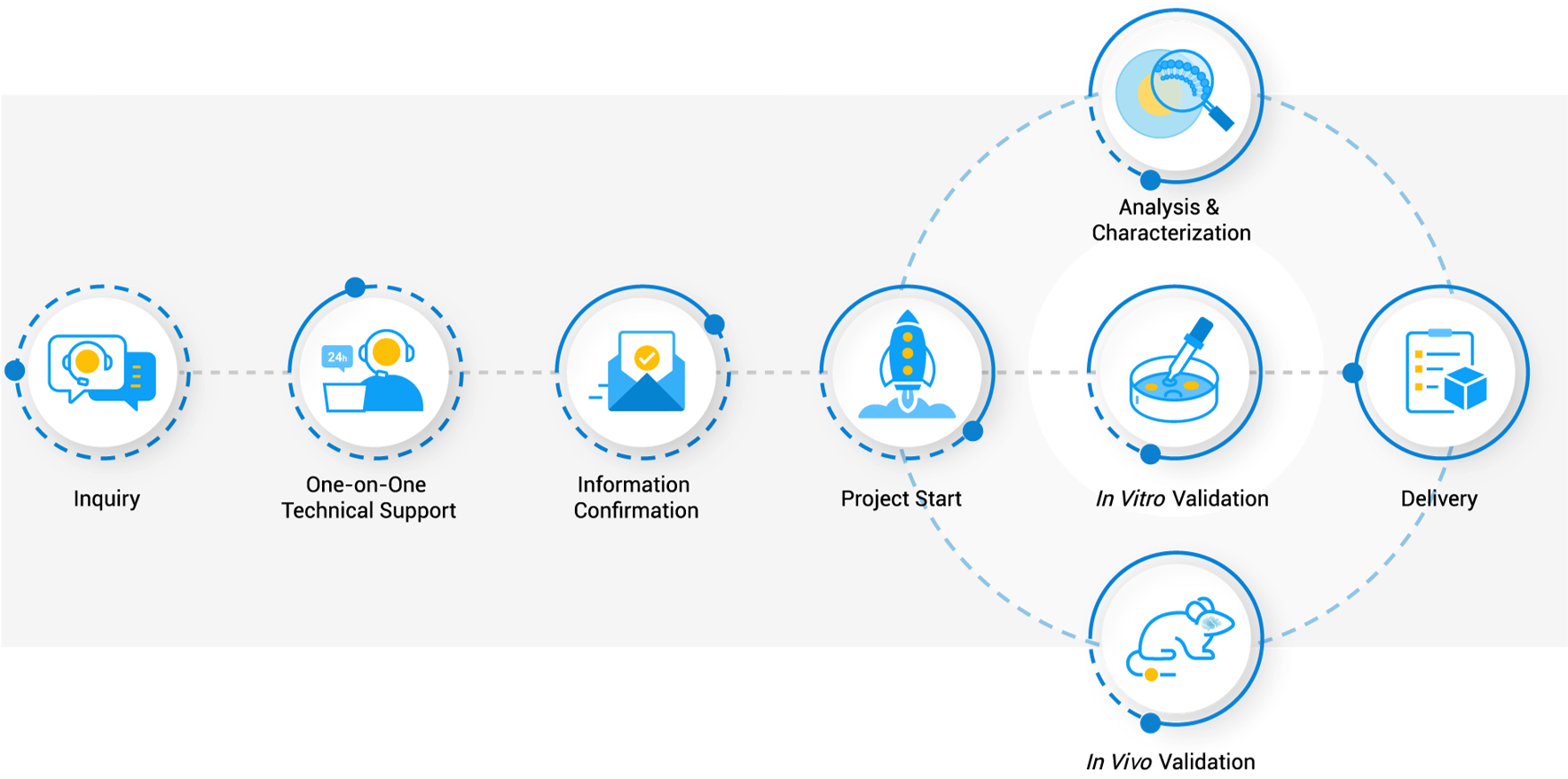
Creative Biolabs is confident in offering customized targeted delivery products and services to meet clients' specific needs. If you are interested in our service, please do not hesitate to contact us for more details.
References
- Jiang, Lei, et al. "Mitochondrion-specific dendritic lipopeptide liposomes for targeted sub-cellular delivery." Nature communications 12.1 (2021): 2390.
- Distributed under Open Access license CC BY 4.0, without modification.