We offer a comprehensive catalog of pre-formulated delivery systems, including liposomes, exosomes, lipid nanoparticles (LNPs), and polymeric nanoparticles, as well as a selection of validated targeted modules such as aptamers, peptides, functionalized lipids, and responsive materials. These are ready for immediate use in your research and development needs.
Integrated Small Molecule Delivery System Development Platform
Overview Solution Application What We Can Offer? Workflow Our Advantages Published Data FAQs
Are you currently facing long drug development cycles, off-target toxicity, and challenges with drug solubility and bioavailability? Creative Biolabs' Integrated Small Molecule Delivery System helps you accelerate drug discovery and enhance therapeutic efficacy by leveraging advanced delivery technologies and innovative engineering techniques. This approach streamlines your projects by combining sophisticated carriers with therapeutic agents, solving critical issues in a single, cohesive solution.
Integrated Small Molecule Delivery System
Small-molecule drugs are the bedrock of pharmaceutical therapy, but their clinical utility is often limited by inherent physicochemical properties. An Integrated Small Molecule Delivery System represents a paradigm shift, where the therapeutic agent is a component of a larger, engineered entity designed for optimal performance. These systems can be categorized by their structure and function. For instance, Drug Self-Delivery Systems (DSDSs) are nanostructures where the drug itself forms the carrier, bypassing traditional limitations. Alternatively, a drug can be encapsulated within or conjugated to a carrier such as a liposome, a polymeric nanoparticle, or a gold or iron oxide nanoparticle. Carrier selection is dictated by pharmaceutical characteristics and clinical objectives. The primary function of these systems is to enhance bioavailability, improve circulation half-life, and enable specific targeting to a disease site. The analyzed literature highlights the evolution of these systems, from simple encapsulation to highly sophisticated, stimuli-responsive prodrugs that are activated by tumor-specific conditions like hypoxia, low pH, or specific enzymes, fundamentally changing the safety and efficacy landscape of small-molecule therapies.
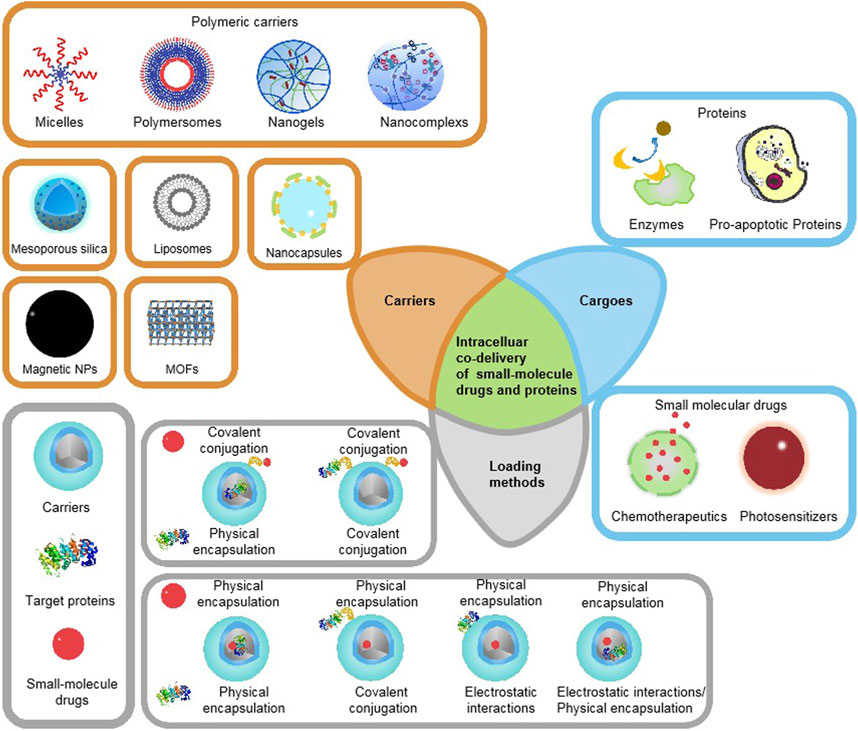 Fig.1 Current therapeutic proteins, small-molecule agents, principal co-delivery system classes, and conventional payload incorporation methodologies.1,3
Our Small Molecule Delivery Solution
Our integrated delivery solutions are meticulously designed to address the unique challenges inherent to your specific small molecule drug. We understand that issues such as poor aqueous solubility, chemical instability in the bloodstream, and non-specific biodistribution can significantly hinder a drug's therapeutic potential. We provide a comprehensive suite of options, backed by our team of experts, to help you navigate these complexities and select the most suitable approach for your project. Our process involves a thorough analysis of your drug's physicochemical properties and your therapeutic objectives, ensuring a rational and evidence-based selection. This tailored approach allows us to create a perfectly matched delivery system that can optimize a drug's performance and unlock its full potential. The following table serves as a quick reference, illustrating how different drug types can be effectively integrated with our various delivery systems to achieve enhanced outcomes such as improved stability, better targeting, and ultimately, a more effective therapeutic product.
Table.1 Different Types of Integrated Small Molecule Delivery System.
| Drug Type | Example Small Molecule Drugs | Delivery System | Primary Advantage |
|---|---|---|---|
| Chemotherapeutics | Doxorubicin, Paclitaxel, Fluorouracil | Liposomes, Polymeric Nanoparticles | Reduced systemic toxicity, enhanced tumor accumulation |
| Immunomodulators | Small-molecule inhibitors | Exosomes, Lipid Nanoparticles (LNPs) | Targeted delivery to immune cells, improved efficacy |
| Enzyme Inhibitors | Tyrosine kinase inhibitors | Gold Nanoparticles | Controlled release, high surface area for conjugation |
| Gene Therapies | siRNA, mRNA | Lipid Nanoparticles (LNPs) | Protection from degradation, efficient cellular uptake |
| Antibiotics | Ciprofloxacin | Self-Assembling Prodrugs | Improved solubility, sustained release |
Application
The applications of Integrated Small Molecule Delivery Systems are vast and rapidly expanding. The ability to precisely control drug localization and release makes these systems a powerful tool for developing safer and more effective treatments across numerous therapeutic areas.
- Cancer Therapy: Overcoming the poor selectivity of conventional chemotherapy. By encapsulating potent chemotherapeutic agents within nanocarriers, we can leverage the enhanced permeability and retention (EPR) effect to passively accumulate drugs within solid tumors. More advanced approaches utilize active targeting through surface ligands (e.g., aptamers, peptides) or by designing stimuli-responsive systems that release their payload only in the tumor microenvironment.
- Chronic Inflammatory Diseases: Delivering therapeutic agents to sites of inflammation, thereby reducing systemic side effects.
- Infectious Diseases: Improving drug delivery to specific pathogens or infected cells to enhance treatment efficacy.
- Neurodegenerative Disorders: Enhancing drug delivery across biological barriers like the blood-brain barrier to treat diseases such as Alzheimer's and Parkinson's.
Contact Us About Bioconjugation Services
What We Can Offer?
Creative Biolabs is at the forefront of targeted drug delivery innovation. Our team of expert biologists, chemists, and engineers brings over two decades of collective experience in developing sophisticated delivery solutions.
Ready-to-Use Products
Customized Services
Our bespoke service allows us to develop tailored delivery systems and novel targeted modules from concept to validation, precisely meeting your project's unique specifications. This includes custom aptamer, peptide, or polymer synthesis and conjugation, as well as optimization of delivery system characteristics for specific disease contexts.
Conjugation Services
Our expertise lies in conjugating selected ligands to various delivery platforms (nanoparticles, liposomes, polymers, etc.), ensuring stable and functional complexes.
Pre-Clinical Validation
We offer robust in vitro and in vivo testing to assess targeting efficiency, cellular uptake, biodistribution, and therapeutic efficacy, providing you with critical data to support your project's progression.
Comprehensive Scientific Support
Partner with us to leverage our deep scientific knowledge, state-of-the-art facilities, and rigorous quality control for your targeted delivery projects, from experimental design to data analysis.
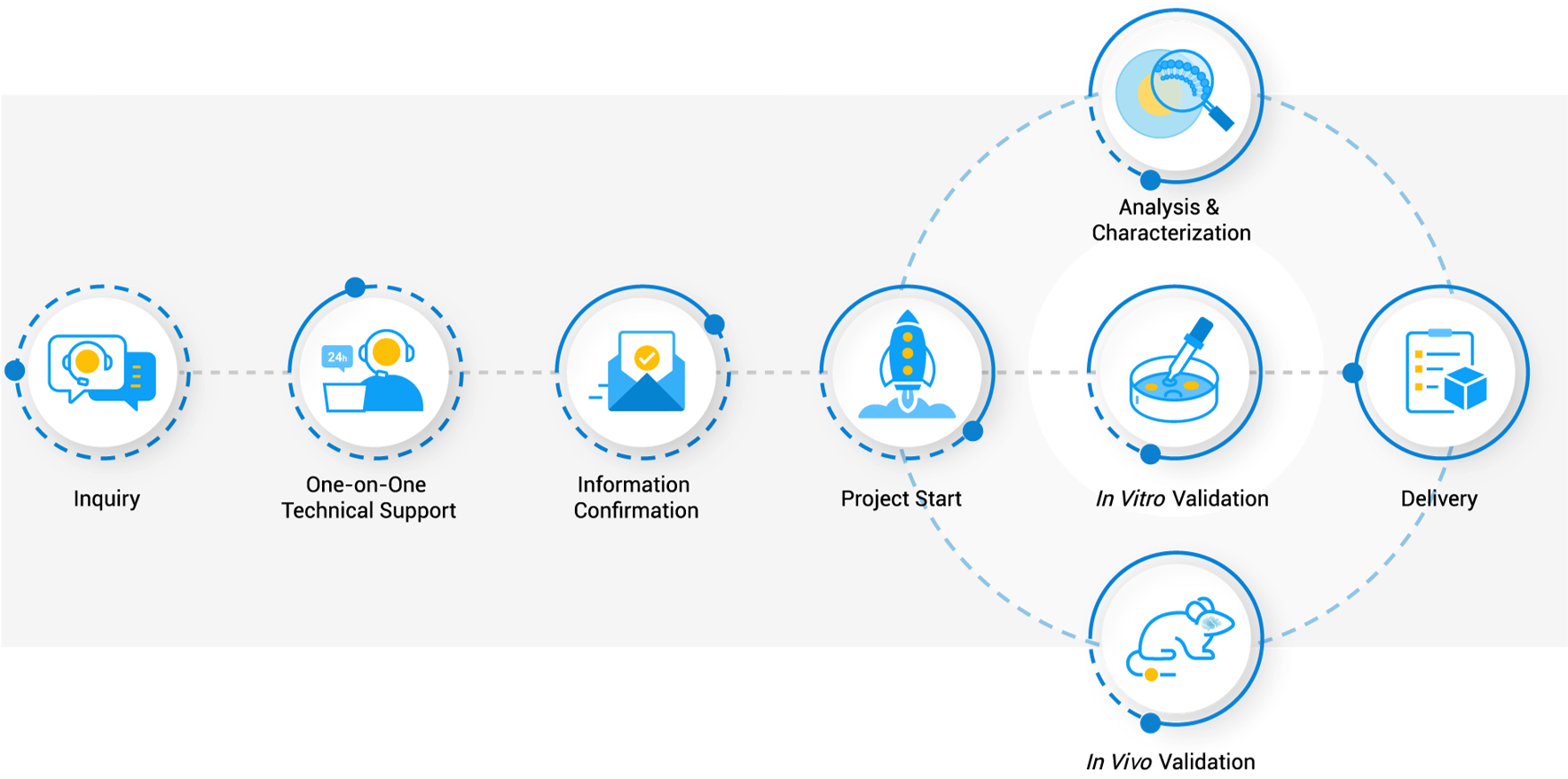
Workflow
Why Choose Us?
Partnering with Creative Biolabs means choosing a path to accelerated drug development, enhanced therapeutic efficacy, and a significant reduction in off-target effects. Our commitment to innovation and scientific excellence ensures that your therapeutic agents reach their targets with unprecedented precision, unlocking new possibilities for disease treatment.
Proven Expertise
Our team of highly specialized biologists, chemists, and engineers possesses deep scientific knowledge in drug delivery systems and targeting module development. We have a track record of success in designing and implementing complex delivery solutions.
Innovative Technology
We leverage state-of-the-art platforms for module synthesis, conjugation, and characterization. This allows for the precise engineering of delivery systems with exceptional control over size, surface chemistry, and functionality.
Tailored Customization & Flexibility
We recognize that every project is unique. Our customized aptamer/peptide design and delivery system optimization services are tailored to your specific therapeutic goals.
Rigorous Quality & Reliability
Our commitment to scientific rigor and stringent quality control ensures reliable, reproducible, and high-quality results for your critical projects. We stand by the data we produce and the products we deliver.
Published Data
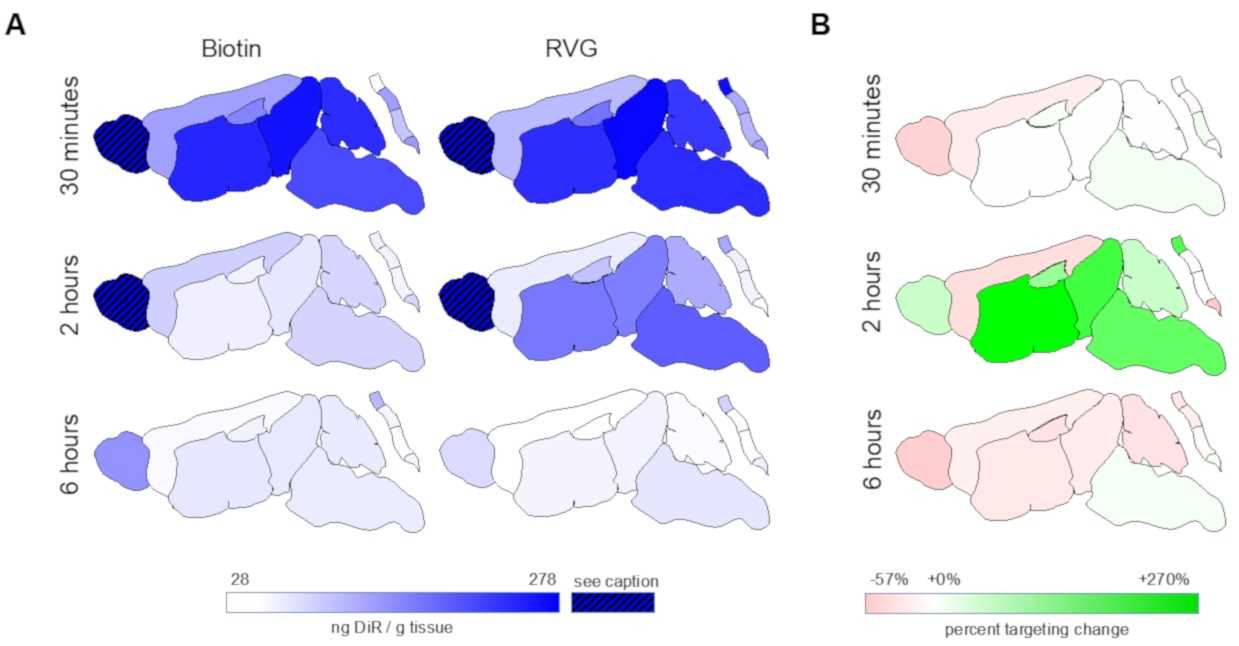 Fig.2 Delivery of payload from intranasally administered nanoparticles varies by central nervous system (CNS) region and surface modification.2,3
The study involved the creation of PLGA nanoparticles loaded with a small molecule called DiR. These nanoparticles were modified with avidin-palmitate and subsequently surface-modified with the RVG-biotin peptide. Characterization of the nanoparticles showed that the RVG-NPs had an average diameter of 129 ± 36 nm, while the control nanoparticles (ctr-NPs) had a diameter of 141 ± 31 nm. To evaluate biodistribution, healthy BALB/c mice received a single intranasal 200 mg/kg nanocarrier dose. The mice were then sacrificed at 0.5, 2, and 6 hours post-administration to analyze the concentration of DiR in various tissues, including the brain, spinal cord, and peripheral organs. The results indicated that the RVG-NPs tended to have a higher delivery to the whole brain compared to ctr-NPs after two hours, although this finding was not statistically significant. The research concluded that interaction with the trigeminal nerve is a critical pathway for the intranasal delivery of nanoparticles to the CNS.
FAQs
Q: How do integrated delivery systems compare to traditional drug formulations?
A: Traditional formulations often struggle with poor solubility, stability, and a lack of specificity, leading to significant off-target effects. Integrated systems are engineered to address these very issues, offering improved drug half-life, enhanced solubility, and targeted delivery, which can result in greater efficacy and a better safety profile.
Q: Is it possible to use these delivery systems for combination therapies?
A: Yes, one of the key advantages is the ability to co-deliver multiple therapeutic agents—such as a small molecule and a protein—in a single nanocarrier. This synergistic approach allows for multi-modal treatment strategies, overcoming drug resistance and improving overall outcomes.
Q: What is a stimuli-responsive system, and how does it work?
A: A stimuli-responsive system is designed to release its drug payload only when triggered by specific biological or physical cues. For example, a system can be engineered to respond to the lower pH or higher enzyme activity found in a tumor, ensuring the drug is activated and released exclusively at the disease site.
Q: What is the typical development timeline for a custom delivery system?
A: The timeline can vary depending on the complexity of the drug and the targeting strategy. Our process typically involves initial consultation, design and synthesis, characterization, and a validation phase. We work closely with our clients to establish a realistic and efficient timeline for each project.
Q: How do these systems improve drug bioavailability?
A: By protecting the drug from degradation and premature clearance by the body's immune system, these systems ensure a larger fraction of the drug reaches its intended target. Furthermore, they can enhance a drug's solubility, which is often a key limiting factor for bioavailability, and promote efficient cellular uptake.
In summary, Creative Biolabs' Integrated Small Molecule Delivery System is a comprehensive solution designed to overcome the critical barriers in modern drug development. We offer a versatile portfolio of ready-to-use delivery systems and a full suite of customization and validation services to meet your specific project needs.
Connect with our experts for project-specific consultation and detailed insights.
References
- Cheng, Zhihong et al. "Nanocarriers for intracellular co-delivery of proteins and small-molecule drugs for cancer therapy." Frontiers in bioengineering and biotechnology vol. 10 994655. 6 Sep. 2022, https://doi.org/10.3389/fbioe.2022.994655
- Chung, Eugene P et al. "Targeting Small Molecule Delivery to the Brain and Spinal Cord via Intranasal Administration of Rabies Virus Glycoprotein (RVG29)-Modified PLGA Nanoparticles." Pharmaceutics vol. 12,2 93. 24 Jan. 2020, https://doi.org/10.3390/pharmaceutics12020093
- Distributed under Open Access license CC BY 4.0, without modification.
Our services are For Research Use Only. We do not provide services to individuals.
Online Inquiry