Payload Encapsulation Service for Targeted Delivery
The future of medicine and advanced materials isn't just the payload; it's the delivery. Effectively translating a promising molecule, nucleic acid, or protein into a viable, high-performance product requires overcoming complex biological and chemical barriers. Creative Biolabs empowers researchers to conquer these challenges with our modular delivery platforms. Our deep expertise in custom encapsulation and targeted delivery systems is designed to accelerate your research from the bench to real-world application.
Discuss Your Payload With an Expert
The Core of Payload Encapsulation
The Strategic Value of Payload Encapsulation
Payload encapsulation is the sophisticated process of engineering a protective, functional carrier system around a valuable active molecule (the "payload"). This advanced methodology is no longer a research novelty but a fundamental requirement for success. It is the key to unlocking the full potential of an API, protecting it from degradation, improving its solubility and bioavailability, and precisely controlling its release kinetics and target-site accumulation.
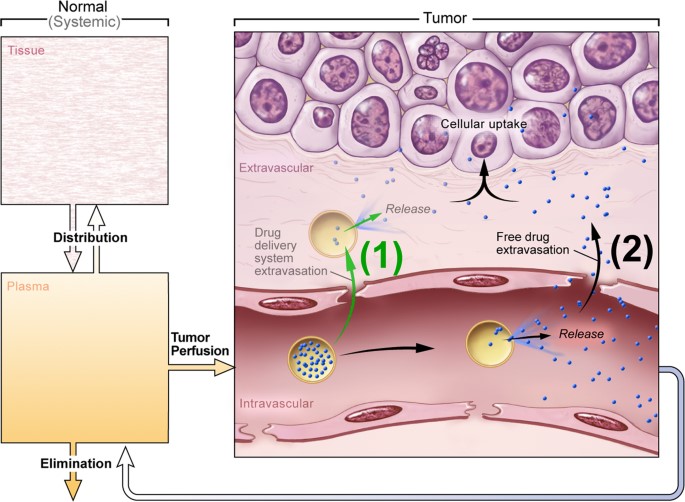 Fig. 1 Schematic of intravascular triggered drug delivery systems.1
Why Encapsulation is Critical for Research
A powerful therapeutic agent is only effective if it reaches its designated site of action. The primary goal of targeted drug delivery is to improve the therapeutic index, maximizing drug concentration at the disease site while minimizing exposure to healthy tissues.
Your research faces significant hurdles:
- Biological Barriers: Navigating the cell membrane, crossing the blood-brain barrier (BBB), and avoiding rapid clearance by the reticuloendothelial system (RES).
- Payload Stability: Protecting fragile payloads, especially nucleic acids (like mRNA and siRNA) and proteins, from enzymatic degradation in the bloodstream.
- Targeting Specificity: Achieving precise delivery to a specific cell type, a diseased tissue, or even a discrete subcellular organelle.
Traditional delivery methods often fail, leading to poor efficacy and unacceptable toxicity. Creative Biolabs addresses these critical gaps.
Our Solution: A Modular Delivery Platform
Creative Biolabs addresses these critical gaps with a powerful, flexible concept: modularity. We combine advanced module delivery systems (The "Vehicle") with specific targeted modules (The "Guide"). This "mix-and-match" approach allows us to engineer a delivery vector precisely tailored to your unique payload and target application, whether it's in disease, bioreactor, or crop.
Our Comprehensive Encapsulation Services
We provide specialized encapsulation services and deep expertise for virtually any bioactive molecule.
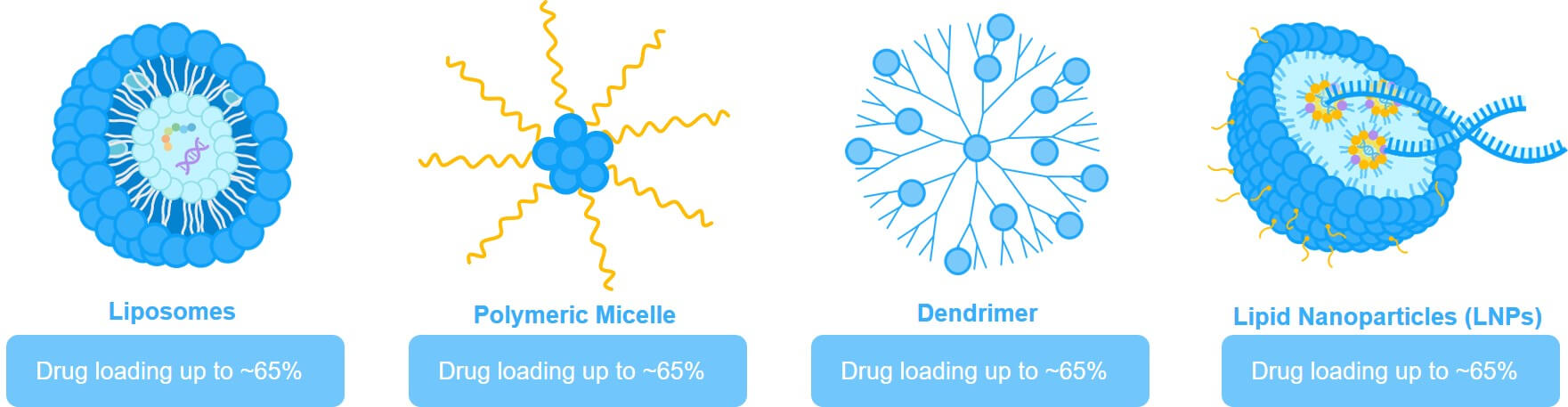 Fig. 2 The capacity of nanoparticles for therapeutic-drug cargoes.

Key Payloads Handled:
Example Applications & Benefits:
Workflow
Enabling Breakthroughs Across Research & Industry
Our precision encapsulation and delivery technologies enable innovation not only in therapeutics but across a wide spectrum of advanced research and industrial fields.
- Pharmaceutical & Therapeutic Development: We enable advanced therapeutic programs, from targeted oncology delivery and in vivo gene therapy (mRNA, siRNA, CRISPR) to engineering formulations that cross the blood-brain barrier (BBB) for neurological applications.
- Cosmeceuticals & Dermatology: Enhancing the stability and skin penetration of active ingredients (e.g., retinol, antioxidants, peptides) for advanced, high-efficacy skincare formulations.
- Agriculture & Crop Science: Developing novel formulations for the targeted, protected delivery of dsRNA (for pest control), fertilizers, or herbicides, reducing environmental impact and increasing crop yield.
- Food Science & Nutraceuticals: Microencapsulation of vitamins, probiotics, flavors, and bioactive compounds to improve stability, mask taste, and enhance bioavailability in functional foods.
- Animal Health & Veterinary Medicine: Formulating next-generation animal vaccines (e.g., mRNA-based) or creating targeted delivery systems for livestock and companion animal therapeutics.
- Industrial Materials: Encapsulation of sensitive components like dyes, catalysts, or self-healing agents for use in advanced materials, textiles, and manufacturing processes.
Why Choose Creative Biolabs?
Deep Modular Expertise
Our unique platform provides a flexible, systematic approach to solving complex delivery challenges. This modularity allows for rapid iteration and optimization.
Accelerate Your R&D
Leverage our expertise to get your formulation right the first time. We help you move faster from concept to validated data, reducing timelines and R&D costs.
Payload-Agnostic Platform
From small molecules to large biologics and nucleic acids, we have the proven experience to handle and protect your specific payload.
A True Scientific Partner
Our team of Ph.D-level scientists speaks your language. We collaborate closely to understand your goals and design a solution that ensures your project's success.
End-to-End Solutions
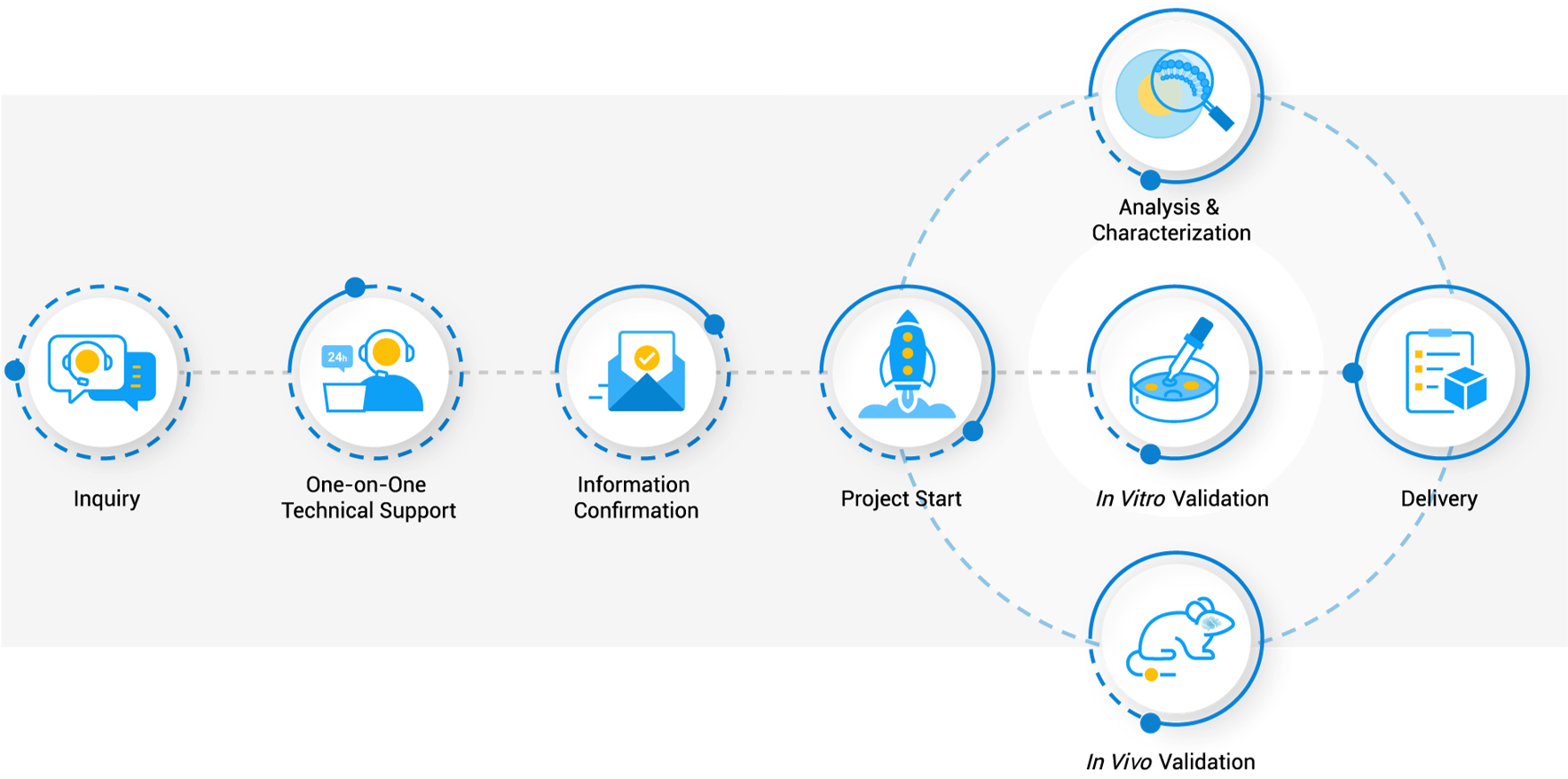
We offer a complete service, from initial feasibility and formulation design to optimization, quality control, and delivery of a research-ready product.
Stop letting poor delivery stall your most promising therapeutics. Partner with us to overcome your most complex delivery challenges. Contact our team today to discuss your project and discover how Creative Biolabs' modular platform can deliver your payload with precision.
Related Services & Products
Related Services
Related Products
| Product Name | Description | Inquiry |
|---|---|---|
| Lyophilized LNP Formulation Kit (RNA) | It contains a lipid mixture and buffer for preparing LNP loaded with RNA. | |
| Targeted LNP Formulation Kit | With our unique targeted lipid mixture, LNPs targeting the lungs, spleen, muscles, liver, etc. can be developed. | |
| RNA-LNP Encapsulation Assay Kit | A quantitative assay kit (e.g., RiboGreen-based) to quickly determine encapsulation efficiency. | |
| LNP Formulation Kit (Universal) | It is used to prepare LNP from various effective drug, including nucleic acids, proteins, etc. |
FAQs
What is the typical encapsulation efficiency (EE%) for your services?
Encapsulation efficiency is highly dependent on the payload and the delivery system used. For example, our optimized LNP-nucleic acid services regularly achieve >90% EE. For small molecules, it can range from 50% to >95%. We work to optimize this as a key deliverable.
What is the minimum amount of payload you require to start a project?
This varies by payload. For initial formulation screening of a nucleic acid, 0.5-1 mg is typically sufficient. For small molecules or proteins, 1-5 mg is a comfortable starting point for our development process.
How do you characterize the final formulation?
Every standard project includes a full QC report. This details particle size (hydrodynamic diameter), polydispersity index (PDI), and zeta potential via Dynamic Light Scattering (DLS). We also perform encapsulation efficiency analysis (e.g., RiboGreen assay for RNA, HPLC for small molecules) and can add further analysis like cryo-TEM or stability studies as needed.
Do you work with novel or proprietary lipids/polymers?
Yes. We can work under a CDA (Confidential Disclosure Agreement) or MTA (Material Transfer Agreement) to incorporate your proprietary targeting ligands, lipids, or polymers into a formulation.
What is the final deliverable I will receive?
The standard final deliverable is a research-grade batch of your encapsulated payload suspended in a buffer of your choice. You will also receive a comprehensive technical report detailing the formulation protocol, all optimization data, and the final QC analysis.
Can you help me target a specific organ or cell type?
Yes. This is a core part of our service. We can either incorporate a targeting module (peptide, antibody, etc.) provided by you, or we can consult on and source established targeting ligands for your cell type of interest (e.g., RGD peptides for integrins, transferrin).
Reference
- Ten Hagen, Timo LM, et al. "Drug transport kinetics of intravascular triggered drug delivery systems." Communications Biology 4.1 (2021): 920. https://doi.org/10.1038/s42003-021-02428-z. Distributed under Open Access license CC BY 4.0, without modification.