

The fundamental application involves directing nanocarriers to specific, overexpressed surface markers on tumor cells (e.g., HER2 in breast cancer).
Active Targeting Strategies for Payload Delivery
At Creative Biolabs, we specialize in developing cutting-edge active targeting strategies for delivery systems. We help clients transition from conventional therapeutics to molecularly precise, targeted treatments, solving issues like systemic toxicity, poor pharmacokinetics, and multi-drug resistance in complex diseases.
Click Here to View more about our Services
Introduction to Active Targeting
Active targeting delivery systems constitute a foundational strategy in precision medicine, enabling highly specific therapeutic intervention through engineered molecular recognition. Unlike passive delivery, which relies on the diffusion of nanocarriers, active targeting involves engineering nanocarriers to achieve a high-affinity molecular handshake with target cells. This specific interaction leads to receptor-mediated endocytosis, ensuring the therapeutic payload is internalized precisely where needed, dramatically enhancing the therapeutic index and moving beyond the limitations of mass-effect drug distribution.

Ligand-Based Delivery System
The most direct Active Targeting strategy involves modifying the nanocarrier with high-affinity biological molecules, such as antibodies (e.g., targeting HER2), peptides (e.g., RGD), or small molecules (E.g., Folate). This ensures the carrier binds exclusively to specific, overexpressed receptors on the diseased cell surface.
Stimuli-Responsive Delivery System
These "smart" nanocarriers are engineered to release their payload only when triggered by internal or external cues. Internal cues include the tumor's acidic pH or high intracellular Redox potential (glutathione), while external cues may include light or localized heat.
Biomimetic Drug Delivery Systems
These systems leverage natural components, such as coating nanocarriers with cell membranes (e.g., red blood cell or platelet membranes). This 'stealth' technique allows the nanocarriers to evade immune clearance and naturally home in on the diseased area, mimicking endogenous targeting.
Advantages of Active Targeting-Based Delivery System
High Specificity & Efficacy
Ligand-receptor recognition ensures highly localized cellular binding, maximizing the therapeutic dose delivered per cell.
Overcoming MDR
The primary benefit in oncology, as active targeting uses receptor-mediated endocytosis, effectively bypassing the P-glycoprotein efflux pump mechanism responsible for multi-drug resistance.
Reduced Systemic Toxicity
Minimal free drug is released systemically, drastically reducing exposure and side effects on healthy tissues.
Optimized Pharmacokinetics (PK)
Carriers extend the drug's half-life and improve its stability and solubility in circulation, ensuring the payload remains intact until it reaches the target.
Theranostic Potential
The ability to combine diagnostic imaging agents with therapeutic payloads in a single system for simultaneous diagnosis, guided delivery, and real-time monitoring.
Applications of Active Targeting in Delivery Systems
Targeting Cancer Cell Markers
Precision Therapy for Bone Malignancies
Active targeting is critical for treating bone tumors like osteosarcoma. Bone-targeting ligands (e.g., bisphosphonates) are used to concentrate nanocarriers at the mineral phase of the bone lesion, significantly enhancing local drug concentration.
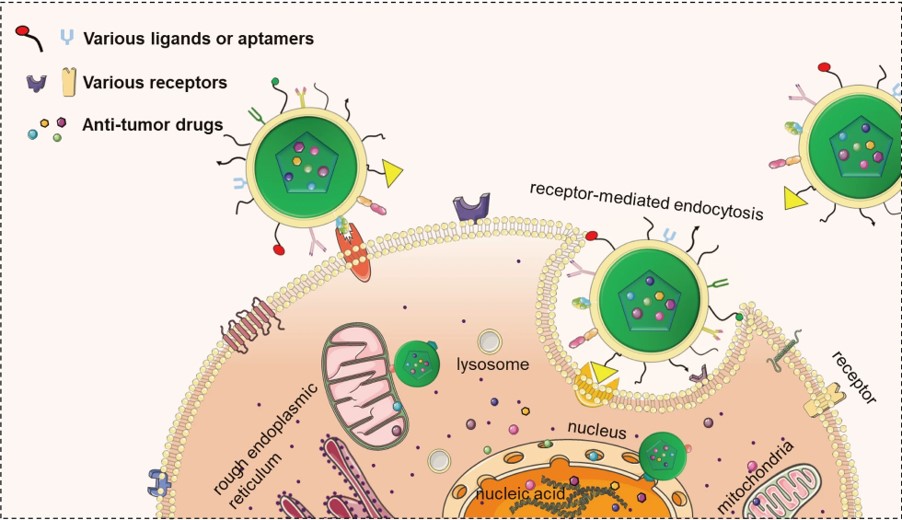 Fig.1 The osteosarcoma cell internalization nanocarriers by active targeting.1
Enabling Potent, Problematic Drugs
Active targeting is vital for delivering potent, yet problematic, drugs like camptothecin (CPT), increasing its water solubility, bioavailability, and stability while minimizing its inherent systemic toxicity.
Anti-Angiogenic Therapy
The application extends to disrupting the tumor's blood supply by targeting factors like VEGFRs on tumor-feeding vessels, effectively starving the tumor.
Targeted Gene Delivery
Active targeting is used for the precise delivery of genetic materials (like siRNA or mRNA) to specific cell types, opening doors for advanced gene therapy treatments.
Creative Biolabs offers full-spectrum active targeting development services, spanning ligand synthesis and carrier fabrication. Drive your pipeline forward with our targeted module and chemical synthesis expertise. Contact our scientific team today to unlock the potential of precision medicine.
Reference
- Shi, Pengzhi, et al. "Active targeting schemes for nano-drug delivery systems in osteosarcoma therapeutics." Journal of Nanobiotechnology 21.1 (2023): 103. Distributed under Open Access license CC BY 4.0, without modification. https://doi.org/10.1186/s12951-023-01826-1
Our services are For Research Use Only. We do not provide services to individuals.
Online Inquiry