Small Molecule Ligand Synthesis Service for Targeted Drug Delivery
Targeted drug delivery is the cornerstone of next-generation therapeutics, transforming how we treat disease by directing potent payloads specifically to the site of action. Whether you are developing nucleic acid therapeutics, antibody-drug conjugates (ADCs), or liposomal formulations, the precision of your delivery system relies heavily on the affinity and specificity of the targeting ligand. At Creative Biolabs, we bridge the gap between biological concept and chemical reality. Creative Biolabs specializes in the custom design and synthesis of high-purity small molecule ligands, empowering researchers to overcome cellular barriers and achieve superior therapeutic indices.
Obtain Solutions for Small Molecule Ligand Development
The Power of Small Molecule Ligand Targeting
The Strategic Advantage of Small Molecule Ligands
Small molecule ligands function as sophisticated targeting vectors, exploiting high-affinity receptor-ligand interactions to facilitate the active cellular uptake of therapeutic payloads. Unlike high-molecular-weight biologics (e.g., monoclonal antibodies), small molecules (typically <1000 Da) possess unique physicochemical properties that enable superior biodistribution and intracellular trafficking.
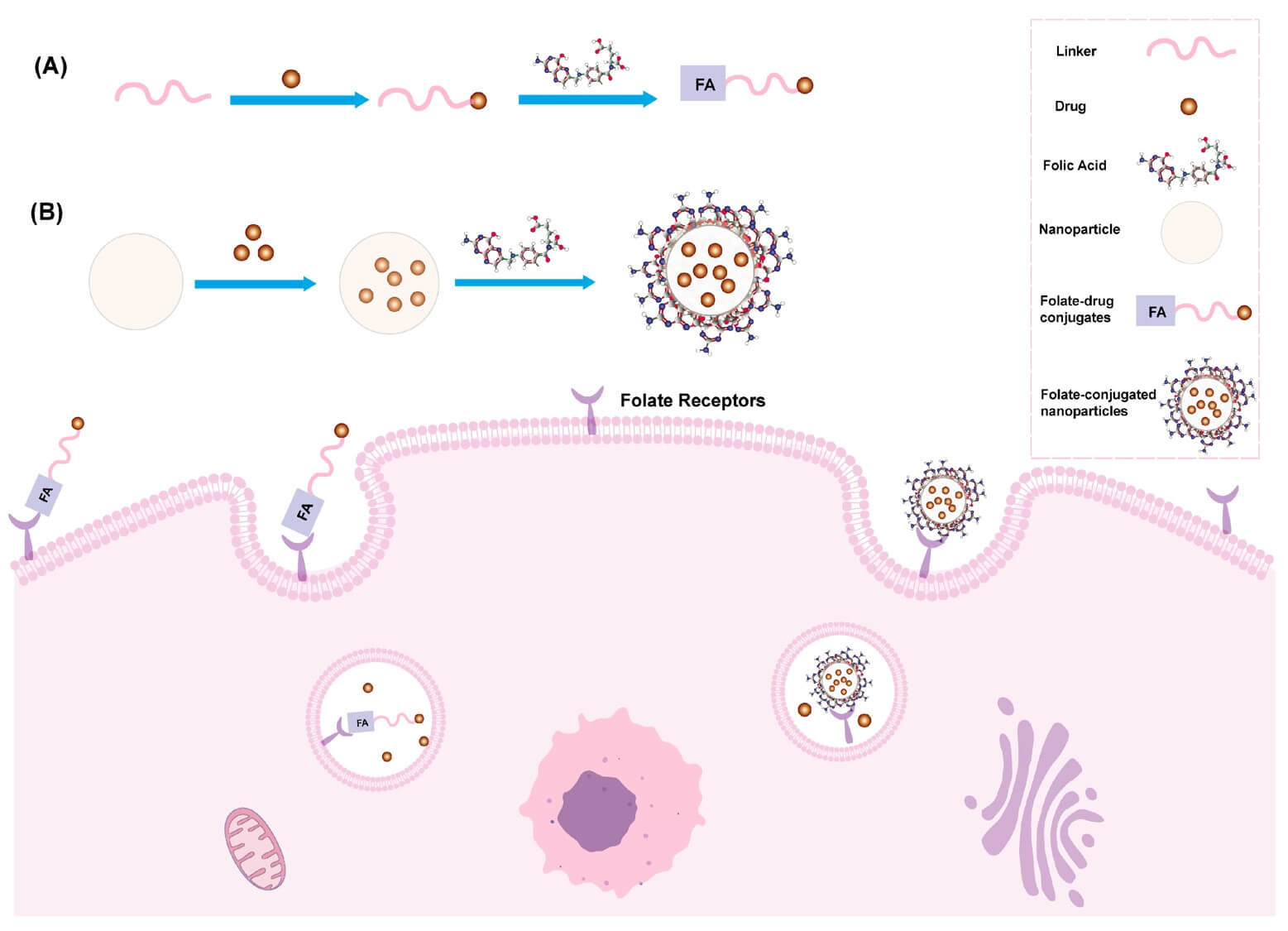 Fig. 1 Folate-mediated targeted drug delivery system.1
- Deep Tissue Penetration: Efficient diffusion into dense solid tumors (TME) often inaccessible to bulky antibodies.
- Low Immunogenicity: Synthetic nature minimizes the risk of neutralizing antibody formation (ADAs).
- Scalable Manufacturing: Chemically defined routes ensure high consistency and cost-effective scale-up.
- Tunable Properties: Precise modifications allow for optimized stability, affinity (Kd), and pharmacokinetics.
- Versatile Conjugation: Diverse functional handles enable site-specific attachment to payloads or nanoparticles.
In the landscape of targeted delivery, utilizing small molecule ligands generally falls into two primary strategies:
Strategy A: Small Molecule-Drug Conjugates (SMDCs)
This approach acts as a miniaturized, highly penetrating alternative to Antibody-Drug Conjugates (ADCs), where a high-affinity small molecule replaces the antibody to achieve targeted cytotoxicity. Mechanistically, the targeting ligand is covalently linked directly to a cytotoxic payload or therapeutic agent via a specialized cleavable or non-cleavable linker, forming a precise "Ligand-Linker-Payload" construct. The primary advantage of this strategy lies in its pharmacokinetics: the smaller molecular size allows for rapid and deep tissue penetration into solid tumors, while unbound conjugates are cleared systemically at a faster rate. This can substantially reduce off-target toxicity compared to large biologics.

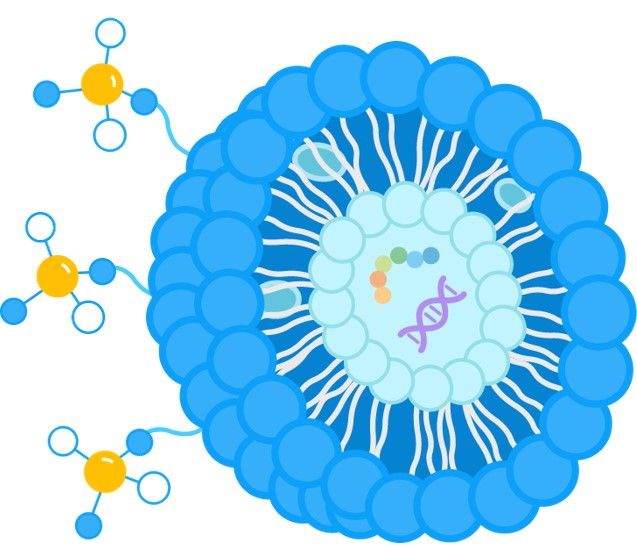
Common Small Molecule Ligands in Targeted Drug Delivery
Targeting ligands are broadly categorized into vitamins, carbohydrates, and synthetic small molecules. Currently, Vitamin-based ligands, with Folate as the most prominent example, occupy a dominant position in the field of active targeting. Due to the significant overexpression of vitamin receptors on a wide variety of cancer cells and their exceptionally high binding affinity, Folate and similar vitamin derivatives serve as the industry "gold standard" for validating novel drug delivery systems.
Below is a selection of high-value small molecule ligands we routinely utilize in our formulations:
| Specific Ligand | Target Receptor | Primary Applications |
|---|---|---|
| Folate | Folate Receptor (FRα) | Ovarian, Breast, Lung, and Kidney Cancers |
| Vitamin A (Retinoic Acid) | RBP Receptors / STRA6 | Hepatic Stellate Cell targeting (Liver Fibrosis) |
| Vitamin B12 (Cobalamin) | CD320 / Transcobalamin II Receptor | Oral delivery improvement; Tumor cell targeting |
| Vitamin B1 (Thiamine) | Thiamine Transporters (THTR1/2) | Crossing the Blood-Brain Barrier; Breast Cancer |
| Vitamin B2 (Riboflavin) | Riboflavin Carrier Protein (RCP) | Metabolically active tumors (Prostate, Breast) |
| Biotin (Vitamin H) | Sodium-Dependent Multivitamin Transporter (SMVT) | Tumor targeting; Blood-Brain Barrier (BBB) transport |
Precision Ligand Engineering & Synthesis Services
Creative Biolabs offers a fully integrated platform for the discovery, synthesis, and conjugation of targeting ligands. We provide end-to-end solutions tailored to your specific delivery modality. Beyond custom synthesis, we also supply a robust catalog of ready-to-use functionalized lipid products combined with small molecule ligands (such as Folic Acid) designed to streamline your formulation process.
Custom Receptor Specific Ligand Synthesis

Move beyond catalog reagents with our bespoke synthesis platform. We utilize expert organic chemistry to synthesize high-affinity targeting moieties tailored precisely to your specifications, whether based on your unique designs or published references.
- Custom Synthetic Route Design: Development of robust synthetic pathways for complex organic molecules, heterocycles, and chiral compounds to meet your project needs.
- Synthesis for SAR Optimization: Iterative synthesis of ligand analogs to support your structural optimization efforts for maximizing Kd and selectivity.
- Reference Compound Synthesis: Synthesis of established ligands based on academic literature or client-provided technical data for internal benchmarking purposes.
- High-Purity Production: Production of ligands with >98% purity suitable for sensitive biological assays and reliable data generation.
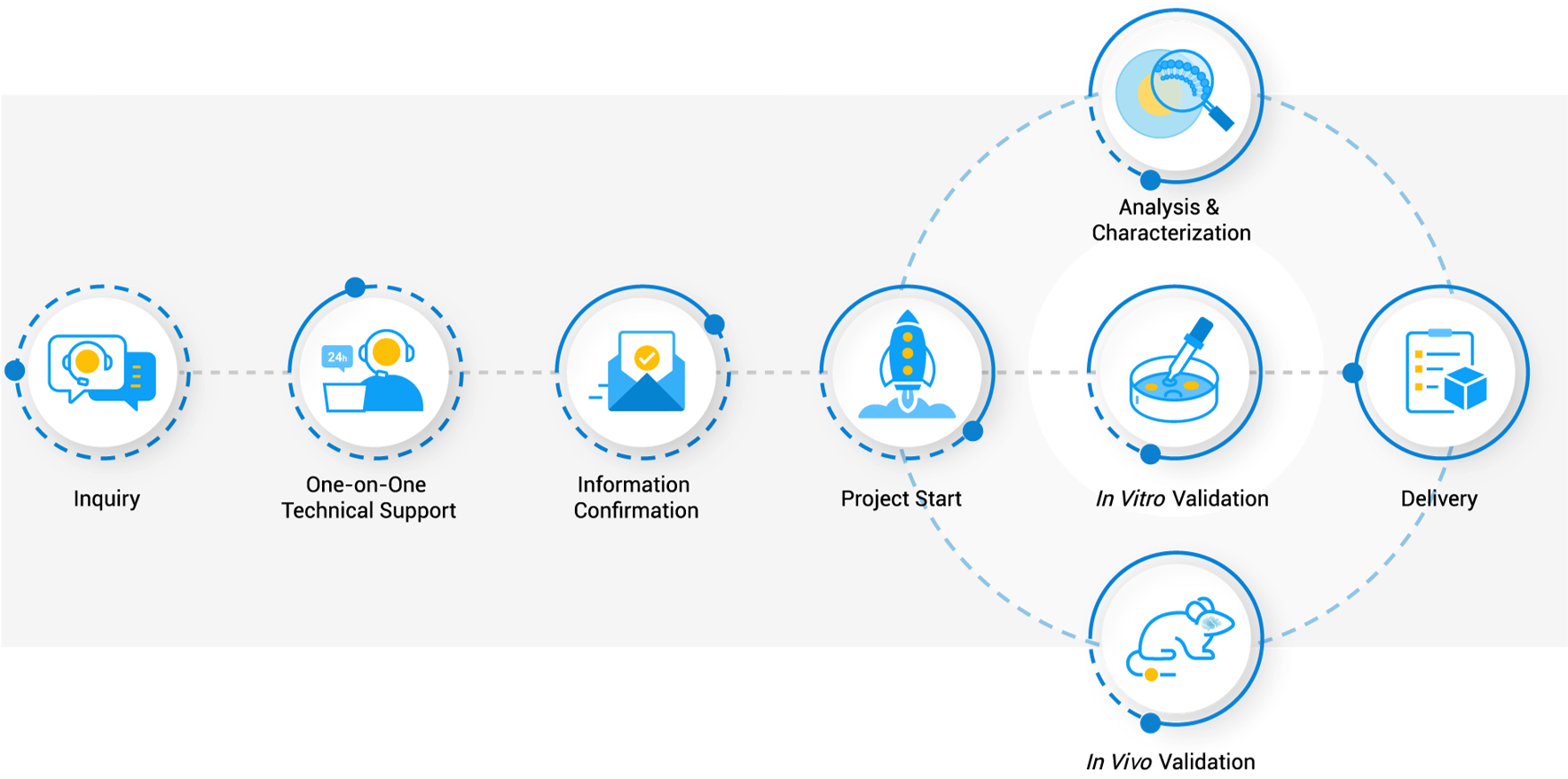
Workflow
Unlocking Therapeutic Potential with Small Molecule Ligand
Our small molecule ligand synthesis services are driving innovation across the most challenging frontiers of medicine.
- Next-Generation SMDCs: Developing potent anticancer therapeutics by linking cytotoxic agents to small molecule ligands that target receptors overexpressed in solid tumors, minimizing systemic exposure.
- Active Targeting of LNPs for Gene Therapy: Utilizing GalNAc or Anisamide-conjugated lipids to guide mRNA-loaded LNPs to hepatocytes or lung cancer cells, unlocking the potential of extrahepatic delivery.
- Crossing the Blood-Brain Barrier (BBB): Leveraging receptor-mediated transcytosis via small molecule ligands targeting the transferrin or insulin receptors to deliver neuroprotective agents to the CNS.
- Diagnostic Imaging (Theranostics): Conjugating small molecule ligands to radioisotopes or fluorophores for precise tumor imaging and patient stratification.
Why Choose Creative Biolabs?
We define excellence by our ability to solve complex chemical problems in the context of biological function.
Deep Expertise in Small Molecule Ligands
Unlike general CROs, we focus specifically on targeting moieties. We understand the SAR required for high-affinity binding.
Integrated "Module" Philosophy
We design ligands not just as isolated molecules, but as functional components of module delivery systems. We ensure compatibility with LNP formulations and bioconjugation conditions.
Complex Chemistry Capabilities
Our team excels in stereoselective synthesis, carbohydrate chemistry (Glycochemistry), and peptidomimetic design.
Translational Quality Standards
We provide impurity profiling and stability data, essential for IND-enabling studies.
Creative Biolabs is dedicated to advancing the frontiers of targeted drug delivery. Our ligand synthesis services provide the essential chemical tools you need to turn broad-spectrum cytotoxicity into precision therapy. By combining expert organic synthesis with a deep knowledge of biological barriers, we help you achieve the therapeutic index your project deserves.
Related Services & Products
Related Services
Chemical Synthesis Services
Related Products
We offer a diverse catalog of high-quality, ready-to-use small molecule ligand conjugates and lipid derivatives. For a more comprehensive selection of small molecule ligand products, please browse our Functionalized Lipids catalog.
| Product Name | Description | Inquiry |
|---|---|---|
| DSPE-PEG-Folate | Phospholipid-PEG conjugate functionalized with Folic Acid for tumor targeting. | |
| DSPE-SS-PEG-Folate | Reduction-sensitive (disulfide) cleavable PEG-lipid with Folate targeting. | |
| DOPE-PEG-Folate | Helper lipid derivative (DOPE) conjugated to Folate via PEG spacer. | |
| DSPE-PEG-Biotin | DSPE-PEG functionalized with Biotin for avidin/streptavidin strategies. | |
| DSPE-SS-PEG-Biotin | Cleavable disulfide linker variant of DSPE-PEG-Biotin. | |
| DOPE-PEG-Biotin | DOPE-PEG conjugate with Biotin handle for liposomal modification. |
FAQs
What is the advantage of using small molecule ligands over antibodies for targeting?
Small molecule ligands generally offer better tissue penetration (especially in solid tumors), lower immunogenicity, higher stability, and significantly lower manufacturing costs compared to antibodies.
Can you synthesize ligands for Small Molecule-Drug Conjugates (SMDCs)?
Yes. We specialize in synthesizing the complete SMDC construct, including the targeting ligand, the cleavable linker, and the payload.
Do you offer ligand-modified lipids for LNP formulation?
We can synthesize custom DSPE-PEG-Ligand or DMG-PEG-Ligand conjugates to your specifications, allowing for direct incorporation into your LNP manufacturing process.
Can you help select the best ligand for my target tissue?
Yes. Our scientific team can consult on the expression profiles of various receptors and recommend the most appropriate small molecule ligand class (e.g., Folate vs. RGD) for your specific indication.
Reference
- Yan, Shuxin, et al. "Different targeting ligands-mediated drug delivery systems for tumor therapy." Pharmaceutics 16.2 (2024): 248. https://doi.org/10.3390/pharmaceutics16020248. Distributed under Open Access license CC BY 4.0, without modification.