Our extensive product library features pre-validated components for both delivery systems (e.g., liposomes, exosomes, LNPs, polymeric nanoparticles) and targeting units (e.g., aptamers, peptides, functionalized lipids, targeted polymers). These are ready to support your research and development needs.
Cancer Cell Targeting Module Development Service
Overview Cancer Cell Targeting Solution Targeting Module What We Can Offer? Workflow Our Advantages Published Data FAQs
Are you currently facing challenges such as poor therapeutic efficacy due to off-target toxicity, the development of multidrug resistance, or difficulty in delivering payloads specifically to cancer cells? Creative Biolabs' specialized Cancer Cell Targeting Module Development services help you overcome these hurdles. By engineering advanced delivery systems with highly specific targeting modules, we enable precise delivery of therapeutic agents to cancer cells, minimizing side effects and enhancing treatment outcomes through innovative protein and peptide engineering techniques.
Overview
The paradigm of cancer treatment is shifting away from broad, systemic therapies toward highly precise, targeted interventions. Traditional chemotherapy, while effective, often results in severe side effects due to its non-specific toxicity to both cancerous and healthy cells. Targeted therapy, in contrast, aims to deliver therapeutic agents specifically to malignant cells by exploiting their unique molecular signatures. These unique molecular signatures, which can include mutated proteins, overexpressed receptors, or specific antigens, serve as crucial identification tags for the modules. For instance, in addition to HER2 in breast cancer, the epidermal growth factor receptor (EGFR) is a key biomarker in various solid tumors like lung and colorectal cancer. Cancer Cell Targeting Module Development is at the forefront of this revolution. These modules are small, engineered components—such as peptides, antibodies, or aptamers—designed to recognize and bind to these specific receptors or antigens that are overexpressed on the surface of cancer cells. This approach not only enhances the therapeutic efficacy by concentrating the drug payload at the tumor site but also significantly reduces the off-target toxicity that plagues conventional treatments.
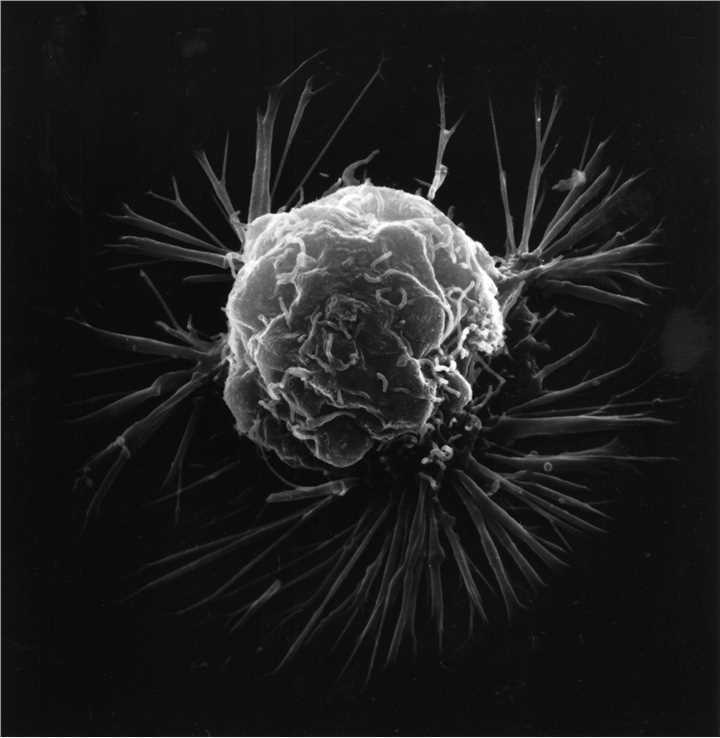 Fig.1 Breast cancer cell. Distributed under CC BY-SA 4.0, from Wiki, without modification.
Creative Biolabs' Cancer Cell Targeting Solution
Our cancer cell targeting strategy is built on a dual-approach model, combining both passive and active targeting methods to achieve optimal therapeutic delivery. This guarantees enhanced fractions of therapeutic cargo attain designated biological destinations.
Passive Targeting
Our approach uses nanoparticles (10-200 nm) that accumulate naturally in the tumor microenvironment, a process known as the Enhanced Permeability and Retention (EPR) effect. This exploits the disorganized nature of tumor blood vessels, which allows nanoparticles to leak into the tumor's interstitial space, while healthy vessels prevent this accumulation. This provides a foundational layer of tumor selectivity.
Active Targeting
Active targeting is a core strategy involving the modification of our delivery platforms with unique ligands engineered to attach to receptors abundant on cancer cells. This ligand-receptor interaction enables precise cellular identification and uptake, often through endocytosis. This distinction between malignant and normal cells significantly improves the selective transport of the therapeutic payload and decreases adverse effects on the body.
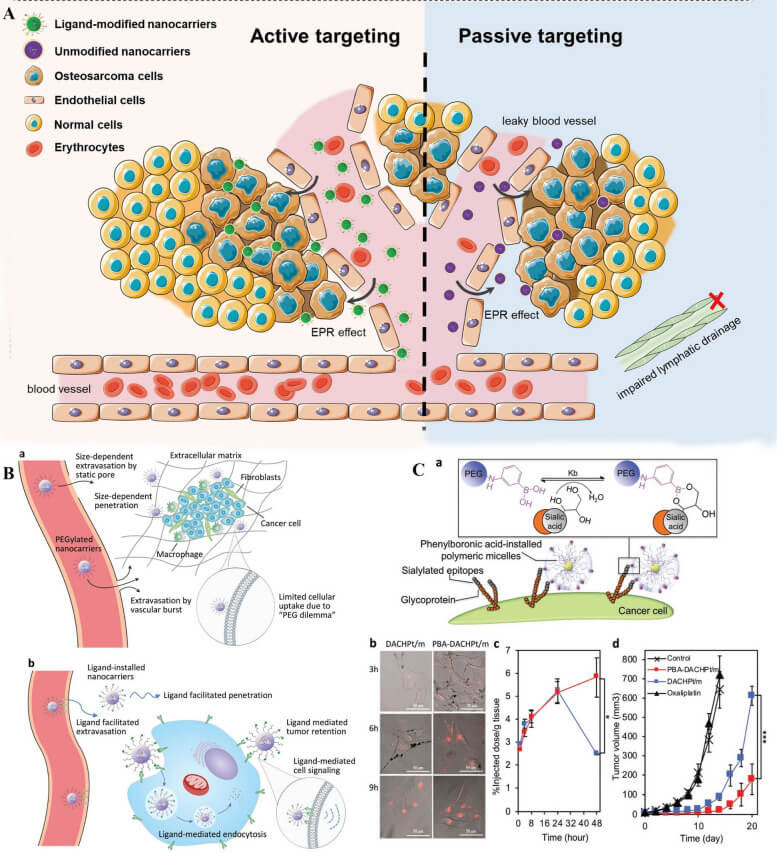 Fig.2 An illustrative diagram depicting the concepts of active and passive targeting in nano-delivery systems for anti-tumor treatment.1,3
Cancer Cell Targeting Module
The cornerstone of Creative Biolabs' precision drug delivery platform lies in our advanced targeting modules. These modules are engineered to steer our delivery systems straight to specific types of cancer cells. This selective recognition is achieved through high-affinity binding to unique surface markers expressed on the target cells, ensuring that therapeutic payloads accumulate precisely where they are needed, minimizing off-target effects and maximizing therapeutic efficacy.
Creative Biolabs' diverse library of targeted modules provides unparalleled flexibility in achieving precise cancer cell delivery. Each module type offers distinct advantages in terms of specificity, stability, and ease of conjugation to our various delivery systems.
| Ligand Type | Mechanism of Action | Targeted Marker(s) | Advantages/Application |
|---|---|---|---|
| Antibodies | Highly specific proteins that bind to unique antigens with exceptional affinity. |
|
Exceptional specificity and a well-established development pathway. |
| Peptides | Short amino acid sequences designed to bind to specific receptors. |
|
Small size, good tissue penetration, high customizability, and relatively low cost. Peptides can be designed to target specific cancer cell signaling pathways or the tumor microenvironment. |
| Carbohydrates | Glycans that bind to lectin receptors or other carbohydrate-binding proteins overexpressed on cancer cells. |
|
Can leverage natural recognition pathways for cellular uptake. Suitable for tumors with specific lectin or glycan receptor profiles. |
| Aptamers | Single-stranded DNA or RNA sequences that fold into a specific three-dimensional structure to bind to targets with high affinity. |
|
High specificity and affinity, low immunogenicity, and ease of chemical synthesis and modification. They are versatile for various cancer surface proteins and can be selected to bind to specific cell lines. |
| Other | A class of small molecules and ligands that bind to receptors expressed by cancer cells. |
|
Stable integration into delivery systems, allowing precise control over ligand density and presentation. Folate is a common choice for active targeting of many cancer types, as the folate receptor is often overexpressed. |
Contact Us About Cancer Cell Targeting Module
What We Can Offer?
Creative Biolabs occupies a distinctive niche at the pioneering edge of precision therapeutic conveyance innovation. Our team of expert biologists, chemists, and engineers brings over two decades of collective experience in developing sophisticated delivery solutions tailored for oncology.
Off-the-Shelf Products
Custom Development
Our bespoke service allows us to create tailored delivery systems and novel targeted modules from initial design to final validation. We precisely meet your project's unique specifications, including custom peptide or aptamer engineering, synthesis, conjugation, and optimization of delivery system characteristics for specific cancer types or tumor microenvironments.
Ligand Conjugation
We have a wealth of experience in attaching specific ligands to various delivery platforms (nanoparticles, liposomes, polymers, etc.), ensuring a stable and functional bond.
Pre-Clinical Evaluation
We conduct rigorous in vitro and in vivo testing to assess targeting precision, cellular absorption, biodistribution, and overall therapeutic effectiveness, providing essential data to confidently advance your project.
Scientific Collaboration
Partner with us to leverage our deep scientific understanding, advanced facilities, and stringent quality assurance for your targeted delivery projects, from experimental design to data analysis.
Workflow
Why Choose Us?
Partnering with Creative Biolabs means choosing a path to accelerated drug development, enhanced therapeutic efficacy, and a significant reduction in off-target effects. Our commitment to innovation and scientific excellence ensures that your therapeutic agents reach their cancer cell targets with unprecedented precision, unlocking new possibilities for disease treatment.
Proven Expertise
Our team of highly specialized biologists, chemists, and engineers possesses deep scientific knowledge in drug delivery systems and targeting module development, with a specific focus on oncology.
Innovative Technology
We leverage state-of-the-art platforms for module synthesis, conjugation, and characterization, enabling us to design and produce high-performance targeting solutions.
Tailored Customization & Flexibility
We offer customized aptamer and peptide design, as well as delivery system optimization, to perfectly align with your specific therapeutic goals and target cancer cells.
Rigorous Quality & Reliability
Our commitment to scientific rigor ensures that all our products and services yield reliable, reproducible, and high-quality results for your critical projects.
Published Data
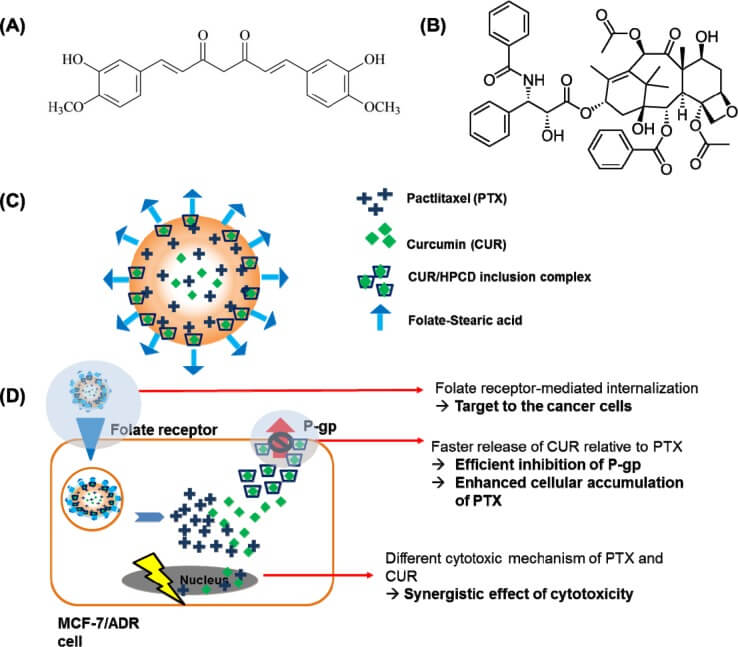 Fig.3 Folate groups on nanoparticle surfaces facilitate receptor-mediated internalization via overexpressed folate receptors on MCF-7/ADR cells, subsequently liberating curcumin and paclitaxel in temporally staggered fashion.2,3
In a notable study, researchers developed a promising therapeutic delivery system to overcome multidrug resistance (MDR) in breast cancer cells. Researchers engineered multifunctional lipid-based nanocarrier FPCHN-30 for concurrent delivery of paclitaxel and curcumin. To achieve targeted delivery to drug-resistant MCF-7/ADR breast cancer cells, they actively functionalized the nanoparticles with folate, which binds to folate receptors overexpressed on these cells. The core experiment focused on a timed, sequential release of the drugs; curcumin, a P-glycoprotein inhibitor, was released first to disable the drug efflux pump, followed by the release of paclitaxel. The results were compelling: cellular uptake studies confirmed that the folate-targeted nanoparticles significantly enhanced the internalization of both drugs. Cytotoxicity assays demonstrated that the FPCHN-30 formulation exhibited the highest efficacy in killing the drug-resistant cancer cells. Furthermore, Western blot analysis confirmed that the system successfully inhibited P-glycoprotein expression, thereby increasing the intracellular accumulation of paclitaxel. This study underscores the power of a multi-pronged approach that combines active targeting with a strategy to overcome drug resistance, a principle that Creative Biolabs' innovative modules are designed to embody.
FAQs
Q: What types of therapeutic payloads can be delivered using a targeting module system?
A: Our versatile module delivery systems and targeted modules are designed to precisely deliver a wide range of therapeutic agents. This includes small molecule drugs, nucleic acids like siRNA and mRNA, and proteins. Our approach is flexible and can be customized to accommodate diverse drug payloads for various research and therapeutic applications in oncology.
Q: What is the development timeline for a custom targeting module?
A: The development cycle for a customized targeting module varies depending on the complexity of the project, such as the novelty of the target or the ligand type. However, our streamlined processes and extensive R&D capabilities allow for rapid and efficient development, typically ranging from a few weeks for minor modifications to several months for novel module design and validation.
Q: How can targeting modules be used to differentiate between cancer cell subtypes?
A: Our expertise extends to developing highly specific targeting modules that differentiate between various cancer cell subtypes. By leveraging distinct surface markers and receptor expression profiles, we can design solutions for highly nuanced and precise therapeutic interventions, such as distinguishing between different molecular subtypes of breast cancer.
Q: What types of targeting ligands are available for cancer cell targeting?
A: We offer a diverse range of targeting ligands, including but not limited to: peptides, monoclonal antibodies and their fragments, aptamers, and small molecule ligands like folate. Our experts will work with you to select the most appropriate ligand for your specific cancer target.
Q: How can targeting modules be integrated with existing delivery systems like liposomes or polymer nanoparticles?
A: Absolutely. Our module design considers compatibility with various drug delivery platforms from the outset. Whether it's liposomes, LNPs, polymer nanoparticles, or others, we can provide coupling strategies and technical support to equip your chosen delivery vehicle with targeting capabilities, aiming for enhanced drug delivery efficiency.
Partnering with Creative Biolabs means choosing a path to accelerated drug development, enhanced therapeutic efficacy, and a significant reduction in off-target effects. Our commitment to innovation and scientific excellence ensures that your therapeutic agents reach their cancer cell targets with unprecedented precision, unlocking new possibilities for disease treatment.
Contact Our Team for More Information and to Discuss Your Project.
References
- Chehelgerdi, Mohammad et al. "Progressing nanotechnology to improve targeted cancer treatment: overcoming hurdles in its clinical implementation." Molecular cancer vol. 22,1 169. 9 Oct. 2023, DOI:10.1186/s12943-023-01865-0.
- Baek, Jong-Suep, and Cheong-Weon Cho. "A multifunctional lipid nanoparticle for co-delivery of paclitaxel and curcumin for targeted delivery and enhanced cytotoxicity in multidrug resistant breast cancer cells." Oncotarget vol. 8,18 (2017): 30369-30382. DOI:10.18632/oncotarget.16153.
- Distributed under Open Access license CC BY 4.0, without modification.
Our services are For Research Use Only. We do not provide services to individuals.
Online Inquiry