
This remains the primary application. Nanocarriers containing chemotherapeutics (e.g., doxorubicin, paclitaxel) or nucleic acids (e.g., siRNA, plasmid DNA) are designed to passively concentrate in the tumor microenvironment via the EPR effect, reducing systemic toxicity while increasing localized efficacy.
Passive Targeting Strategies for Payload Delivery
In the pursuit of groundbreaking therapies, the journey from a promising molecule to a viable treatment often stalls at a single, formidable obstacle: targeted delivery. Protecting fragile nucleic acids and guiding therapeutics to their precise site of action are challenges that can make or break a project. Our Passive Targeting Strategy Optimization Service helps you accelerate therapeutic development and enhance drug efficacy by designing and characterizing nanocarriers that exploit inherent physiological and pathological conditions, such as the Enhanced Permeability and Retention (EPR) effect.
Click Here to View more about our Services
Passive Targeting
Passive targeting is a strategy in drug delivery that leverages the unique pathophysiology of a diseased tissue, such as a solid tumor or areas of inflammation, to achieve preferential accumulation of macromolecular drugs or nanocarriers. Unlike active targeting, which relies on specific ligand-receptor binding, passive targeting relies on the physical properties of the delivery system and the biological environment of the target site.
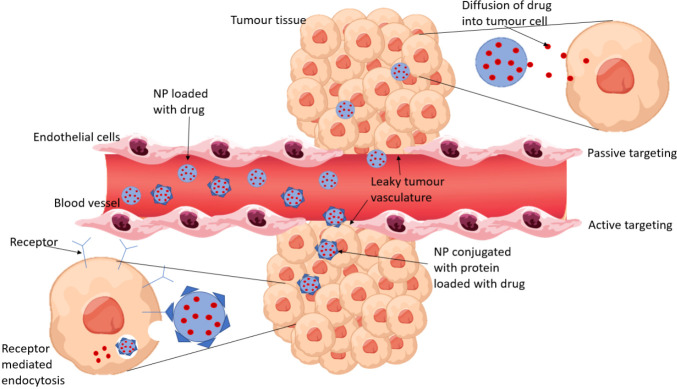 Fig.1 A comparison of passive and active drug targeting.1,3
The fundamental principle driving passive targeting, particularly in oncology, is the Enhanced Permeability and Retention (EPR) effect. This effect is characterized by two main features observed in rapidly growing solid tumors:
Enhanced Permeability
Tumor vasculature is often highly irregular, tortuous, and defective, with wide gaps (fenestrations) between endothelial cells, sometimes ranging from 200 nm up to 2,000 nm, depending on the tumor type. This allows drug carriers (nanoparticles, liposomes, etc.) that are typically restricted from entering healthy tissues to extravasate, or passively diffuse, into the tumor interstitial space.
Impaired Retention
Solid tumors typically lack effective lymphatic drainage. In healthy tissues, lymphatic vessels clear interstitial fluid and macromolecules. The compromised lymphatic function in tumors means that once the nanocarriers accumulate in the tumor interstitium, their clearance is significantly hindered, leading to prolonged retention and a higher local drug concentration.
Successful implementation of passive targeting requires careful consideration of the nanocarrier's design. The material must possess the correct physicochemical profile—hydrodynamic diameter, surface charge (often neutral or slightly negative to avoid clearance), and the ability to evade the mononuclear phagocytic system (MPS)—to maximize circulation time and accumulation via the EPR effect. While originally noted in tumor biology, similar principles are being applied to other pathological conditions where vascular integrity is compromised, such as sites of inflammation or myocardial infarction.
Explore Our Advanced Nanocarrier Platforms
Creative Biolabs specializes in optimizing passive targeting across a diverse range of cutting-edge nanocarrier platforms. Each system offers unique advantages, tailored for specific drug payloads and therapeutic requirements.

Lipid-based Delivery System
Highly biocompatible (Liposomes, LNPs). Superior protection for fragile nucleic acids (mRNA, siRNA) and small molecules. Tunable stability and fusion properties for intracellular release.

Polymer-Based Delivery System
Versatile and highly tunable polymeric nanoparticles, micelles, and hydrogels. Offers precise, sustained, and controlled drug release over long periods. Biodegradable components.

Microsphere-based Delivery System
Micro-to-nanoscale spherical particles (1-1000 µm) often made from biodegradable polymers (e.g., PLGA). Designed for long-term depot effect and significantly reduced dosing frequency.

Inorganic Delivery System
Utilizes materials like Gold, Silica, or Iron Oxide. Offers exceptional structural stability and unique physical properties (e.g., magnetic, optical) for multimodal theranostics.
Application of Passive Targeting Solutions
The versatility of passive targeting makes it a powerful tool across numerous therapeutic areas, especially when combined with sophisticated nanocarrier technology. By optimizing the foundational passive accumulation, researchers can achieve therapeutic benefit in applications that were previously challenging due to poor systemic drug stability or unfavorable biodistribution.
Key applications where optimized passive targeting strategies are essential include:
Oncology (Solid Tumors)
Anti-Inflammatory Therapies
In chronic inflammatory diseases (e.g., arthritis, atherosclerosis), the local vasculature often exhibits increased permeability similar to tumor vessels. Passive targeting of nanocarriers loaded with anti-inflammatory agents can achieve higher drug concentrations at the inflamed site, minimizing side effects associated with high systemic dosing.
Gene & Nucleic Acid Delivery
Fragile payloads like mRNA or siRNA, components require robust protection and efficient delivery. Encapsulation in optimized Lipid Nanoparticles (LNPs) allows these nucleic acids to achieve prolonged systemic circulation, enabling passive accumulation in target organs (e.g., liver, spleen) or through EPR mechanisms for solid tumors, as size and surface chemistry are precisely controlled.
Theranostics
Passive accumulation is used to deliver diagnostic agents (imaging probes) alongside therapeutic drugs within the same nanocarrier. This allows for real-time monitoring of drug accumulation and treatment response, facilitating a more personalized and effective therapeutic approach.
What We Can Offer: Comprehensive Targeted Delivery Services
Passive targeting, primarily mediated by carrier characteristics (size, surface charge, stealth properties) and disease biology (such as leaky tumor vasculature), is the cornerstone of successful nanomedicine. However, the phenomenon is heterogeneous and highly dependent on nanocarrier design. Creative Biolabs provides sophisticated solutions to optimize this process, ensuring your therapeutic payload reaches its target with maximum efficiency and minimal off-target effects.
We assist your project by meticulously engineering the physicochemical properties of your delivery system (e.g., liposomes, polymeric nanoparticles, micelles). This includes:
Size Modulation
Tuning particle size to the optimal range (typically 20-200 nm) to maximize extravasation through leaky vasculature, while minimizing rapid clearance by the Reticuloendothelial System (RES) and renal filtration.
Surface Modification (Stealth Effect)
Utilizing hydrophilic polymers, such as Polyethylene Glycol (PEGylation), to create a 'stealth' layer that prevents opsonization and subsequent recognition and clearance by phagocytes, thereby prolonging systemic circulation time.
Compositional Fine-Tuning
Optimizing the lipid or polymer composition to influence stability, drug release kinetics, and interaction with biological membranes, often through pH-sensitive or ionizable components.
These precise engineering efforts directly translate into enhanced passive accumulation at the desired pathological site, significantly improving the therapeutic index of your drug candidate.
FAQs
How do I determine the ideal nanocarrier size for my specific tumor model?
The optimal size range is generally considered to be 20 to 200 nm, as this minimizes rapid renal and splenic clearance while maximizing extravasation through the leaky tumor endothelium. However, the exact ideal size is dependent on the specific tumor type and its vascular porosity. This requires a small-scale, empirical screening process using carriers of tightly controlled sizes (e.g., 50 nm, 100 nm, 150 nm) to determine the best performance for your unique application.
What is the most critical factor in achieving a long circulation time for systemic delivery?
Evading the body's mononuclear phagocyte system (MPS), or reticuloendothelial system (RES), is the most critical challenge. This is typically achieved through surface modification, such as PEGylation, which creates a hydrophilic shield that prevents the adsorption of opsonin proteins. Optimizing the surface chemistry to be neutral or slightly negative is also vital to minimize non-specific protein adsorption and subsequent rapid clearance.
Can passive targeting be used effectively for targets outside of oncology?
Absolutely. While the Enhanced Permeability and Retention (EPR) effect is best known in solid tumors, any pathological site that exhibits compromised vascular integrity—such as areas of acute inflammation, certain liver pathologies, or ischemic tissues—can be exploited. The key is characterizing the local vascular leakage and designing the carrier size and surface properties to match those specific physiological parameters.
What are the main limitations of relying solely on passive targeting?
The primary limitation is the inherent heterogeneity of the EPR effect, which varies significantly between different patient tumors and even within the same tumor. This means accumulation efficiency can be modest (sometimes 20-30% over normal tissue). Therefore, for highly aggressive or hard-to-penetrate tumors, passive targeting often serves as the crucial first step, followed by the incorporation of a ligand for active targeting to enhance cell-specific uptake.
How do nanocarriers protect the therapeutic cargo and ensure its proper release?
Nanocarriers provide a protective environment that shields the cargo from enzymatic degradation in the bloodstream. Release is controlled by the carrier's chemical composition. For instance, ionizable lipids in LNPs are stable at physiological pH but become charged in the acidic environment of the endosome, leading to membrane disruption and cargo release inside the target cell. Careful formulation ensures the cargo remains locked inside until the appropriate intracellular trigger is encountered.
Creative Biolabs provides specialized research services focused on optimizing passive targeting for drug delivery. We offer expertise in nanocarrier design (liposomes, LNPs, polymer NPs), surface engineering (PEGylation), in vitro characterization, and in vivo biodistribution studies to ensure your therapeutic payload achieves maximal accumulation in diseased tissues via the EPR effect and other physiological mechanisms. Our mission is to transform your complex therapeutic molecule into a highly effective and targeted treatment.
Reference
- Holder, Jessica E et al. "The use of nanoparticles for targeted drug delivery in non-small cell lung cancer." Frontiers in oncology vol. 13 1154318. 9 Mar. 2023, https://doi.org/10.3389/fonc.2023.1154318
- Wu, Di et al. "The blood-brain barrier: structure, regulation, and drug delivery." Signal transduction and targeted therapy vol. 8,1 217. 25 May. 2023, https://doi.org/10.1038/s41392-023-01481-w
- Distributed under Open Access license CC BY 4.0, without modification.
Our services are For Research Use Only. We do not provide services to individuals.
Online Inquiry