Targeted Peptide Synthesis Services for Targeted Drug Delivery
Harness the specificity of peptides to unlock the full potential of your drug delivery system. Creative Biolabs provides expert, end-to-end custom peptide synthesis, modification, and conjugation services designed to overcome the most complex biological barriers. Whether you are developing targeted lipid nanoparticles (LNPs), functionalized liposomes, or novel peptide-drug conjugates (PDCs), our one-stop targeted drug delivery platform provides the critical targeting module you need to enhance therapeutic efficacy and minimize off-target effects.
Obtain Solutions for Peptide Development
The Science of Targeted Peptides
What Are Targeted Peptides?
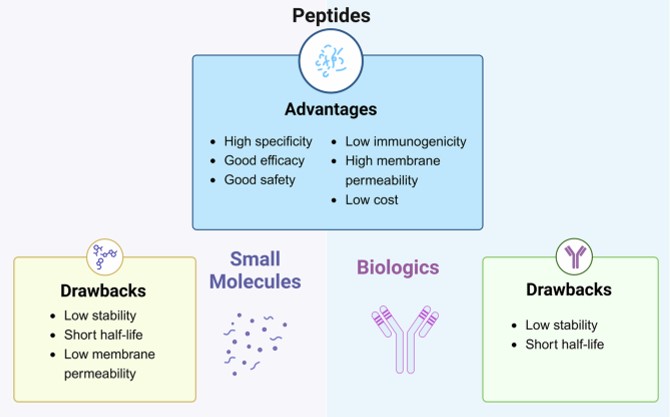 Fig. 1 Advantages and limitations of peptide-based drugs.1
Peptides are short chains of amino acids (typically <50) that function as high-precision guidance molecules. Unlike large monoclonal antibodies, they are small, exhibit low immunogenicity, and are highly versatile for chemical synthesis and modification. They can be engineered to bind with high affinity to specific receptors that are overexpressed on diseased cells (e.g., in tumors) or to navigate and penetrate biological barriers.
How Do Peptides Enable Targeted Delivery?
Peptide-based targeting is a powerful strategy to enhance the therapeutic index of a drug by guiding it to a specific site of action. By conjugating them to a liposome, LNP, or directly to a therapeutic payload, they act as a "homing device." This guides the cargo (such as siRNA, mRNA, small molecules, or CRISPR components) to the precise cell, subcellular organelle, or tissue/organ. This approach directly addresses the central challenge of modern therapeutics: maximizing on-site efficacy while minimizing off-target toxicity.
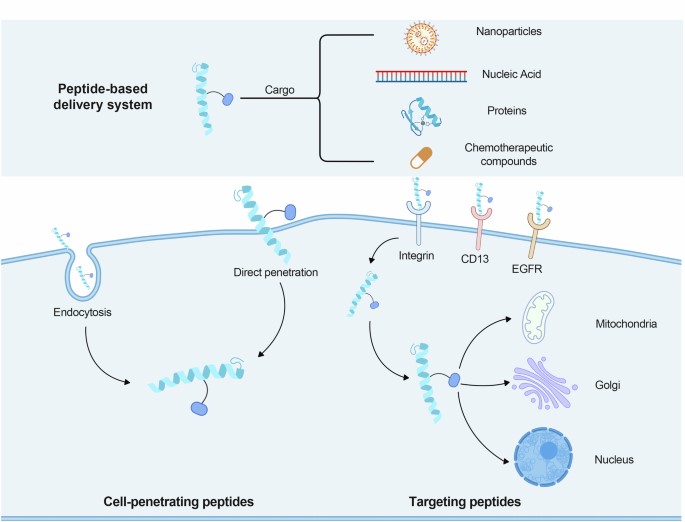 Fig. 2 Targeting and delivery strategies for peptide-based delivery systems.1
Tumor-Targeted Peptides
These peptides are engineered to bind with high affinity to receptors that are overexpressed on the surface of cancer cells or tumor vasculature, while having low affinity for healthy tissues. This "active targeting" concentrates the drug at the tumor site, minimizing systemic toxicity. Integrins are highly expressed on the surface of various tumors and in neovascular endothelial cells, playing a significant role in tumor angiogenesis. Peptides containing arginine-glycine-aspartic acid sequences (Arg-Gly-Asp, RGD) can be recognized by integrin αvβ3 receptors. Therefore, RGD peptide is often used to target integrin receptors and is widely applied in tumor targeting.
| Peptides | Targets | Application |
|---|---|---|
| RGD | α3β1, α5β1, αvβ1, αvβ3, αvβ5, αvβ6 | Tumor targeting |
| GPR | αxβ2 | Tumor targeting |
| AEIDGIEL | α9β1 | Tumor targeting |
| QIDS | α4β1 | Tumor targeting |
| LDT | α4β7 | Tumor targeting |
| CS-1 peptide | α4β1, α4β7 | Tumor targeting |
| CS-5 peptide | α4β1 | Tumor targeting |
| NGR | Aminopeptidase N (CD13) | Tumor targeting |
| T7 | Transferrin Receptor (TfR) | Tumor targeting |
Cell-Penetrating Peptides (CPPs)
This class of peptides, often cationic or amphipathic, is designed to overcome the cell membrane—a major barrier for large-molecule drugs like nucleic acids and proteins. They facilitate the efficient, non-disruptive entry of their conjugated cargo into the cytoplasm.
| Peptides | Description | Application |
|---|---|---|
| Tat (48-60) | A classic, arginine-rich peptide from the HIV-1 Tat protein, enabling efficient cellular uptake. | Cell-Penetrating |
| Tat (47-57) | An efficient, truncated sequence from the HIV-1 Tat protein, facilitating cargo delivery. | Cell-Penetrating |
| pVEC | An amphipathic peptide derived from VEC, demonstrating superior cell-penetrating capabilities. | Cell-Penetrating |
| MAP | A synthetic, model amphipathic peptide engineered for effective membrane penetration and delivery. | Cell-Penetrating |
Nuclear Localization Signal (NLS) Peptides
For therapies that must act within the nucleus (e.g., gene editing, transcription-modifying drugs), NLS peptides are essential. They are short, positively charged sequences that hijack the cell's endogenous importin pathway, actively shuttling the therapeutic cargo from the cytoplasm, through the nuclear pore complex, and into the nucleus.
| Peptides | Description | Application |
|---|---|---|
| SVT40 | A canonical NLS from the SV40 large T antigen. | Nuclear targeting |
| H2B | A core histone protein essential for DNA packaging into chromatin in the nucleus. | Nuclear targeting |
| V-Jun | A viral oncogenic transcription factor that regulates gene expression from the nucleus. | Nuclear targeting |
| Dorsal | A Drosophila transcription factor with a well-characterized NLS. | Nuclear targeting |
| Nucleoplasn | A nuclear chaperone protein facilitating histone storage and chromatin assembly. | Nuclear targeting |
| NIN2 | A nuclear protein containing a bipartite NLS. | Nuclear targeting |
| SWI5 | A yeast transcription factor that shuttles between the cytoplasm and nucleus. | Nuclear targeting |
| RB | A key tumor suppressor protein that regulates cell cycle progression. | Nuclear targeting |
| PTHrP | A signaling protein with a nuclear localization signal, regulating calcium and cell growth. | Nuclear targeting |
| HnRNP | A family of RNA-binding proteins involved in pre-mRNA processing and transport. | Nuclear targeting |
| RpL23a | A ribosomal protein that functions as a nucleocytoplasmic shuttling protein. | Nuclear targeting |
| RpL25 | A ribosomal protein imported into the nucleus for ribosome assembly. | Nuclear targeting |
Our Comprehensive Peptide Synthesis Services
Creative Biolabs is your integrated partner for all peptide-related discovery and development. We provide a complete, custom solution from initial design to your final, functionalized conjugate. For immediate research needs, we also offer a wide selection of in-stock peptides and peptide-lipid conjugates (e.g., DSPE-PEG-RGD) ready for shipment.
Peptide Library Construction Services
A peptide library is a powerful screening tool, consisting of a large, diverse collection of peptides. These libraries are essential for drug discovery, epitope mapping, and identifying new targeting ligands or enzyme substrates. We offer a high-throughput platform to rapidly generate custom libraries tailored to your research.
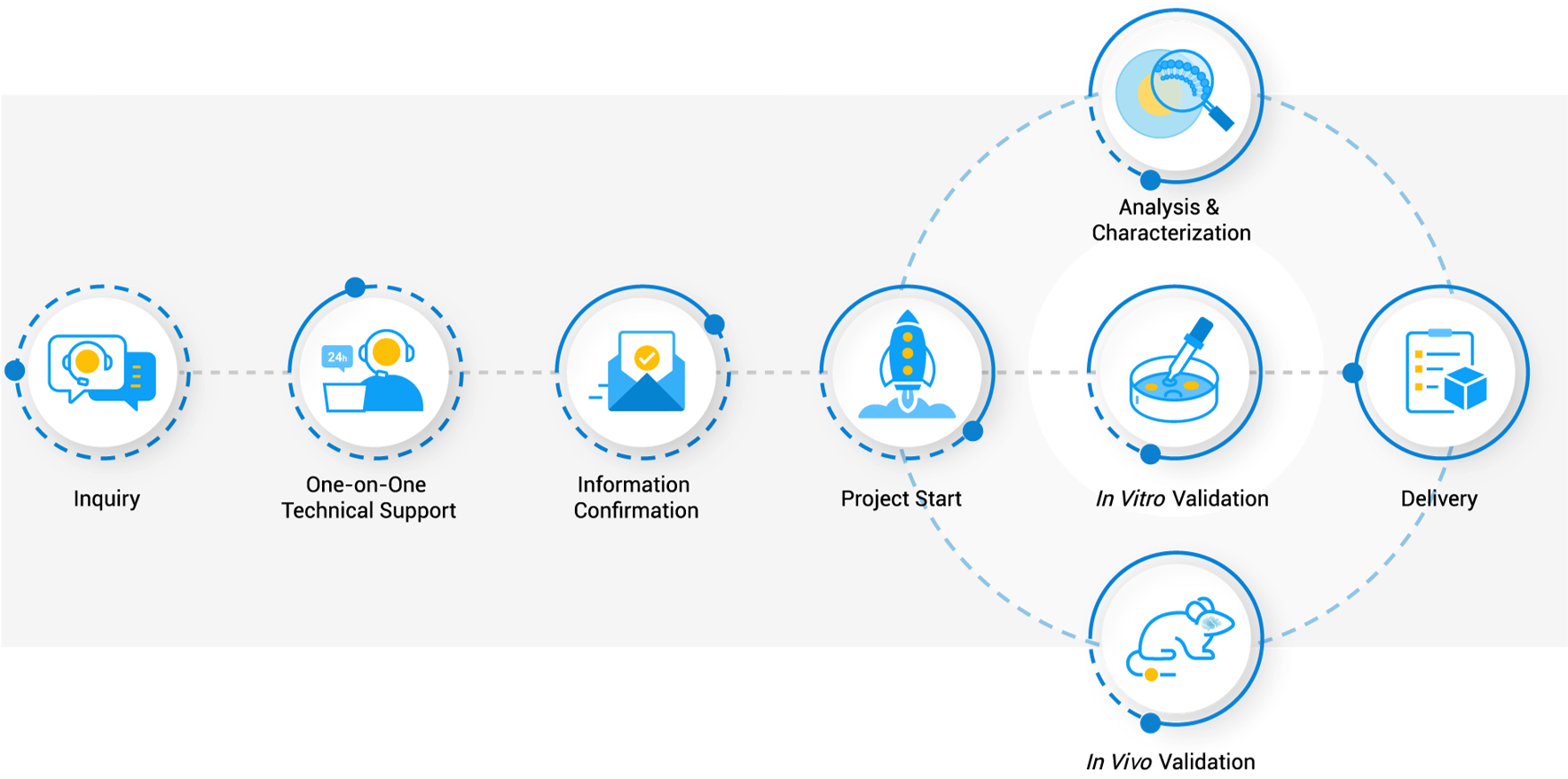
Workflow
Application in Modern Therapeutics and Research
Our targeted peptide development services empower researchers across a vast spectrum of applications.
- Targeted Nanomedicine: Functionalize LNPs, liposomes, exosomes, or polymeric nanoparticles to actively target specific cell populations for the delivery of mRNA, siRNA, ASOs, or CRISPR-Cas9 components.
- Advanced Peptide-Drug Conjugates (PDCs): Develop next-generation "magic bullets" that deliver highly potent small molecule drugs or advanced therapeutics directly to diseased cells, enhancing the therapeutic window.
- Targeted Imaging & Theranostics: Create peptides conjugated to imaging agents (fluorescent or radioactive) for highly specific in vivo diagnostics and receptor-mediated theranostics.
- Organ-Specific Delivery: Design peptides (e.g., receptor-mediated transcytosis peptides) to shuttle payloads across intact biological barriers, including the challenging Blood-Brain Barrier (BBB).
- Subcellular Targeting: Engineer peptides with sequences for nuclear localization (NLS) or mitochondrial targeting to deliver payloads to specific organelles.
Why Choose Creative Biolabs?
Integrated Delivery Expertise
We are not a simple peptide foundry. We are a dedicated drug delivery company that understands how to design, synthesize, and integrate peptides into complex systems like LNPs, liposomes, and PDCs.
Comprehensive Modification & Conjugation
Our expertise in complex bioconjugation, including site-specific attachment and functional lipid synthesis, saves you time and ensures a functional final product.
Absolute Quality & Transparency
We provide a full, transparent QC data package (HPLC, MS) for every peptide, ensuring you have absolute confidence in your starting material.
Scientific Partnership
Our Ph.D.-level team provides consultative support from sequence design to troubleshooting, acting as a true partner in your success.
Scalability & Speed
Our platform is built to scale, supporting your project from initial in vitro discovery (mg) to in vivo studies and preclinical development (kg) with industry-leading speed.
If you are interested in our peptide-related services, please do not hesitate to contact us immediately to obtain the latest service details.
Related Services & Products
Related Services
Chemical Synthesis Services
Related Products
| Product Name | Description | Inquiry |
|---|---|---|
| Targeting Peptides | Research-grade, pre-synthesized peptides like RGD, NGR, and other common targeting sequences. | |
| Cell-Penetrating Peptides | Ready-to-use peptides like TAT for rapid cellular uptake studies | |
| Peptide-Functionalized Lipids | Pre-made, ready-to-use lipids such as DSPE-PEG-RGD and DSPE-PEG-TAT for immediate LNP/liposome formulation. | |
| Lipid-Protein Conjugation Kit | It can be used to couple phospholipids with peptides, antibodies, and other proteins. |
FAQs
What is the difference between a standard peptide and a cell-penetrating peptide (CPP)?
A standard targeting peptide is typically designed to bind to a specific extracellular receptor to "dock" the delivery vehicle. A CPP is designed to actively facilitate the transport of a payload across the cell membrane into the cytoplasm.
What purity level do I need for my peptide?
For initial in vitro screening or non-quantitative assays, >85% is often sufficient. For in vivo animal studies, cell-based functional assays, or NMR, we strongly recommend >95% or >98% purity to avoid confounding results from impurities.
How do you conjugate a peptide to a lipid nanoparticle (LNP)?
The most robust method is "post-insertion." We synthesize the peptide and conjugate it to a functionalized lipid (e.g., DSPE-PEG). This pre-formed peptide-lipid conjugate is then incubated with the pre-formed LNP, where the lipid "anchors" the peptide to the LNP's surface. We can also synthesize the conjugate for you to include in your initial formulation.
What is the typical turnaround time?
This is sequence- and complexity-dependent. A standard 15-mer peptide at >95% purity can often be synthesized in 2-3 weeks. Complex modifications or multi-step conjugations will add 1-2 weeks. We will provide a firm timeline with your quote.
Can you synthesize peptides with D-amino acids or other non-standard modifications?
Yes. We routinely synthesize peptides with D-amino acids (for protease resistance), N-methylated amino acids, stapled peptides, and a wide variety of other non-natural amino acids and modifications.
How do I choose between a peptide, an aptamer, or another targeting module?
This depends on your target. Peptides are excellent for protein receptors. Aptamers (nucleic acids) can be "evolved" to bind to a wider range of targets, including small molecules or membrane proteins, with high specificity. Our experts can consult on the best module for your specific application.
Reference
- Xiao, Wenjing, et al. "Advance in peptide-based drug development: delivery platforms, therapeutics and vaccines." Signal Transduction and Targeted Therapy 10.1 (2025): 74. https://doi.org/10.1038/s41392-024-02107-5. Distributed under Open Access license CC BY 4.0, without modification.