
- Full-length antibody discovery via hybridoma, phage display, and B-cell screening.
- Development of scFv and Fab fragments for targeted delivery vehicles.
- Engineering of bispecific and multispecific antibodies for dual-target engagement or conditional activation.
Targeting Ligand Discovery for Targeted Drug Delivery
In the pursuit of precise and potent next-generation therapeutics, highly specific targeting ligands are the critical bridge between drug and disease site. Fragile payloads, complex delivery systems, and the need to minimize off-target effects all demand molecular navigators with exceptional affinity. Our Targeting Ligand Discovery Services and Solutions helps you accelerate drug discovery and develop highly specific therapeutics through advanced high-throughput screening platforms, innovative rational design, and engineering expertise.
Click Here to View more about our Services
Introduction of Targeting Ligand
Targeting ligands are recognition elements—typically small molecules, peptides, aptamers, or antibodies—that exhibit high binding affinity toward a specific molecular target (receptor, protein, or cell surface marker) associated with a disease state. Their primary function is to serve as the "zip code" for a therapeutic agent, enabling active delivery to the site of action, such as a tumor microenvironment (TME) or an inflamed joint.
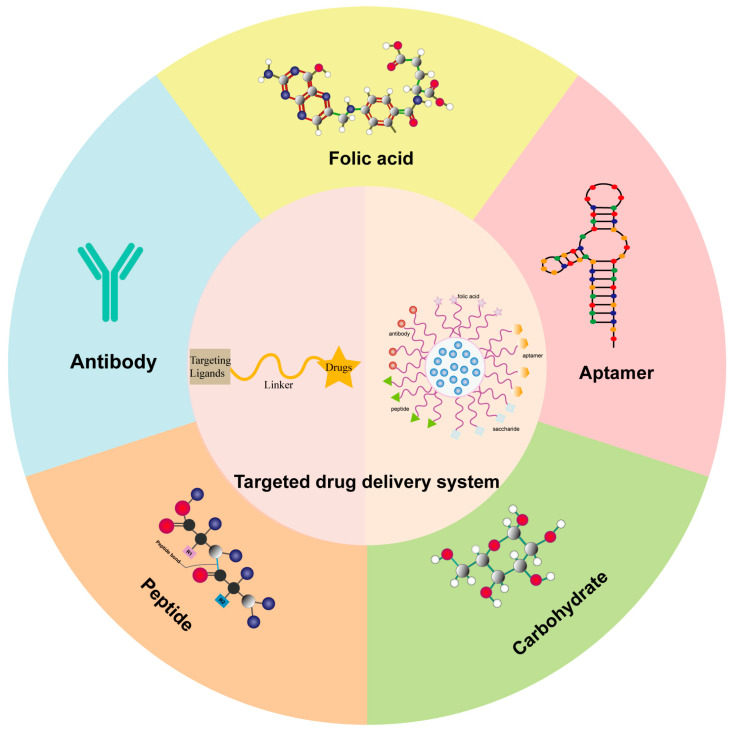 Fig.1 Different targeting ligands-mediated drug delivery systems.1
The shift toward active targeting is essential for managing complex diseases like cancer, where therapies must navigate numerous physiological barriers. For instance, in oncology, ligands are often directed against tumor-specific antigens or receptors that are highly upregulated, such as Folate Receptors or components of the TNFRSF10a signaling pathway, allowing the attached drug or nanocarrier to bypass passive accumulation limitations (Enhanced Permeability and Retention, or EPR effect) and achieve receptor-mediated endocytosis.
Creative Biolabs provides an end-to-end suite of services for the discovery, engineering, and characterization of custom targeting ligands across multiple modalities.
Antibodies
Proteins
- Design and optimization of non-antibody protein scaffolds for high stability and low molecular weight.
- Creation of fusion proteins leveraging natural targeting domains (e.g., transferrin).
Peptides
- Discovery of highly specific peptide ligands using Phage Display or chemical library screening.
- Optimization for enhanced stability and cellular penetration (Cell-Penetrating Peptides, CPPs).
Aptamer
- Systematic Evolution of Ligands for DNA or RNA aptamer identification.
- Modification for improved nuclease resistance and in vivo half-life.
Carbohydrates
- Targeting tumor-associated carbohydrate antigens (TACAs) or highly expressed metabolic receptors (e.g., Folate).
- Rational design of small molecules with high receptor affinity.
Vitamins
- Utilizing naturally occurring ligands (e.g., Vitamin B12) for tissue-specific uptake via overexpressed nutritional receptors.
Hyaluronic Acid
- Synthesis and modification of high and low molecular weight hyaluronic acid derivatives for CD44 receptor targeting, highly relevant in cancer and inflammation.
Application of Targeted Delivery System
Targeting ligand discovery is foundational to the development of precision medicine and is transforming multiple therapeutic and diagnostic fields.
Targeted Drug Delivery Systems
Ligands are integral components of complex drug delivery modalities, including Liposome-based Delivery Systems, Lipid Nanoparticles (LNPs), and various polymeric carriers. Covalently attaching a targeting ligand to the surface of a nanocarrier ensures that the encapsulated nucleic acid payload (e.g., mRNA, siRNA) or cytotoxic drug is preferentially delivered to the target cell, significantly enhancing efficacy and reducing systemic exposure and toxicity.
Cancer Immunotherapy & Diagnostics
In the rapidly evolving landscape of immuno-oncology, ligands are used to modulate immune checkpoints or deliver immune-stimulating agents directly to immune cells or tumor cells. For diagnostics, highly specific ligands are conjugated to imaging agents (e.g., radioisotopes or fluorescent markers) for use in PET or optical imaging, allowing for precise, non-invasive visualization and molecular subtyping of pathological tissues.
Functional Probe Development
Beyond therapeutics, ligands are crucial for fundamental research and assay development. They serve as chemical probes to elucidate complex biological pathways, identify off-target effects of drug candidates, and establish the mechanism-of-action (MoA) by facilitating quantitative monitoring of drug–target engagement inside living cells.
What We Can Offer: Comprehensive Ligand Discovery Solutions
The success of modern drug modalities—from Antibody-Drug Conjugates (ADCs) and targeted nanocarriers to gene therapies—rests entirely on the ability of the therapeutic agent to recognize and interact specifically with its pathological target. Without a high-affinity, selective ligand, even the most promising payload is likely to be ineffective or highly toxic.
At Creative Biolabs, we specialize in overcoming the biological complexity of target recognition. Our tailored approach moves beyond conventional library screening to provide ligands optimized not just for binding affinity, but for functionality in a complex physiological environment. We enable researchers to:
Achieve Ultra-High Specificity
Identify ligands that bind selectively to disease-associated biomarkers (e.g., receptors overexpressed on cancer cells like EGFR or PD-1/PD-L1 components) while minimizing interaction with healthy tissues. This drastically improves the therapeutic index.
Functionalize Nanocarriers
Provide optimized ligands (such as peptides, aptamers, and small molecules) ready for conjugation to liposomes, polymeric nanoparticles, or LNPs, driving active targeting strategies.
Resolve Difficult Targets
Successfully discover binders against challenging targets, including membrane proteins, conformational epitopes, or highly conserved proteins, utilizing advanced techniques and structural biology.
Optimize Binding Kinetics
Focus on improving target residence time rather than just initial affinity, ensuring sustained therapeutic engagement in vivo.
FAQs
What type of targeting ligand is best suited for modifying a liposomal drug delivery system?
The optimal ligand depends entirely on your specific target and therapeutic payload. Peptides offer small size and good tissue penetration, while aptamers provide antibody-like specificity with high stability. Small molecules are excellent for highly abundant or specific receptors. We recommend defining your target's characteristics and the required in vivo half-life first, as these factors will guide the best molecular class selection.
Our target protein is highly conserved and expressed on both healthy and pathological cells. Can a highly selective ligand still be developed?
Yes. High conservation necessitates a sophisticated approach. We focus on conformational epitopes or post-translational modification (PTM) sites that are uniquely expressed or accessible only in the disease state. By using cell-based screening against both healthy and diseased cells (counter-selection), we can evolve ligands that distinguish between subtle differences in target presentation, even on conserved proteins.
How do you ensure the ligand retains its function once it is chemically conjugated to a nanoparticle?
Chemical modification and conjugation can indeed compromise ligand binding. Our process involves optimizing the linker chemistry and the site of conjugation on the ligand to ensure the binding domain remains sterically accessible and functionally active. Rigorous post-conjugation testing using surface plasmon resonance (SPR) or cell-binding assays confirms that the high affinity is retained on the final delivery system.
What is the main advantage of developing a peptide or aptamer ligand over using a full monoclonal antibody (mAb)?
Peptides and aptamers are significantly smaller and offer superior tissue penetration, which is vital for reaching solid tumors or dense tissues. They typically have lower immunogenicity, are simpler and cheaper to synthesize chemically, and can withstand harsher environments like lyophilization, making them highly attractive for certain applications where mAbs face manufacturing or stability hurdles.
Our project requires ligands for multiple targets on the same cell (multivalent targeting). Is this feasible?
Absolutely. Multivalent or multispecific ligands are a key area of expertise. We can design systems that incorporate multiple different targeting molecules (e.g., two distinct aptamers or a peptide and a small molecule) onto a single nanocarrier. This strategy is highly effective for overcoming tumor heterogeneity and simultaneously engaging different receptors to enhance cellular uptake and retention.
Creative Biolabs is dedicated to providing the enabling technologies that define precision medicine. Our Targeting Ligand Discovery Services and Solutions cover every molecular class—small molecules, peptides, and aptamers—combined with industry-leading rational design and rigorous in vitro and cellular validation. We are your comprehensive partner for transforming novel therapeutic concepts into actively targeted, high-efficacy drug candidates.
Reference
- Yan, Shuxin et al. "Different Targeting Ligands-Mediated Drug Delivery Systems for Tumor Therapy." Pharmaceutics vol. 16,2 248. 7 Feb. 2024, Distributed under Open Access license CC BY 4.0, without modification. https://doi.org/10.3390/pharmaceutics16020248.
Our services are For Research Use Only. We do not provide services to individuals.
Online Inquiry