A comprehensive catalog of pre-formulated Module Delivery Systems (liposomes, exosomes, LNPs, polymeric nanoparticles) and a selection of validated Endothelium Targeting Modules (aptamers, peptides, functionalized lipids, targeted polymers, responsive materials) ready for your research and development needs.
Endothelium Targeting Module Development Service
Overview Endothelium Targeting Solution Targeting Module What We Can Offer? Workflow Our Advantages Published Data FAQs
Are you currently facing challenges with systemic toxicity or inefficient delivery of therapeutic agents to specific disease sites? Our Endothelium Targeting Module Development service at Creative Biolabs helps you overcome these hurdles by providing innovative solutions for precision drug delivery. Leveraging our expertise in advanced protein engineering and nanocarrier technology, we enable therapeutic agents to precisely and efficiently reach the vascular endothelium, unlocking new possibilities for treating a wide range of diseases, from inflammation to cancer.
Overview
The vascular endothelium, a single layer of cells lining the circulatory system, acts as a critical interface between the bloodstream and tissues, functioning as a dynamic and selective semi-permeable barrier. This dynamic layer is active in controlling vascular tone, regulating hemostasis, and modulating immune responses. However, in various pathologies like chronic inflammation, autoimmune disorders, and cancer, the endothelium undergoes a phenotypic shift, becoming "activated." This activation process is characterized by the expression of unique surface markers, such as adhesion molecules (e.g., ICAM-1, VCAM-1) and specific receptors, which are either absent or present at very low levels on the healthy endothelium. These changes make the pathological endothelium an exceptionally accessible and valuable target for selective drug delivery.
Endothelium targeting module development involves creating specific ligands—including peptides, antibodies, and aptamers—that are conjugated to therapeutic payloads. This strategy ensures precise delivery to disease-associated endothelial cells, which serves to enhance efficacy by concentrating the drug at the site of action while dramatically reducing systemic exposure and off-target side effects. This innovative approach provides a significant advantage over traditional systemic therapies, offering a safer and more effective treatment profile.
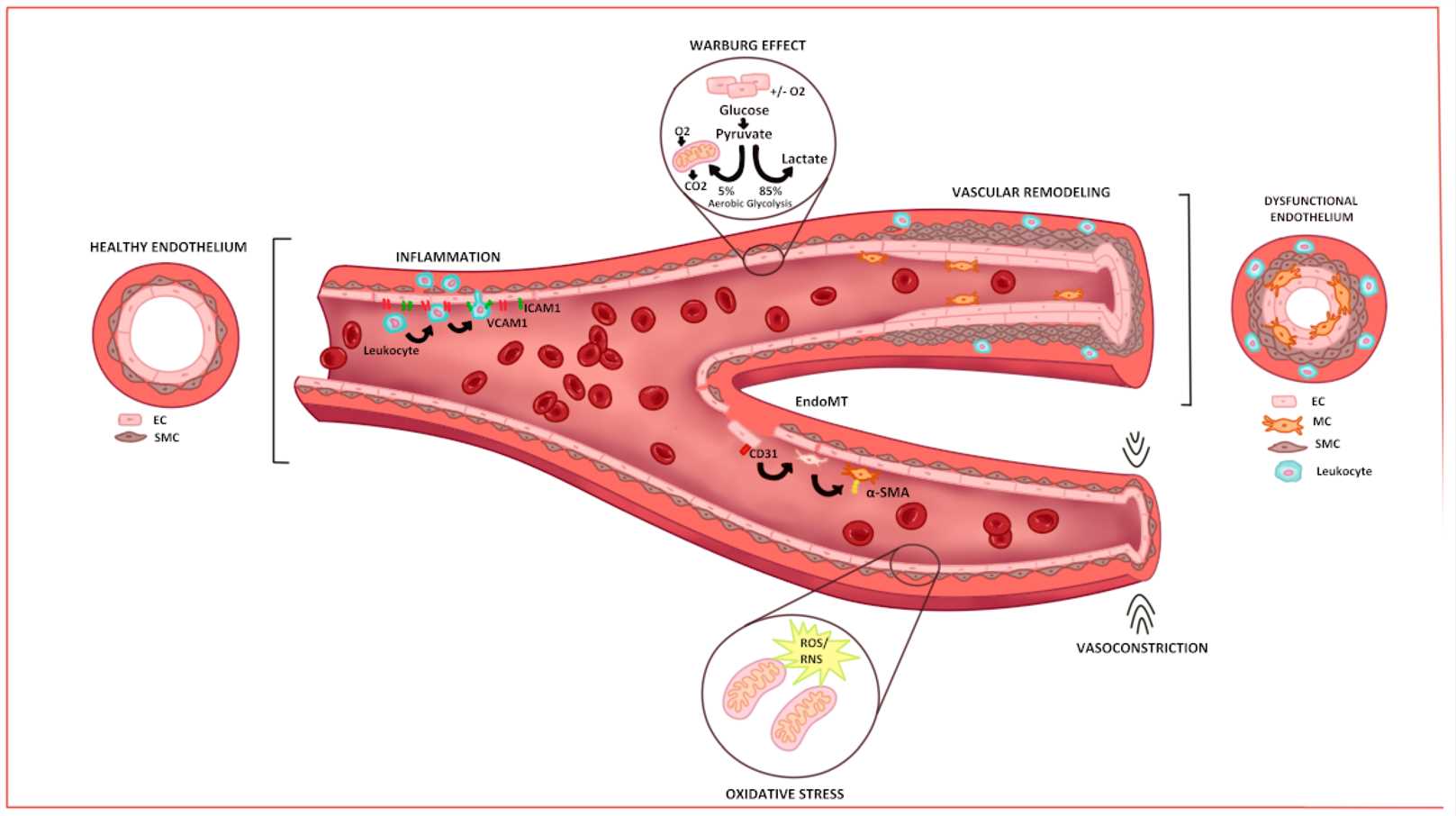 Fig.1 Main mechanisms of pathology in endothelium.1,5
Creative Biolabs' Endothelium Targeting Solution
Our endothelium targeting strategy guides therapeutic agents to their destination with minimal off-target effects, using two main approaches: passive and active targeting.
Passive Targeting
Nanoparticles (100-200 nm) passively accumulate in leaky vasculature of tumors and inflamed tissues via the Enhanced Permeability and Retention (EPR) effect. While this increases local drug concentration, it is often non-specific and can lead to off-target accumulation.
Active Targeting
The cornerstone of our platform is active targeting, functionalizing delivery systems with specific ligands that bind to receptors overexpressed on pathological endothelial cells. This ensures precise cellular recognition and uptake, allowing for customized modules for diverse therapeutic goals.
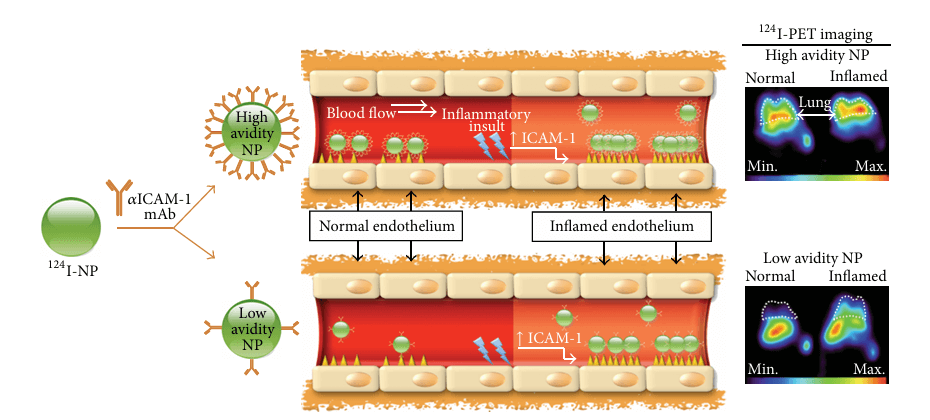 Fig.2 Enhanced selectivity of targeting to inflamed endothelium of nanocarriers with reduced surface density of ICAM antibody.2,5
Endothelium Targeting Module
The cornerstone of Creative Biolabs' precision drug delivery lies in our advanced targeting modules. These modules are designed to steer our delivery systems straight to particular types of endothelial cells, sometimes even specific subsets. This selective recognition is achieved through high-affinity binding to unique surface markers expressed on the target cells, ensuring that therapeutic payloads accumulate precisely where they are needed, minimizing off-target effects and maximizing therapeutic efficacy. Our diverse library of targeted modules provides unparalleled flexibility in achieving precise endothelium delivery.
| Ligand Type | Mechanism of Action | Targeted Marker(s) | Advantages/Application |
|---|---|---|---|
| Antibodies | Exquisitely selective macromolecules engaging distinctive epitopes exhibiting potent binding force. They can be full-length antibodies or smaller fragments (e.g., scFv, Fab). |
|
Exceptional specificity and well-established development pathways. Can offer robust and durable targeting, and are widely used in clinical settings. |
| Peptides | Short amino acid sequences designed to bind to specific receptors, often mimicking the native ligands. |
|
Small size, good tissue penetration, high customizability, and relatively low cost. Permits straightforward chemical production and adaptation for designated purposes. |
| Carbohydrates | Glycosylated molecules that are recognized by lectins or C-type lectin receptors on the endothelial cell surface, often involved in cell-cell adhesion and inflammatory responses. |
|
Natural ligands for adhesion molecules, offering a highly specific targeting mechanism for inflamed endothelium. |
| Aptamers | Small single-strand nucleic acids assuming unique spatial arrangements to engage specified biological targets showing potent binding characteristics. |
|
High specificity, low immunogenicity, and stability. They can be chemically synthesized and easily modified for conjugation to various delivery systems. |
| Other | Other targeting strategies including small molecules, lipid modifications, and recombinant proteins. |
|
Versatile and can be tailored to target specific receptors not addressed by other ligand types. |
Contact Us About Endothelium Targeting Module
What We Can Offer?
Creative Biolabs occupies an unrivaled position at the innovation vanguard of precision therapeutic conveyance. Our team of expert biologists, chemists, and engineers brings over two decades of collective experience in developing sophisticated delivery solutions. We offer a comprehensive suite of products and services designed to meet your endothelium-targeting needs.
Ready-to-Use Products
Customized Services
Our bespoke service allows us to develop tailored delivery systems and novel endothelium-targeting modules from concept to validation, precisely meeting your project's unique specifications. This includes custom aptamer, peptide, or polymer synthesis and conjugation, as well as optimization of delivery system characteristics for specific pathological endothelial phenotypes.
Conjugation Services
Expertise in conjugating selected ligands to various delivery platforms (nanoparticles, liposomes, polymers, etc.).
Pre-Clinical Validation
In vitro and in vivo testing to assess targeting efficiency, cellular uptake, biodistribution, and therapeutic efficacy.
Comprehensive Scientific Support
Partner with us to leverage our deep scientific knowledge, state-of-the-art facilities, and rigorous quality control for your endothelium-targeting projects, from experimental design to data analysis.
Workflow
Why Choose Us?
Opting for collaboration with Creative Biolabs selects expedited therapeutic advancement, amplified treatment effectiveness, and mitigated non-target interactions. Our commitment to innovation ensures your agents reach their endothelial targets with precision, unlocking new possibilities.
Proven Expertise
Our team of specialized scientists has deep knowledge in drug delivery and a track record of translating complex biological concepts into effective solutions.
Innovative Technology
We leverage state-of-the-art platforms for module synthesis, conjugation, and characterization, designing modules with high specificity and stability.
Tailored Customization & Flexibility
We offer customized aptamer/peptide design and delivery system optimization to align with your therapeutic goals.
Rigorous Quality & Reliability
Our commitment to scientific rigor ensures reliable, reproducible, and high-quality results through stringent quality control.
Published Data
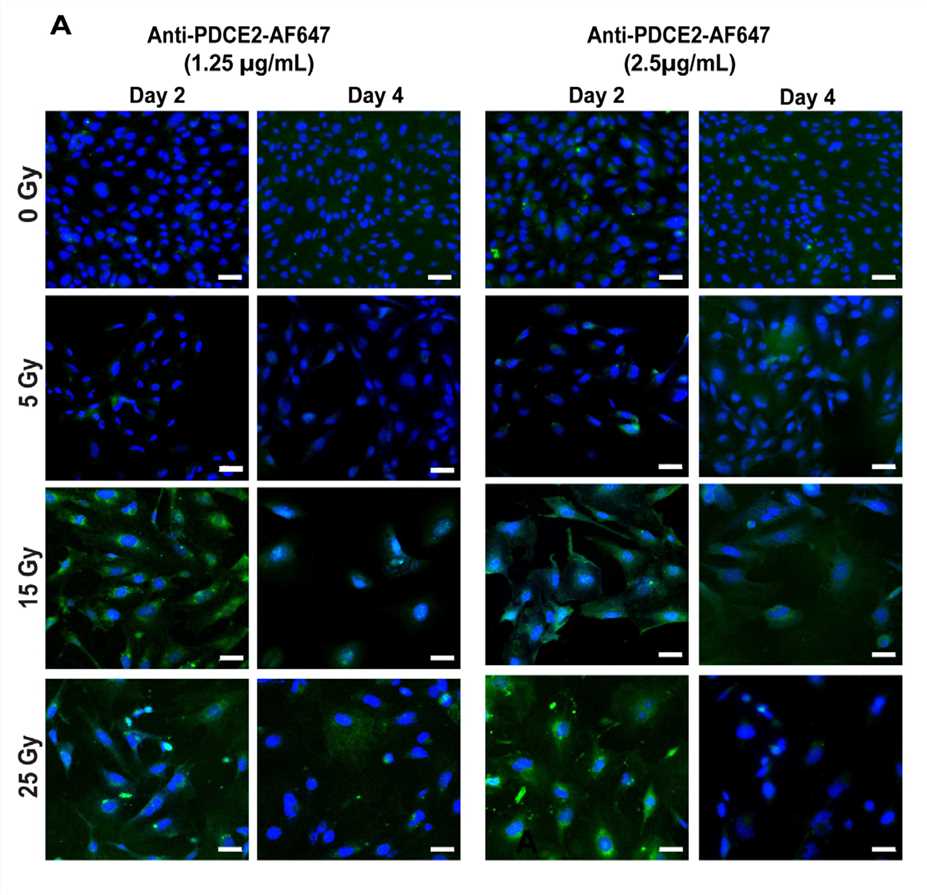 Fig.3 Anti-PDCE2 antibodies bind to the surface of irradiated endothelial cells under optimized shear flow in a parallel-plate flow system.3,4
In the experiment, the researchers developed an innovative antibody-thrombin conjugate designed to specifically target mitochondrial PDCE2, a protein that becomes ectopically expressed on the surface of endothelial cells following radiation exposure. Utilizing a sophisticated parallel-plate flow system to precisely simulate the dynamic conditions of blood flow within a vascular network, the study demonstrated that this conjugate effectively and precisely induced thrombosis on the irradiated endothelial cells. The experiment successfully confirmed the viability of using these unique, radiation-induced surface changes as a highly specific targeting mechanism. This innovative strategy allows for a novel form of radiation-guided drug delivery, offering a method to induce precision thrombosis in pathological vasculature, such as the neovascularization often found in tumors. This approach has the potential to localize therapeutic effects and minimize systemic harm to healthy tissues, presenting a promising new direction in cancer treatment.
FAQs
Q: Why is targeting the endothelium a valuable strategy for drug development?
A: The endothelium is an accessible, disease-relevant target. Precision drug delivery to these cells achieves high local concentrations, minimizes healthy tissue exposure, and reduces systemic side effects.
Q: Can your targeting modules distinguish between healthy and diseased endothelium?
A: Yes, our modules exploit differences in surface markers between healthy and pathological endothelial cells. By targeting markers overexpressed in diseased states (e.g., tumors), we achieve highly selective delivery.
Q: How does this approach compare to traditional systemic drug delivery?
A: Unlike traditional systemic delivery, which requires high doses and risks off-target toxicity, our targeted approach concentrates the drug where it's needed, allowing for lower doses and a more favorable safety profile.
Q: What kind of payloads can your modules deliver?
A: Our versatile modules integrate with various payloads, including small-molecule drugs, proteins, nucleic acids (siRNA, mRNA), gene editing tools, and diagnostic agents.
Q: What is the typical timeline for developing a custom targeting module?
A: Timelines vary by project complexity. We work closely with clients to establish clear milestones and provide precise estimates. We encourage you to contact our team to discuss your project for more details.
Creative Biolabs' Endothelium Targeting Module Development delivers a robust, accurate approach for sophisticated therapeutic conveyance. Our comprehensive services—from ready-to-use products to custom solutions and rigorous validation—are designed to accelerate your research. Our expertise and commitment to quality make us your ideal partner in a new era of precision medicine.
Reach out to our specialists for further details and project consultation.
References
- de la Bastida-Casero, Laura et al. "The Relevance of the Endothelium in Cardiopulmonary Disorders." International journal of molecular sciences vol. 25,17 9260. 27 Aug. 2024, DOI:10.3390/ijms25179260.
- Muzykantov, Vladimir R. "Targeted drug delivery to endothelial adhesion molecules." International Scholarly Research Notices 2013.1 (2013): 916254, DOI:10.1155/2013/916254.
- Faqihi, Fahimeh et al. "Externalization of Mitochondrial PDCE2 on Irradiated Endothelium as a Target for Radiation-Guided Drug Delivery and Precision Thrombosis of Pathological Vasculature." International journal of molecular sciences vol. 23,16 8908. 10 Aug. 2022, DOI:10.3390/ijms23168908.
- Distributed under Open Access license CC BY 4.0, this image is part of figure 2 from the original publication, without modification.
- Distributed under Open Access license CC BY 4.0, without modification.
Our services are For Research Use Only. We do not provide services to individuals.
Online Inquiry