Creative Biolabs is offering the most comprehensive services for antibody development projects. With strict regulation and effective execution, we are dedicated to providing the most valuable solutions to complete your projects.
HighlightsCreative Biolabs is offering the most comprehensive services for antibody development projects. With strict regulation and effective execution, we are dedicated to providing the most valuable solutions to complete your projects.
HighlightsCreative Biolabs has established a broad range of platforms for developing novel antibodies or equivalents. These cutting-edge technologies enable our scientists to meet your demands from different aspects and tailor the most appropriate solution that contributes to the success of your projects.
HighlightsWith deep understanding in antibody-related realms and extensive project experience, Creative Biolabs offers a variety of references to help you learn more about our capacities and achievements, including infographic, flyer, case study, peer-reviewed publications, and all kinds of knowledge that can assist your projects. You are also welcome to contact us directly for more specific solutions.
HighlightsGet a real taste of Creative Biolabs, one of the most professional custom service providers in the world. We are committed to providing highly customized comprehensive solutions with the best quality to advance your projects.
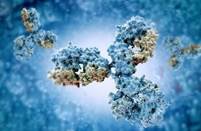
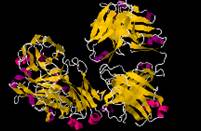
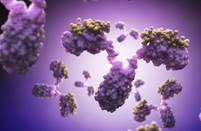
HighlightsThe discovery of naturally occurring heavy-chain only antibodies in camelids (camels, llamas, alpacas) has revolutionized antibody engineering. The antigen-binding fragment of these incredible molecules features one soluble and stable domain called the VHH which stands for Variable domain of Heavy-chain only antibodies. The emergence of VHH domains along with their engineered single-domain antibodies (sdAbs) counterparts forms a groundbreaking development in biologics which provides distinctive benefits across research fields and diagnostic and therapeutic areas.
A VHH is the smallest naturally occurring, intact antigen-binding domain, typically around 12-15 kDa in size. It constitutes the entire variable region of a camelid HCAb. VHHs maintain full antigen-binding capacity from parent HCAb while demonstrating exceptional properties such as high affinity and specificity alongside excellent stability in extreme temperature and pH conditions together with high solubility and capability to bind unique epitopes that conventional antibodies cannot access.
VHHs' special structure leads to clear benefits beyond those offered by conventional monoclonal antibodies (mAbs).
Table 1. VHH vs Conventional Antibodies.
| Feature | Conventional Antibody | VHH (Single-Domain Antibody) | Significance |
| Structure | Heterotetramer (2 Heavy + 2 Light Chains) | Homodimer (Heavy Chains Only); VHH is monomeric | Simpler structure, no chain pairing issues |
| Antigen Binding Unit | VH-VL Pair | Single VHH Domain | Smallest intact antigen-binding fragment |
| Size | ~150 kDa | VHH Domain: ~15 kDa; HCAb: ~95 kDa | Enhanced tissue penetration, access to cryptic epitopes, potential for new routes of administration |
| Solubility | Variable, can be prone to aggregation | Generally High | Easier formulation, reduced immunogenicity potential |
| Stability | Requires specific conditions, less thermostable | High thermal and chemical stability | Longer shelf-life, resistance to denaturation |
| Production | Complex mammalian cell systems often required | Efficient production in microbial systems (E. coli, yeast) | Lower production costs, faster development timelines |
| Epitope Recognition | Often binds flatter surfaces | Can access clefts, grooves, enzymatic active sites | Broader range of targetable epitopes, potential for enzyme inhibition |
| Immunogenicity | Can elicit immune response (especially non-human) | Lower potential, can be humanized | Improved safety profile for potential therapeutic applications |
The absence of the light chain and the CH1 domain necessitates key adaptations in the VHH structure:
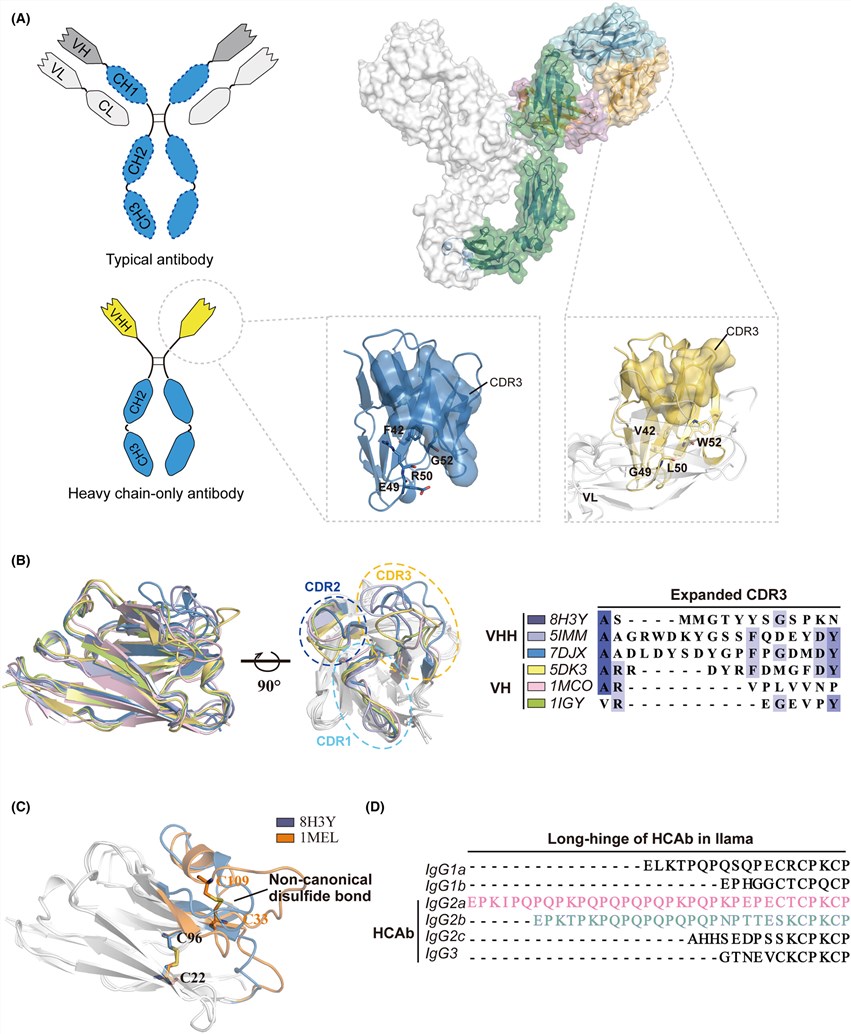 Fig. 1 Adaptive evolution of HCAbs and single domain antibody structures.1
Sequencing is not merely a characterization step; it is fundamental to the entire VHH discovery and development workflow.
VHH sequencing is an integral part of the characterization package for any lead candidate. It provides the "blueprint" of the molecule. Accurate sequence data is essential because recombinant production along with functional testing and structural analysis will fail or become unreliable without it. It underpins hit validation, lead optimization, and preclinical development phases.
Table 2. Comparison of VHH/sdAb Sequencing Techniques
| Feature | Sanger Sequencing | Next-Generation Sequencing (NGS) | De Novo sdAb Sequencing (Protein-based) |
| Throughput | Low (Single clone per reaction) | Very High (Millions of DNA reads per run) | Low-Medium (Single purified protein per analysis) |
| Application | Single clone sequence verification | Repertoire analysis, rare clone discovery | Sequence determination/confirmation from purified protein, PTM analysis, when genetic material is unavailable |
| Sensitivity | Low for detecting minor variants in a mix | High for low-frequency DNA/RNA variants | High sensitivity for detecting PTMs; sensitivity depends on protein amount |
| Data Output | Single consensus DNA sequence | Millions of DNA reads, diversity metrics | Assembled amino acid sequence, peptide fragments, PTM identification |
| Cost | Lower per individual clone | Lower per base/read, higher per experiment | Generally High (requires MS instrumentation & expertise) |
| Bioinformatics | Minimal | Complex (repertoire analysis, error correction) | Complex (MS data processing, peptide assembly, PTM mapping) |
| Input | Purified plasmid/PCR product from a clone | cDNA library from B-cell pool or library output | Purified sdAb protein sample |
Obtaining accurate VHH sequences, especially from complex repertoires, presents unique challenges.
| Challenge | Description | Solution(s) |
| Low Expression Levels | If starting from B-cells, the frequency of antigen-specific HCAb-expressing cells might be low, leading to insufficient mRNA for RT-PCR. | Efficient B-cell isolation/enrichment techniques (e.g., FACS sorting for antigen binders), optimized and sensitive RNA extraction and reverse transcription protocols. |
| Framework Region Ambiguities | High sequence similarity between different VHH germline families and, more critically, between VHH and conventional VH framework regions. | Design of VHH-specific PCR primers targeting conserved regions unique to VHH (e.g., characteristic FR2 residues, specific J segments). Careful validation of primer specificity. Use of nested PCR strategies. |
| Distinguishing VHH from VH | Amplification from mixed B-cell populations (PBMCs) can co-amplify conventional VH sequences if primers are not perfectly specific. | Stringent VHH-specific primer design (as above). Size selection of PCR products (VHH amplicons derived from mRNA lack CH1 and are smaller than conventional VH-CH1 amplicons). Bioinformatic filtering post-NGS based on canonical VHH motifs (e.g., FR2 substitutions). |
| PCR & Sequencing Errors | Errors introduced during RT-PCR amplification or NGS can create artificial sequence variants. | Use of high-fidelity polymerases. Deep sequencing coverage (NGS). Advanced bioinformatic error correction algorithms and quality filtering pipelines. Confirming key sequences via Sanger. |
| Repertoire Complexity (NGS) | Analyzing millions of sequences requires robust bioinformatic tools to cluster sequences, identify CDRs, annotate germlines, and quantify clones. | Specialized VHH/antibody sequencing analysis platforms and pipelines (e.g., IMGT/V-QUEST adapted for camelids, custom scripts). Expertise in antibody bioinformatics. |
| De Novo Sequencing Ambiguities | Distinguishing isobaric residues (Leu/Ile, Gln/Lys) via standard MS/MS can be difficult. Achieving full sequence coverage can be challenging. | Utilizing complementary enzymatic digests, high-resolution mass spectrometry, Electron Transfer Dissociation (ETD) fragmentation, specialized database search algorithms. |
At Creative Biolabs, we leverage our state-of-the-art sequencing technologies and robust bioinformatic pipelines to provide high-fidelity VHH sequencing services, empowering researchers to confidently advance their single-domain antibody projects.
Learn more about Creative Biolabs' de novo antibody sequencing services:
All listed services and products are For Research Use Only. Do Not use in any diagnostic or therapeutic applications.