
Creative Biolabs is offering the most comprehensive services for antibody development projects. With strict regulation and effective execution, we are dedicated to providing the most valuable solutions to complete your projects.
HighlightsCreative Biolabs is offering the most comprehensive services for antibody development projects. With strict regulation and effective execution, we are dedicated to providing the most valuable solutions to complete your projects.
HighlightsCreative Biolabs has established a broad range of platforms for developing novel antibodies or equivalents. These cutting-edge technologies enable our scientists to meet your demands from different aspects and tailor the most appropriate solution that contributes to the success of your projects.
HighlightsWith deep understanding in antibody-related realms and extensive project experience, Creative Biolabs offers a variety of references to help you learn more about our capacities and achievements, including infographic, flyer, case study, peer-reviewed publications, and all kinds of knowledge that can assist your projects. You are also welcome to contact us directly for more specific solutions.
HighlightsGet a real taste of Creative Biolabs, one of the most professional custom service providers in the world. We are committed to providing highly customized comprehensive solutions with the best quality to advance your projects.
HighlightsAntibody phage display identifies and designs specific antibodies by presenting antibody fragments on the surface of phage. This method integrates molecular biology and genetic engineering, linking the DNA encoding an antibody to its displayed fragment. High-throughput screening of antibody libraries allows for the rapid identification of high-affinity binders. Over the past few decades, advancements in library construction, screening methods, and automation have made antibody phage display the cornerstone of therapeutic antibody development.
Phage display involves the genetic fusion of antibody fragment genes with the coat protein genes of a bacteriophage, usually M13 filamentous phage. The antibody fragments are expressed on the phage and displayed on the phage surface, while the DNA encoding the antibody fragments is located inside the phage particle. The display process links the phenotype to its genotype, allowing iterative selection and amplification of high-affinity binders.
The key components of phage display include the following:
The typical workflow of antibody phage display includes:
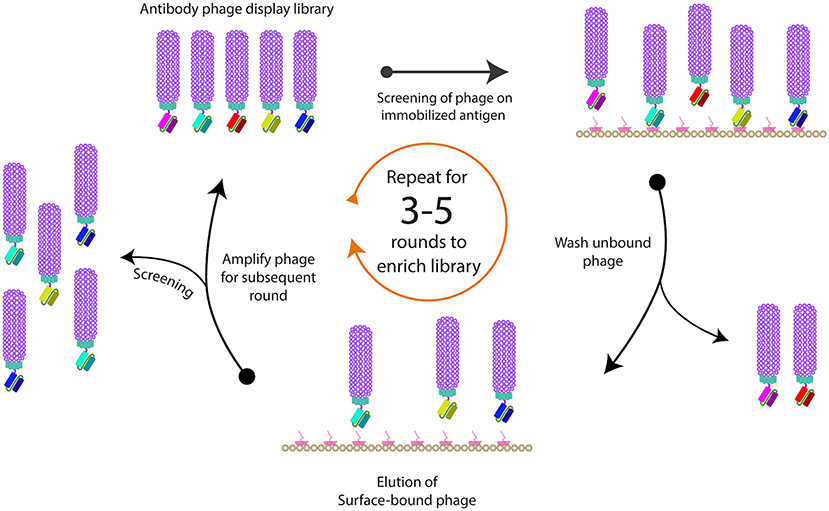 Fig. 1 Schematic representation of phage biopanning.1, 3
Antibody phage display technology has a wide range of applications in the biotechnology and pharmaceutical industries.
Phage display offers an alternative to traditional hybridoma technology, allowing rapid discovery of monoclonal antibodies without animal immunization. This approach is particularly advantageous for:
| Advantage | Description |
| Speed | Rapid selection process compared to hybridoma methods. |
| Diversity | Libraries contain billions of antibody variants. |
| Specificity | High affinity and selectivity, even for challenging targets. |
The ability of antibody phage display to select antibodies with therapeutic potential has revolutionized drug development:
Membrane proteins, such as GPCRs and ion channels, are important drug targets but are notoriously difficult to study. Phage display can:
Phage display helps create recombinant antibodies for the following uses:
Phage display can be seamlessly integrated with advanced antibody engineering technologies:
Library construction is a key step in determining the success of phage display:
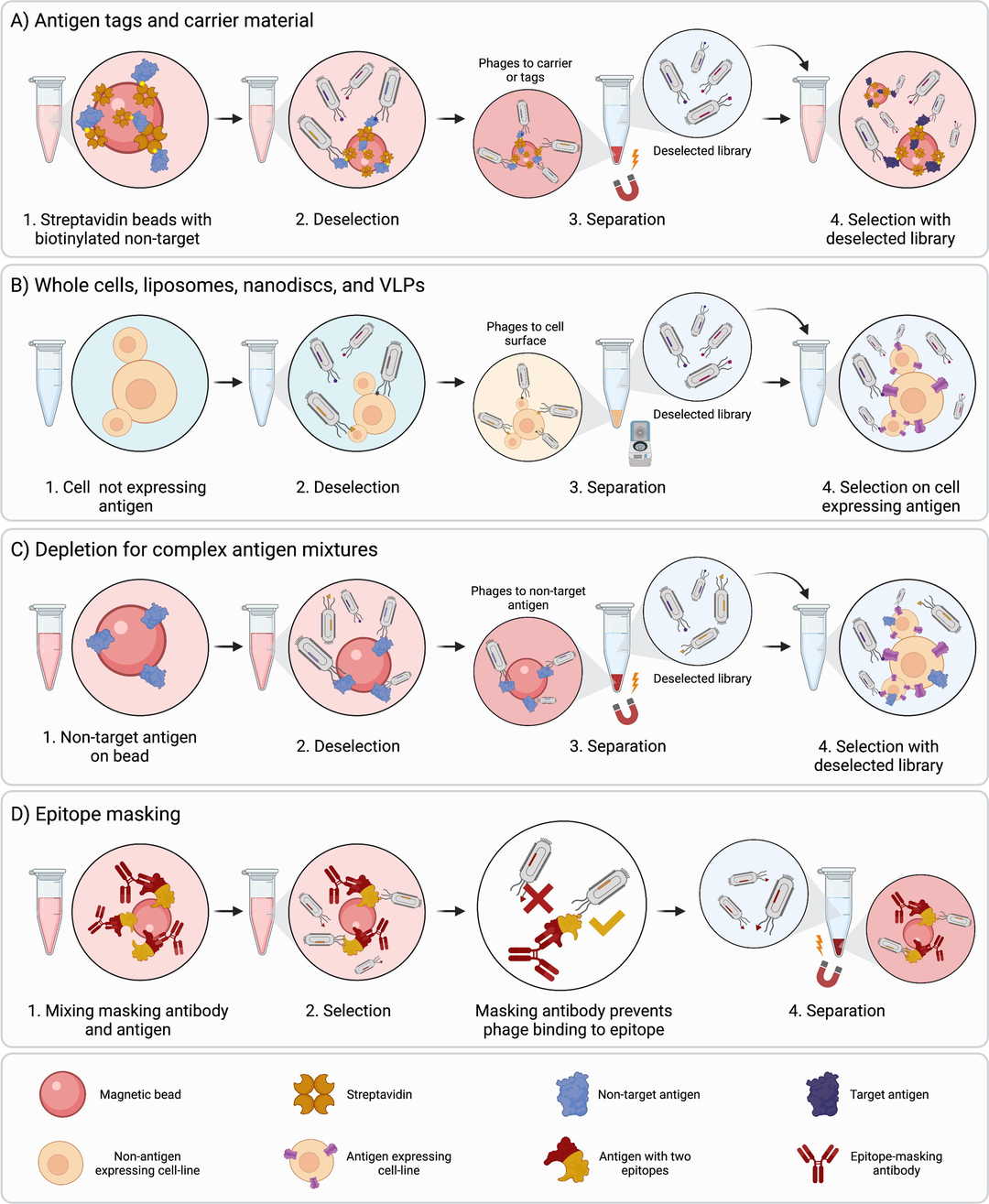 Fig. 2 Deselection strategies.2, 3
Phage display is one of several display technologies. Others include:
Phage display derived antibodies are optimized to achieve the following:
All listed services and products are For Research Use Only. Do Not use in any diagnostic or therapeutic applications.








