Creative Biolabs is offering the most comprehensive services for antibody development projects. With strict regulation and effective execution, we are dedicated to providing the most valuable solutions to complete your projects.
HighlightsCreative Biolabs is offering the most comprehensive services for antibody development projects. With strict regulation and effective execution, we are dedicated to providing the most valuable solutions to complete your projects.
HighlightsCreative Biolabs has established a broad range of platforms for developing novel antibodies or equivalents. These cutting-edge technologies enable our scientists to meet your demands from different aspects and tailor the most appropriate solution that contributes to the success of your projects.
HighlightsWith deep understanding in antibody-related realms and extensive project experience, Creative Biolabs offers a variety of references to help you learn more about our capacities and achievements, including infographic, flyer, case study, peer-reviewed publications, and all kinds of knowledge that can assist your projects. You are also welcome to contact us directly for more specific solutions.
HighlightsGet a real taste of Creative Biolabs, one of the most professional custom service providers in the world. We are committed to providing highly customized comprehensive solutions with the best quality to advance your projects.
HighlightsIn the intricate world of molecular biology, the interactions between proteins and nucleic acids govern the very essence of cellular function—from gene expression and replication to DNA repair and signaling pathways. The Electrophoretic Mobility Shift Assay (EMSA), also known as a gel shift or gel retardation assay, stands as a cornerstone technique for this discovery. For over two decades, Creative Biolabs has been at the forefront, providing robust, sensitive, and highly reliable EMSA services to researchers worldwide, empowering them to decode these critical molecular dialogues. Our platform is not just about running gels; it's about providing insightful, publication-quality data that propels your research forward.
The Electrophoretic Mobility Shift Assay (EMSA), also known as a gel shift assay, is a common and powerful laboratory technique used to study the interactions between proteins and nucleic acids (DNA or RNA). It is a fundamental tool in molecular biology for identifying proteins that bind to specific sequences of DNA or RNA and for characterizing the properties of these interactions.
The core idea behind EMSA is based on the difference in the rate of migration of nucleic acid molecules through a gel matrix when they are free versus when they are bound to a protein.
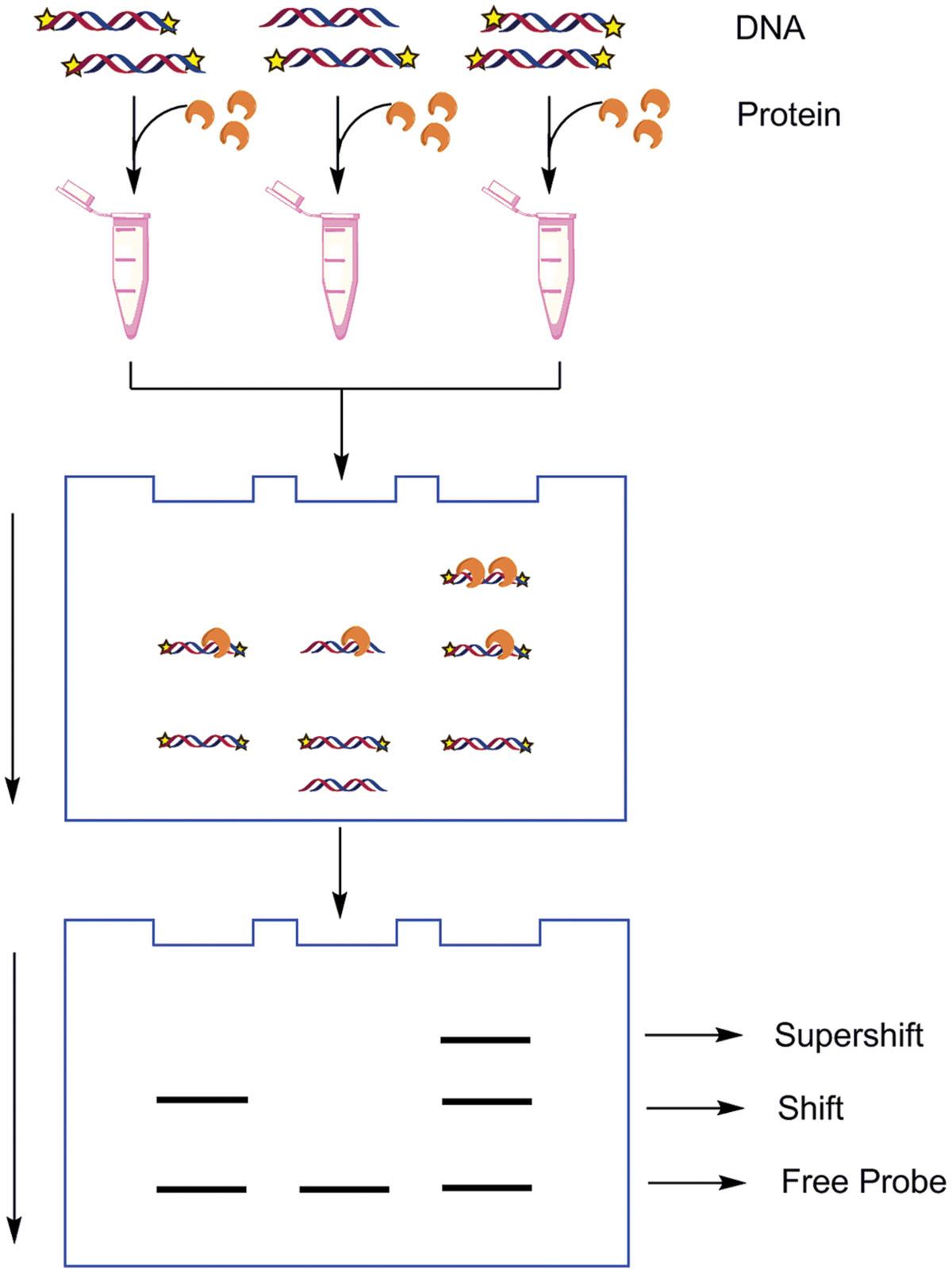 Fig. 1 The schematic illustration of electrophoretic mobility shift assays (EMSA).1
Creative Biolabs offers a suite of EMSA services tailored to meet diverse research objectives.
The foundational service to quickly and reliably determine if your protein of interest binds to a specific DNA or RNA sequence.
To prove the binding is specific, we introduce unlabeled competitor probes. A specific interaction will be outcompeted by a specific unlabeled probe but not by a non-specific or mutated probe.
This powerful variation involves adding an antibody specific to the protein of interest into the binding reaction. If the protein is part of the complex, the antibody will bind to it, creating an even larger "supershifted" complex, thus confirming the protein's identity.
By titrating the protein concentration while keeping the probe concentration constant, we can accurately calculate the dissociation constant (Kd), a critical measure of binding affinity.
We have developed a transparent and efficient project workflow to ensure a seamless experience and timely delivery of high-quality data.
Our EMSA services provide critical insights for a wide range of research areas:
Navigating the nuances of EMSA requires deep technical expertise. From probe design to optimizing binding conditions, many factors can influence the outcome. Partnering with Creative Biolabs eliminates these hurdles and provides you with a distinct advantage.
EMSA is often one piece of a larger puzzle. To provide a more complete picture of your biological system, consider our other relevant services:
Ready to move your research forward with definitive data? The experts at Creative Biolabs are here to help. Contact us today to discuss your project, and we will provide a detailed, customized proposal tailored to your specific needs.
Q: What is the difference between EMSA and ChIP-Seq?
A: EMSA is an in vitro method that confirms a direct interaction between a specific protein and a specific nucleic acid sequence in a controlled environment. ChIP-Seq is an in vivo method that identifies all the genomic regions a protein is bound to within a cell at a specific moment. EMSA is excellent for validating ChIP-Seq hits.
Q: What types of samples do you accept?
A: We can work with purified proteins, cell nuclear extracts, or custom-expressed proteins. For nucleic acids, we can work with your sequences or design and synthesize them for you.
Q: Can you help if I don't have purified protein?
A: Yes. Creative Biolabs offers premier Protein Expression and Purification Services. We can seamlessly integrate protein production into your EMSA project workflow.
Q: How much protein and nucleic acid is required?
A: This is highly dependent on the binding affinity. We typically recommend starting with at least 50-100 µg of purified protein and several micrograms of DNA/RNA, but our scientists will provide specific guidance during the consultation phase.
All listed services and products are For Research Use Only. Do Not use in any diagnostic or therapeutic applications.