
Creative Biolabs is offering the most comprehensive services for antibody development projects. With strict regulation and effective execution, we are dedicated to providing the most valuable solutions to complete your projects.
HighlightsCreative Biolabs is offering the most comprehensive services for antibody development projects. With strict regulation and effective execution, we are dedicated to providing the most valuable solutions to complete your projects.
HighlightsCreative Biolabs has established a broad range of platforms for developing novel antibodies or equivalents. These cutting-edge technologies enable our scientists to meet your demands from different aspects and tailor the most appropriate solution that contributes to the success of your projects.
HighlightsWith deep understanding in antibody-related realms and extensive project experience, Creative Biolabs offers a variety of references to help you learn more about our capacities and achievements, including infographic, flyer, case study, peer-reviewed publications, and all kinds of knowledge that can assist your projects. You are also welcome to contact us directly for more specific solutions.
HighlightsGet a real taste of Creative Biolabs, one of the most professional custom service providers in the world. We are committed to providing highly customized comprehensive solutions with the best quality to advance your projects.
HighlightsMost of the human proteome resides within the cell, including a wealth of high-value targets for therapeutic intervention and research that remain inaccessible to conventional antibodies. Creative Biolabs has been at the forefront of antibody engineering, and we are proud to offer our industry-leading Intrabody Discovery Services, a comprehensive platform designed to break through the cell membrane barrier and empower researchers to modulate intracellular targets with the specificity and affinity of an antibody. Our integrated workflow combines diverse library construction, advanced screening technologies, and meticulous optimization to deliver functional intrabodies tailored to your unique project goals.
An intrabody is a recombinant antibody fragment, most commonly a Single-chain Variable Fragment (scFv) or a single-domain antibody (VHH), that is genetically encoded and expressed inside a target cell. Unlike traditional monoclonal antibodies that function extracellularly, intrabodies are designed to fold correctly and bind to their specific antigen within the complex and reducing environment of the cytoplasm, nucleus, or other organelles. This unique capability makes them powerful tools for both basic research and therapeutic development.
Table 1. Comparison of Common Intrabody Formats
| Feature | Single-chain Variable Fragment (scFv) | Dingle Domain Antibody ( VHH) |
| Structure | Comprises the variable heavy (VH) and variable light (VL) chains of an antibody, joined by a flexible peptide linker. | A single monomeric variable antibody domain derived from heavy-chain-only antibodies found in camelids. |
| Size | ~25-30 kDa | ~12-15 kDa |
| Advantages | Utilizes conventional antibody frameworks; extensive research base. | Smaller size allows for better tissue penetration and access to cryptic epitopes; exceptional stability and solubility. |
| Ideal For | Applications requiring the classic antigen-binding pocket structure. | Probes for super-resolution microscopy, targeting small cavities on proteins, high-stability applications. |
At Creative Biolabs, our platform is optimized for the discovery and development of both scFv and VHH intrabodies, ensuring we can select the ideal format for your specific intracellular target.
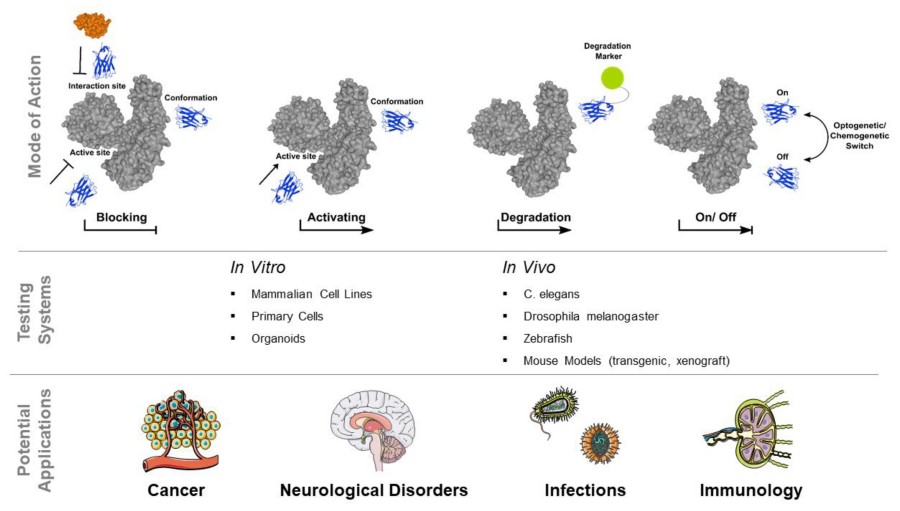 Fig. 1 Intrabodies as intracellular modulators.1
Our end-to-end intrabody discovery platform is a fusion of cutting-edge technologies and deep-seated expertise. We guide your project from antigen design to the delivery of fully validated, expression-ready intrabody constructs.
Step 1: Antigen & Strategy Design
Step 2: High-Diversity Library Construction
Step 3: Advanced Intrabody Screening & Selection
Step 4: Intracellular Stability & Functionality Engineering
Step 5: Comprehensive Characterization & Validation
We offer a flexible suite of services that can be tailored into a custom package to meet your precise research needs.
| Service Category | Description | Key Deliverables |
| Custom Intrabody Library Construction | Generation of high-diversity phage or yeast display libraries from immunized animals or naïve/synthetic sources. | High-diversity antibody library; Quality control report. |
| High-Throughput Intrabody Screening | Screening of our pre-made or your custom libraries against your target protein to isolate specific binders. | List of unique antibody sequences (hits); Binding data for top candidates. |
| Intrabodies for Targeted Protein Degradation (TPD) | Discovery and engineering of intrabodies (degraders) fused to E3 ligase domains to induce proteasomal degradation of target proteins. | Validated intrabody-degrader constructs; Data demonstrating target knockdown. |
| Intrabody Characterization & Validation | Full biophysical and cellular characterization of lead intrabody candidates, including affinity, specificity, and in-cell functional validation. | Comprehensive characterization report; Validated lead intrabody clones. |
| Intrabody Expression Vector & Cell Line Services | Cloning of intrabody sequences into various expression vectors (e.g., lentiviral, AAV) and generation of stable cell lines for your downstream research. | Expression-ready plasmids; Stably expressing cell lines. |
Our custom intrabody discovery services provide powerful reagents for a wide array of applications, enabling research that was previously impossible.
Q: What is the primary difference between a conventional antibody and an intrabody?
A: The fundamental difference lies in their site of action. Conventional monoclonal antibodies (mAbs) are large IgG molecules that function outside the cell, binding to cell surface receptors or soluble antigens in the bloodstream. Intrabodies, in contrast, are smaller antibody fragments (scFv or VHH) that are designed to be expressed inside a cell. This allows them to bind to and modulate the function of intracellular proteins, which constitute most potential drug targets and are inaccessible to traditional antibodies.
Q: How do you ensure that the selected intrabody will be stable and functional inside a cell?
A: This is the most critical challenge in intrabody development and a core strength of our platform. Simple in vitro binding (like ELISA) does not guarantee in-cell function. We address this through:
Q: Can you target proteins in specific subcellular compartments, like the nucleus or mitochondria?
A: Absolutely. This is a key feature of intrabody technology. We can genetically fuse our validated intrabody sequences with specific Subcellular Localization Signals (SLSs). For example, by adding a Nuclear Localization Signal (NLS), we can direct the intrabody to the nucleus to target a transcription factor. Similarly, a Mitochondrial Targeting Signal (MTS) can traffic the intrabody to the mitochondria. This allows for highly precise spatial control over target modulation.
Q: What starting material do I need to provide for an intrabody discovery project?
A: We are highly flexible and can start a project with various materials. The ideal starting point is a high-purity recombinant target protein (typically >100 µg). However, we can also work with:
Q: What is the typical timeline for a standard intrabody discovery project?
A: While the exact timeline can vary depending on the project's complexity and scope, a standard end-to-end project—from library construction and screening to the delivery of validated lead intrabody candidates—typically takes between 12 and 20 weeks. We provide a detailed project timeline with clear milestones at the proposal stage.
Q: Which format is better for my project: scFv or VHH?
A: The choice depends on the specific target and downstream application. VHH are often favored for their small size, exceptional stability, and ability to bind unique "cryptic" epitopes that larger fragments might miss. scFvs are a more classic format, and vast libraries are readily available. Our scientific team will consult with you to analyze your target and project goals, recommending the optimal format and discovery strategy to maximize the probability of success.
All listed services and products are For Research Use Only. Do Not use in any diagnostic or therapeutic applications.








