Creative Biolabs is offering the most comprehensive services for antibody development projects. With strict regulation and effective execution, we are dedicated to providing the most valuable solutions to complete your projects.
HighlightsCreative Biolabs is offering the most comprehensive services for antibody development projects. With strict regulation and effective execution, we are dedicated to providing the most valuable solutions to complete your projects.
HighlightsCreative Biolabs has established a broad range of platforms for developing novel antibodies or equivalents. These cutting-edge technologies enable our scientists to meet your demands from different aspects and tailor the most appropriate solution that contributes to the success of your projects.
HighlightsWith deep understanding in antibody-related realms and extensive project experience, Creative Biolabs offers a variety of references to help you learn more about our capacities and achievements, including infographic, flyer, case study, peer-reviewed publications, and all kinds of knowledge that can assist your projects. You are also welcome to contact us directly for more specific solutions.
HighlightsGet a real taste of Creative Biolabs, one of the most professional custom service providers in the world. We are committed to providing highly customized comprehensive solutions with the best quality to advance your projects.
HighlightsFor over two decades, Creative Biolabs has stood at the forefront of protein science and functional genomics. As your dedicated partner, we leverage our profound expertise to unravel the intricate web of protein-protein interactions (PPIs) that dictates cellular function. Our Yeast Two-Hybrid (Y2H) services are not just an assay; they are a gateway to discovery, meticulously designed to provide the highest accuracy, broadest coverage, and deepest insights in the industry.
The Yeast Two-Hybrid system is a powerful in vivo genetic method for detecting binary protein-protein interactions. The principle is elegant and effective, relying on the modular nature of eukaryotic transcription factors, which typically have a DNA-binding domain (BD) and a transcriptional activation domain (AD).
Creative Biolabs offers a multi-tiered service portfolio designed to meet any research need, from small-scale validation to genome-wide discovery.
Before any screen, we perform essential preliminary tests. We express the bait protein alone in yeast to ensure it does not independently activate the reporter genes (auto-activation) or prove toxic to the host cells. This critical first step prevents wasted resources and ensures the reliability of downstream results.
Do you have a hypothesis about two specific proteins interacting? Our 1-on-1 service is a fast and cost-effective method to confirm or refute a suspected binary interaction with high confidence.
This is the discovery engine of our Y2H services. We screen your bait protein against our high-complexity cDNA or ORF libraries to identify a comprehensive list of novel interacting partners.
Screening Workflow:
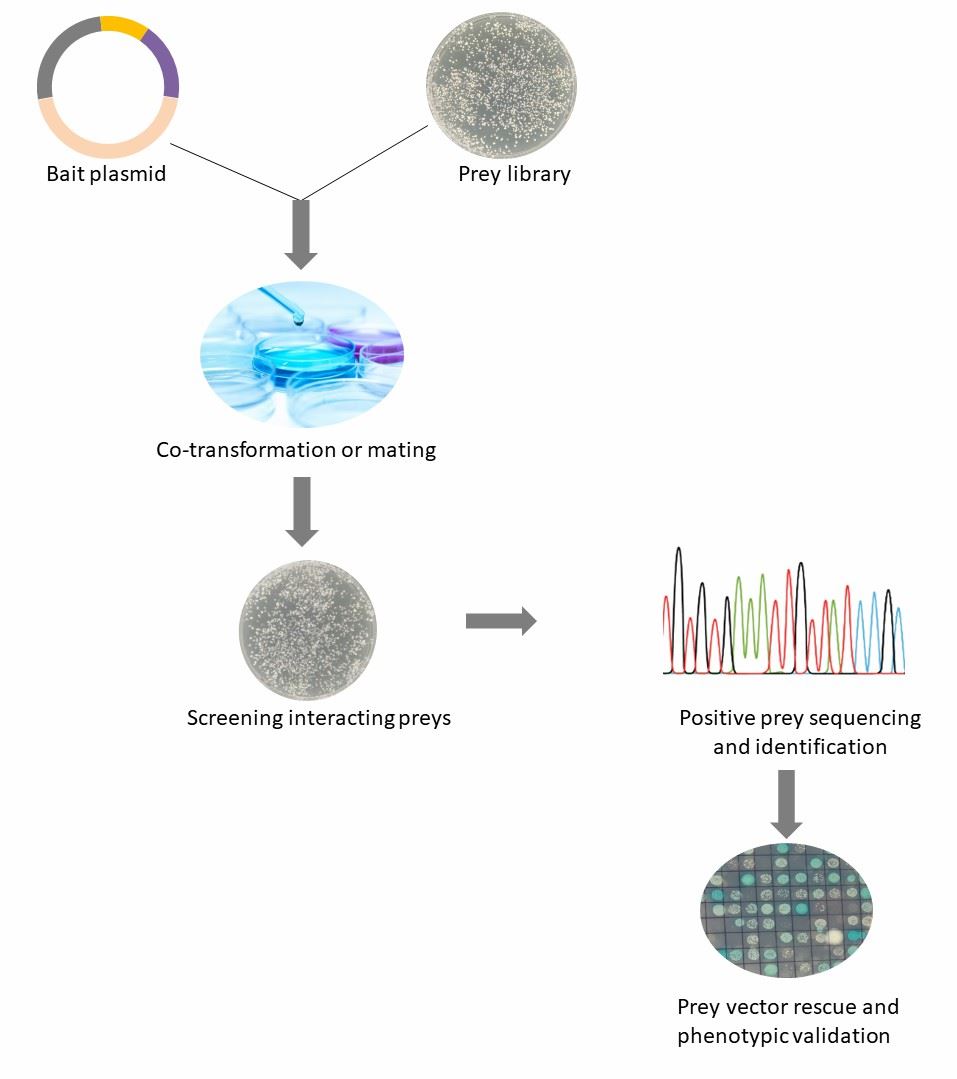 Fig. 1 A simple flowchart for a random Y2H library screening service.
If a suitable library is not available, our molecular biology experts will construct a high-quality, high-complexity custom cDNA library from your specific tissue, cell line, or developmental stage. We guarantee library complexity and insert size to ensure the highest chance of discovering relevant interactors.
To address the inherent limitations of the classic Y2H system, Creative Biolabs has adopted and optimized a suite of advanced Y2H platforms.
| Platform | Primary Application | Key Advantages |
| Classic GAL4 Y2H | Nuclear & Cytoplasmic Proteins | Gold-standard, highly sensitive, robust for soluble proteins. |
| Split-Ubiquitin Y2H (DUALmembrane System) | Full-Length Membrane Proteins | The premier choice for membrane protein interactions (Type I, II, multi-spanning) and organelle proteins. Detects interactions in situ at the membrane. |
| Cytoplasmic Y2H (CytoY2H) | Proteins that function exclusively in the cytoplasm. | Overcomes the need for nuclear translocation, allowing study of proteins in their native cellular compartment. |
| Reverse Y2H (rY2H) | Identifying mutations or compounds that disrupt PPIs. | Powerful tool for drug screening and functional domain mapping. Interaction leads to cell death, allowing for selection of disruptors. |
| Multi-Reporter Systems (e.g., Matchmaker Gold) | High-Confidence Screening | Utilizes up to four distinct reporter genes to virtually eliminate false positives, providing a highly stringent and reliable dataset. |
Studying the interactions of membrane proteins has historically been a major challenge. Our DUALmembrane system, based on the split-ubiquitin principle, is the definitive solution.
In this system, the bait protein is fused to the C-terminal half of ubiquitin (Cub) and a transcription factor. The prey protein is fused to the N-terminal half of ubiquitin (Nub). If the bait and prey interact, the Cub and Nub fragments reconstitute a full ubiquitin molecule, which is recognized by ubiquitin-specific proteases (UBPs). The proteases then cleave the transcription factor, allowing it to translocate to the nucleus and activate reporter genes. This elegant system allows for the investigation of full-length membrane proteins in their native membrane environment.
Choosing a service provider is a critical decision. At Creative Biolabs, we combine decades of hands-on experience with the latest technological innovations to offer a service that is truly best-in-class.
Creative Biolabs optimized Y2H protocols. The efficiency and quality of our Y2H system have been satisfying clients with highly reproducible and reliable results.
Other optional two-hybrid systems:
A: While classic Y2H systems can have a notable rate of false positives, Creative Biolabs mitigates this significantly by using advanced, multi-reporter yeast strains and performing rigorous validation steps. Our goal is to provide a hit list with the highest possible confidence.
A: Absolutely. This is a perfect application for our Split-Ubiquitin Y2H (DUALmembrane) system, which is specifically designed to analyze interactions of full-length membrane proteins in their native context.
A: For a standard screen, you only need to provide a plasmid containing the sequence for your bait protein. We handle the rest. If a custom library is needed, you would provide the source material (e.g., frozen tissue or cell pellets).
A: You will receive a comprehensive report including details of the bait validation, screening process, a list of confirmed positive interactors with their sequences, and a full bioinformatics analysis (including gene ontology and pathway analysis) of the hit list.
A: The timeline can vary depending on the project's complexity, but a standard library screen from bait validation to final report typically takes between 6-8 weeks.
Unlock the next breakthrough in your research. Contact our team of experts to discuss your project and receive a no-obligation quote.
All listed services and products are For Research Use Only. Do Not use in any diagnostic or therapeutic applications.