
Creative Biolabs is offering the most comprehensive services for antibody development projects. With strict regulation and effective execution, we are dedicated to providing the most valuable solutions to complete your projects.
HighlightsCreative Biolabs is offering the most comprehensive services for antibody development projects. With strict regulation and effective execution, we are dedicated to providing the most valuable solutions to complete your projects.
HighlightsCreative Biolabs has established a broad range of platforms for developing novel antibodies or equivalents. These cutting-edge technologies enable our scientists to meet your demands from different aspects and tailor the most appropriate solution that contributes to the success of your projects.
HighlightsWith deep understanding in antibody-related realms and extensive project experience, Creative Biolabs offers a variety of references to help you learn more about our capacities and achievements, including infographic, flyer, case study, peer-reviewed publications, and all kinds of knowledge that can assist your projects. You are also welcome to contact us directly for more specific solutions.
HighlightsGet a real taste of Creative Biolabs, one of the most professional custom service providers in the world. We are committed to providing highly customized comprehensive solutions with the best quality to advance your projects.
HighlightsAmino acids are organic molecules characterized by the presence of specific functional groups: an amino group (−NH2) and a carboxyl group (−COOH). These groups, along with a hydrogen atom, are bonded to a central carbon atom known as the alpha-carbon (Cα). The distinguishing attribute of each amino acid is its exclusive side chain or R group which attaches to the central alpha-carbon.
Life as we know it depends heavily on proteins, which perform a vast array of functions, including enzymatic catalysis, structural support, transport, signaling, and immune defense. Proteins are polymers constructed from a set of 20 standard amino acid monomers. These amino acids link together in specific sequences via peptide bonds to form polypeptide chains. The sequence and composition of amino acids in a polypeptide dictate its three-dimensional structure and, consequently, its biological function.
The generalized structure of an α-amino acid can be visualized as follows:
The tetrahedral configuration around the alpha-carbon (Cα) remains fundamental as previously detailed. The alpha-carbon displays chirality except in glycine where R equals H resulting in lack of asymmetry. The chirality of the alpha-carbon generates stereoisomers which are referred to as L- and D-forms. Protein amino acids exist mainly in the L-stereoisomeric form.
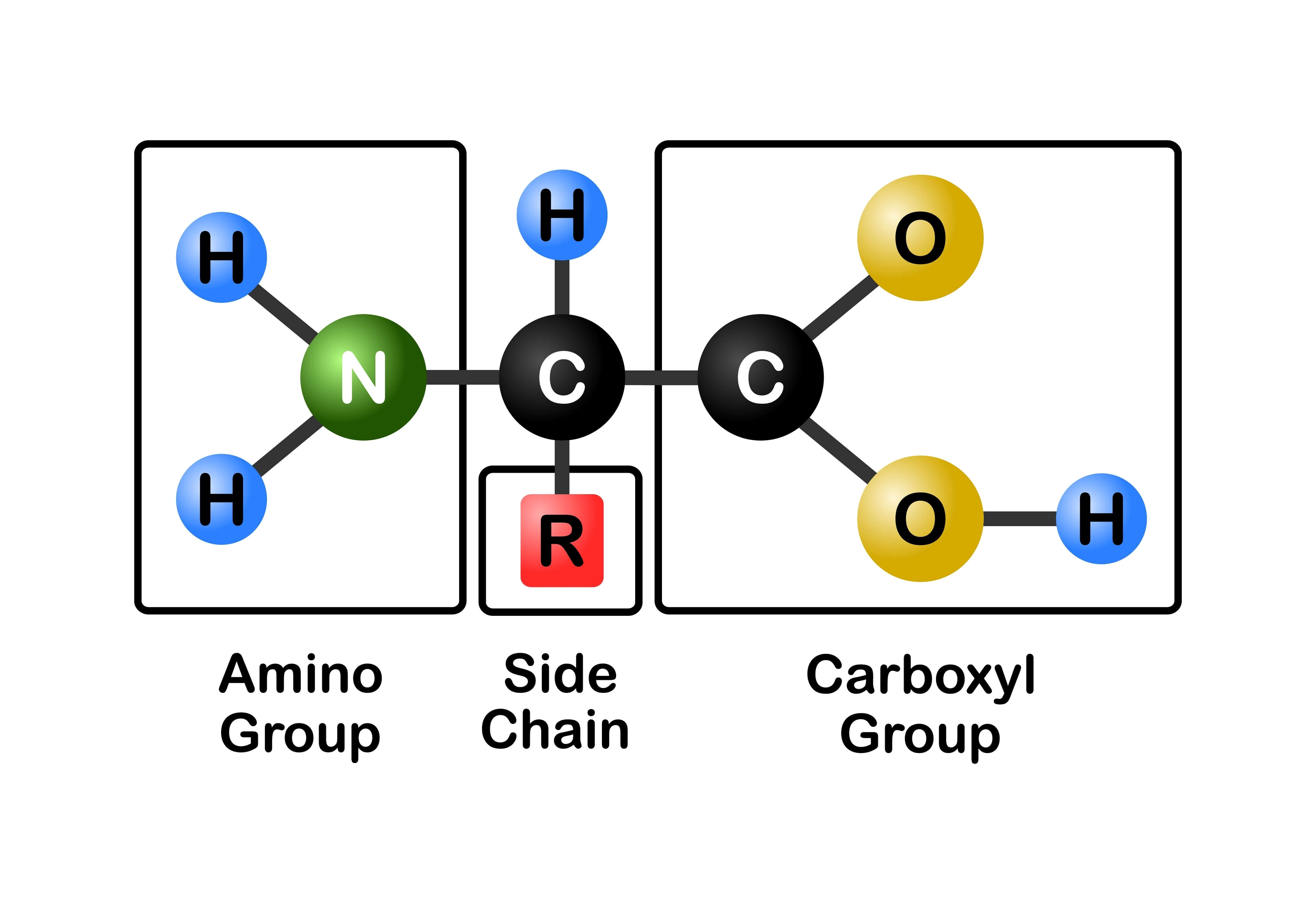 Fig. 1 General structure of an amino acid.
Two hydrogen atoms bond to a nitrogen atom to form the amino group (−NH2). Through its lone pair of electrons the group can behave as a base by accepting a proton (H+) to form a positively charged species (−NH3+). The ability to form a peptide bond and participate in acid-base reactions depends on this property.
In the carboxyl group (−COOH) the carbon atom establishes a double bond with one oxygen atom and a single bond with another oxygen atom which in turn forms a bond with a hydrogen atom. This group releases a proton (H+) which transforms it into an acid and results in a negative charge (−COO−). Peptide bond formation requires this additional vital functional group.
Each amino acid has unique characteristics because of its R group. The R group demonstrates extensive variation across its size dimensions and shape characteristics as well as differences in electrical charge and polarity together with chemical reactivity. The variety found in amino acid side chains leads directly to the extensive structural and functional diversity seen in proteins.
Nature contains hundreds of amino acids but protein synthesis mainly utilizes a particular subset.
The universal genetic code directly encodes these 20 amino acids to be incorporated into proteins during translation.
Table 1. The 20 Standard Proteinogenic Amino Acids
| Category | Amino Acid | 3-Letter Code | 1-Letter Code | Key Side Chain Feature |
| Non-polar, Aliphatic | Glycine | Gly | G | Hydrogen atom |
| Alanine | Ala | A | Methyl group | |
| Valine | Val | V | Isopropyl group | |
| Leucine | Leu | L | Isobutyl group | |
| Isoleucine | Ile | I | Sec-butyl group | |
| Methionine | Met | M | Thioether group | |
| Proline | Pro | P | Cyclic imino acid | |
| Aromatic | Phenylalanine | Phe | F | Benzyl group |
| Tyrosine | Tyr | Y | Phenol group | |
| Tryptophan | Trp | W | Indole ring | |
| Polar, Uncharged | Serine | Ser | S | Hydroxymethyl group |
| Threonine | Thr | T | Hydroxyethyl group | |
| Cysteine | Cys | C | Thiol group | |
| Asparagine | Asn | N | Amide group | |
| Glutamine | Gln | Q | Amide group (longer) | |
| Positively Charged (Basic) | Lysine | Lys | K | Primary amine group |
| Arginine | Arg | R | Guanidinium group | |
| Histidine | His | H | Imidazole ring | |
| Negatively Charged (Acidic) | Aspartic Acid | Asp | D | Carboxyl group |
| Glutamic Acid | Glu | E | Carboxyl group (longer) |
The classification of amino acids in humans and many animals depends on whether they need to be acquired through dietary intake.
Table 2. Essentiality of Amino Acids for Humans
| Category | Amino Acids |
| Essential | Histidine (His, H), Isoleucine (Ile, I), Leucine (Leu, L), Lysine (Lys, K), Methionine (Met, M), Phenylalanine (Phe, F), Threonine (Thr, T), Tryptophan (Trp, W), Valine (Val, V) |
| Non-essential | Alanine (Ala, A), Asparagine (Asn, N), Aspartic Acid (Asp, D), Glutamic Acid (Glu, E), Serine (Ser, S) |
| Conditionally Essential | Arginine (Arg, R), Cysteine (Cys, C), Glutamine (Gln, Q), Glycine (Gly, G), Proline (Pro, P), Tyrosine (Tyr, Y) |
This is another common classification scheme, overlapping with the polarity-based one:
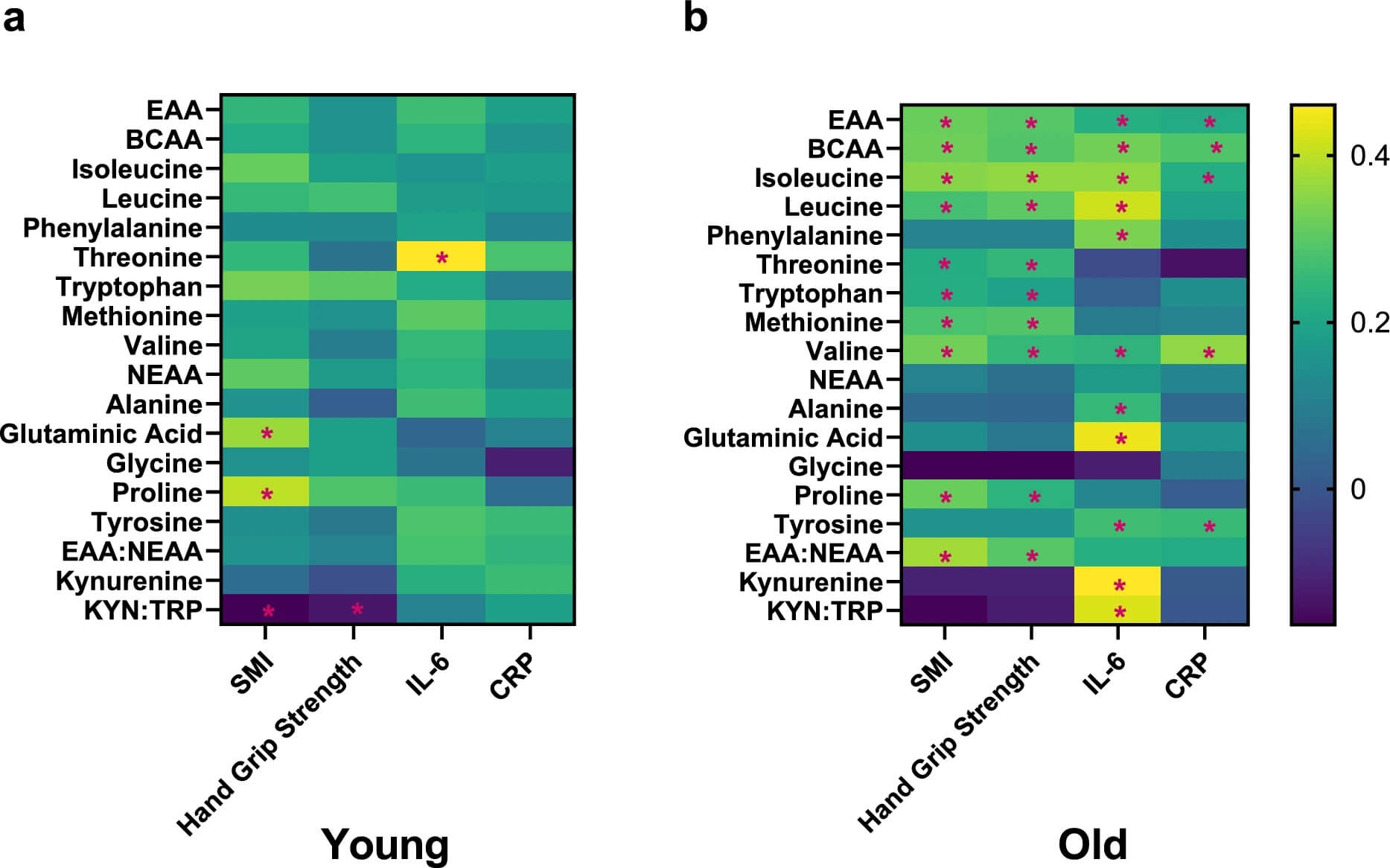 Fig. 2 Association of Amino acid and metabolite concentrations with skeletal muscle and inflammatory markers.1
The linear sequence of amino acids in a polypeptide chain, linked by peptide bonds, constitutes the primary structure of a protein. This sequence is determined by the genetic information encoded in DNA and transcribed into messenger RNA (mRNA).
While often used interchangeably, there's a subtle distinction:
The primary structure (amino acid sequence) is paramount because it dictates higher levels of protein structure:
The unique chemical properties of the amino acid side chains at each position drive the folding process, ultimately determining the protein's specific 3D shape. The protein structure forms binding sites and catalytic centers which together with structural components enable its biological role. A single mutation that modifies an amino acid can significantly change a protein's structure and function and may cause disease.
Amino acids' diverse structures and chemical properties underpin the complexity of protein architecture and function, while their participation in a wide array of metabolic and signaling pathways highlights their central importance in biochemistry and physiology. At Creative Biolabs, we recognize the fundamental significance of these molecules and leverage this knowledge across our diverse service platforms. We offer de novo antibody sequencing and de novo protein sequencing services, powered by our propriety DASS (Database Assisted Shotgun Sequencing) technology to meet the diverse protein research needs of our clients, driving innovation and advancement in the field of biomedical science.
Learn more about Creative Biolabs' de novo antibody sequencing services:
All listed services and products are For Research Use Only. Do Not use in any diagnostic or therapeutic applications.








