
Creative Biolabs is offering the most comprehensive services for antibody development projects. With strict regulation and effective execution, we are dedicated to providing the most valuable solutions to complete your projects.
HighlightsCreative Biolabs is offering the most comprehensive services for antibody development projects. With strict regulation and effective execution, we are dedicated to providing the most valuable solutions to complete your projects.
HighlightsCreative Biolabs has established a broad range of platforms for developing novel antibodies or equivalents. These cutting-edge technologies enable our scientists to meet your demands from different aspects and tailor the most appropriate solution that contributes to the success of your projects.
HighlightsWith deep understanding in antibody-related realms and extensive project experience, Creative Biolabs offers a variety of references to help you learn more about our capacities and achievements, including infographic, flyer, case study, peer-reviewed publications, and all kinds of knowledge that can assist your projects. You are also welcome to contact us directly for more specific solutions.
HighlightsGet a real taste of Creative Biolabs, one of the most professional custom service providers in the world. We are committed to providing highly customized comprehensive solutions with the best quality to advance your projects.
HighlightsAntibodies, which are immunoglobulins (Igs), take the form of large Y-shaped proteins and plasma B cells produce them primarily. Antibodies stand as vital elements of the adaptive immune system which identify and eliminate particular foreign substances that are antigens. Their structure comprises:
| Component | Description |
| Heavy Chains (H) | Composed of variable (VH) and constant (CH) regions |
| Light Chains (L) | Contain variable (VL) and constant (CL) regions |
| Antigen-binding | Formed by the pairing of VH and VL regions (Fab arms) |
| Fc Region | Constant region responsible for effector function and stability |
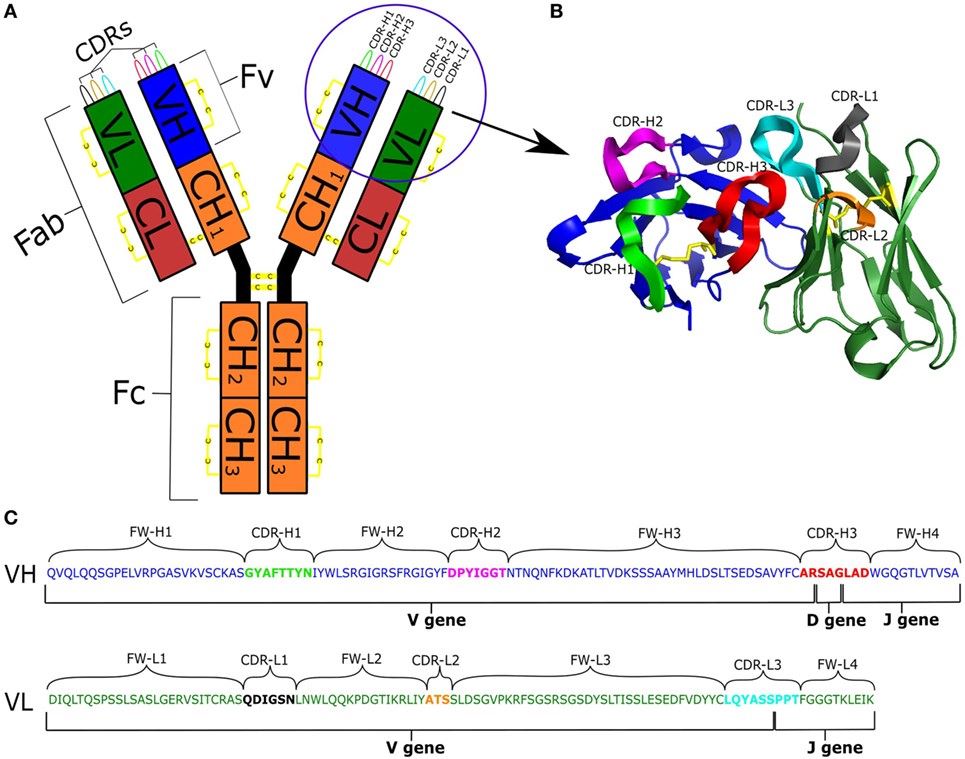 Fig. 1 Schematic representation of an antibody IgG structure.1, 3
CDRs are short, non-contiguous amino acid sequences within the variable regions of antibodies. They form the antigen-binding site, exhibiting high variability to recognize a vast array of antigens.
Each antibody variable domain (VH or VL) contains three CDRs:
| Region | Location | Contribution |
| CDR1 | First hypervariable loop | Moderate variability |
| CDR2 | Central loop | Less diverse, structural role |
| CDR3 | Most variable region | Major determinant of specificity |
| Feature | CDRs | Framework Regions (FRs) |
| Sequence | Highly variable | Relatively conserved |
| Function | Direct antigen binding | Structural support for CDRs |
| Location | Within variable regions (VH and VL) | Flanking CDRs within variable regions (VH and VL) |
| Synonyms | Hypervariable regions |
Antibody sequencing identifies the amino acid arrangement of antibodies by focusing on their variable regions which include the CDRs. Researchers use sequencing techniques for both nucleic acids and proteins in their studies.
The sequencing process of nucleic acids targets DNA or RNA molecules responsible for encoding antibody genes.
The amino acid sequence of the antibody protein becomes known through direct determination by protein sequencing.
Standardized numbering schemes are essential for:
Kabat Scheme:
Chothia Scheme:
IMGT Scheme:
Combined Approaches:
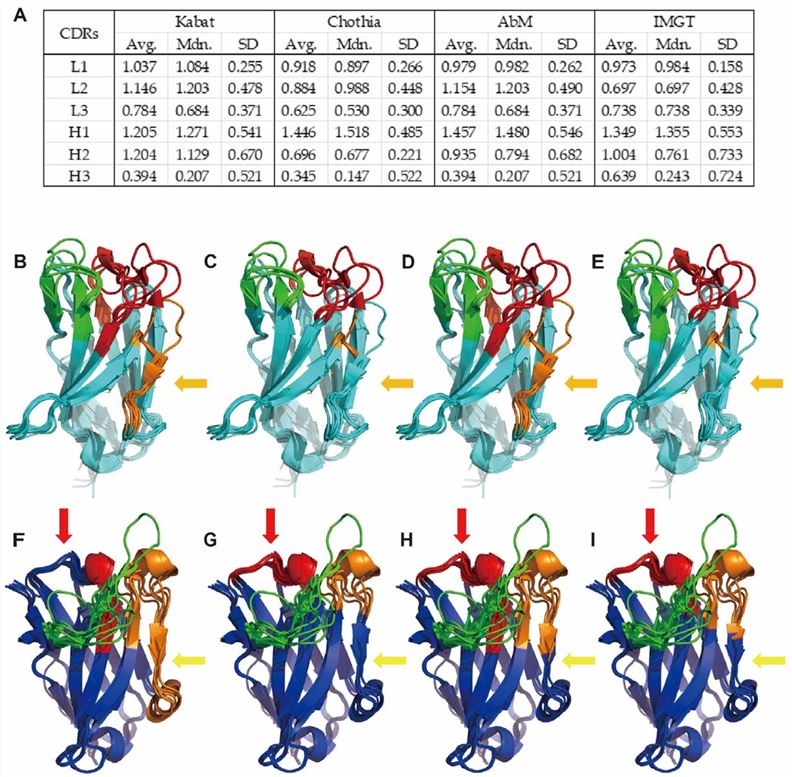 Fig. 2 The relative entropy and structural alignments of the CDRs based on different numbering schemes.2, 3
Sequence alignment and precise CDR boundary definition become problematic due to the high variability found in CDR regions with CDR3 being especially unpredictable. Both nucleic acid and protein sequencing methods face significant obstacles because of this issue.
Multiple conformations of CDR loops generate additional complexity because of their structural diversity. The variety of CDR loop structures leads to changes in amino acid counts and placements within the CDR regions which prevents a consistent application of a single numbering scheme.
Incomplete sequence data and ambiguous sequences create additional difficulties. NGS short sequence reads often fail to cover all CDR regions and protein sequencing methods may not fully capture the entire antibody sequence.
Accurate identification of CDRs through antibody sequencing is an indispensable capability in modern antibody discovery pipelines. At Creative Biolabs, our extensive expertise, combined with cutting-edge sequencing platforms, ensures precise mapping and engineering of antibody repertoires to meet the most demanding research and therapeutic needs. We offer de novo antibody sequencing and de novo protein sequencing services, powered by our propriety DASS (Database Assisted Shotgun Sequencing) technology to meet the diverse protein research needs of our clients, driving innovation and advancement in the field of biomedical science.
Learn more about Creative Biolabs' de novo antibody sequencing services:
All listed services and products are For Research Use Only. Do Not use in any diagnostic or therapeutic applications.








