Creative Biolabs is offering the most comprehensive services for antibody development projects. With strict regulation and effective execution, we are dedicated to providing the most valuable solutions to complete your projects.
HighlightsCreative Biolabs is offering the most comprehensive services for antibody development projects. With strict regulation and effective execution, we are dedicated to providing the most valuable solutions to complete your projects.
HighlightsCreative Biolabs has established a broad range of platforms for developing novel antibodies or equivalents. These cutting-edge technologies enable our scientists to meet your demands from different aspects and tailor the most appropriate solution that contributes to the success of your projects.
HighlightsWith deep understanding in antibody-related realms and extensive project experience, Creative Biolabs offers a variety of references to help you learn more about our capacities and achievements, including infographic, flyer, case study, peer-reviewed publications, and all kinds of knowledge that can assist your projects. You are also welcome to contact us directly for more specific solutions.
HighlightsGet a real taste of Creative Biolabs, one of the most professional custom service providers in the world. We are committed to providing highly customized comprehensive solutions with the best quality to advance your projects.
HighlightsThe term "de novo" is Latin for "from the beginning" or "anew". In the context of biological sequencing, de novo refers to the process of determining a sequence without relying on a known reference sequence or database. This is particularly critical when analyzing novel proteins, peptides, or variants for which no prior sequence information exists.
De Novo Amino Acid Sequencing is the analytical process used to determine the precise order (primary structure) of amino acids within a protein or peptide chain solely from experimental data. This is in contrast to database-driven approaches, where experimental fragmentation patterns are matched against known sequences in a database. De novo sequencing algorithms interpret the fragmentation data to deduce the sequence directly, amino acid by amino acid.
The ability to sequence proteins de novo is paramount for several reasons:
An amino acid sequence, also known as the primary structure of a protein or peptide, is the linear order in which amino acids are linked together by peptide bonds. There are 20 standard amino acids commonly found in proteins, each with a unique side chain. The specific sequence of these amino acids dictates the protein's three-dimensional structure and, consequently, its function.
The primary structure (amino acid sequence) is the fundamental determinant of a protein's higher-order structure:
Any alteration in the amino acid sequence can potentially impact the protein's folding, stability, and function.
Determining the amino acid sequence is crucial for:
Historically, the Edman degradation method was the primary technique for protein sequencing. While valuable, it is limited to sequencing relatively short peptides and requires a free N-terminus. Modern de novo sequencing relies heavily on mass spectrometry (MS).
Mass spectrometry is the dominant technology for de novo amino acid sequencing due to its sensitivity, speed, and ability to analyze complex mixtures. The general workflow involves:
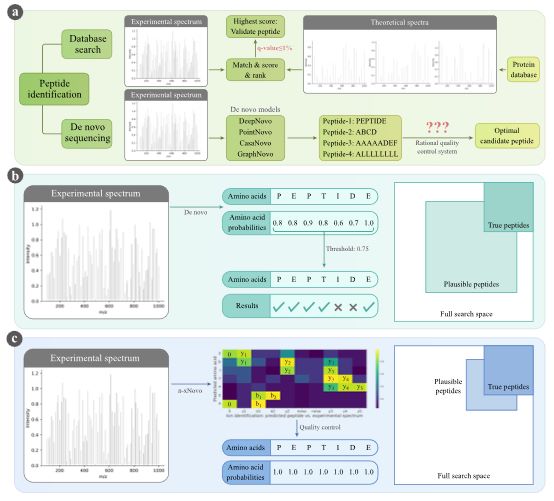 Fig. 1 Schematic overview of peptide identification.1
While MS is dominant, other techniques like Edman degradation are still used, particularly for confirming N-terminal sequences or for specific applications where MS might be less suitable. However, for comprehensive de novo sequencing, MS/MS is the method of choice.
De Novo Amino Acid Sequencing has broad applications beyond clinical diagnostics, particularly in research and biopharmaceutical development:
Even when a protein is not in a database, de novo sequencing can provide partial or full sequence tags that can sometimes be used to search genomic or transcriptomic data to identify the encoding gene. More importantly, it provides the definitive amino acid sequence, allowing for detailed characterization of the protein's primary structure, including splice variants and unexpected modifications.
This is a critical application. Antibodies are proteins with highly variable complementarity-determining regions (CDRs) that determine antigen binding. De novo sequencing of antibody variable regions (heavy and light chains) is essential for:
In exploratory proteomics studies, particularly in non-model organisms or complex biological systems, de novo sequencing is invaluable for identifying and characterizing previously unknown proteins or peptides. This can lead to the discovery of novel biomarkers, enzymes, or therapeutic peptides.
While the focus of this article is not clinical diagnosis, it's worth noting that de novo sequencing can indirectly support clinical research by:
However, direct clinical diagnostic tests based on de novo sequencing of patient samples are less common than targeted protein assays or genomic sequencing.
Despite its power, de novo amino acid sequencing presents certain challenges:
Interpreting MS/MS spectra for de novo sequencing requires sophisticated algorithms and can be challenging for:
Manual validation of de novo sequence calls is often necessary, especially for critical applications.
While MS sensitivity is high, successful de novo sequencing still requires sufficient sample quantity and purity to generate high-quality MS/MS spectra. Complex mixtures can be challenging, necessitating effective fractionation strategies.
De novo sequencing algorithms are computationally intensive, requiring significant processing power and specialized software. The analysis of large datasets generated from comprehensive proteomic experiments can be time-consuming.
The field of de novo sequencing continues to evolve rapidly:
In conclusion, de novo amino acid sequencing is a vital technique for the in-depth characterization of proteins and peptides, particularly those that are novel or require precise sequence validation. At Creative Biolabs, we offer de novo antibody sequencing and de novo protein sequencing services, powered by our propriety DASS (Database Assisted Shotgun Sequencing) technology to meet the diverse protein research needs of our clients, driving innovation and advancement in the field of biomedical science.
Learn more about Creative Biolabs' de novo antibody sequencing services:
All listed services and products are For Research Use Only. Do Not use in any diagnostic or therapeutic applications.