Creative Biolabs is offering the most comprehensive services for antibody development projects. With strict regulation and effective execution, we are dedicated to providing the most valuable solutions to complete your projects.
HighlightsCreative Biolabs is offering the most comprehensive services for antibody development projects. With strict regulation and effective execution, we are dedicated to providing the most valuable solutions to complete your projects.
HighlightsCreative Biolabs has established a broad range of platforms for developing novel antibodies or equivalents. These cutting-edge technologies enable our scientists to meet your demands from different aspects and tailor the most appropriate solution that contributes to the success of your projects.
HighlightsWith deep understanding in antibody-related realms and extensive project experience, Creative Biolabs offers a variety of references to help you learn more about our capacities and achievements, including infographic, flyer, case study, peer-reviewed publications, and all kinds of knowledge that can assist your projects. You are also welcome to contact us directly for more specific solutions.
HighlightsGet a real taste of Creative Biolabs, one of the most professional custom service providers in the world. We are committed to providing highly customized comprehensive solutions with the best quality to advance your projects.
HighlightsThe ability to decipher the complete genetic makeup of an organism has revolutionized biological sciences. At the forefront of this revolution is de novo genome sequencing, a powerful approach that allows us to construct an organism's genome sequence for the first time. As a company deeply embedded in pioneering genomic solutions, Creative Biolabs recognizes the profound impact of this technology.
De novo sequencing, derived from the Latin phrase meaning "from the beginning" or "anew," refers to the method of determining the full sequence of DNA bases in an organism's genome without the guidance of a pre-existing reference genome. Unlike resequencing, which maps sequence reads to a known reference, de novo sequencing pieces together overlapping DNA fragments to construct a contiguous and complete genomic map.
Imagine trying to assemble a million-piece puzzle without looking at the picture on the box – that's analogous to de novo genome assembly. The "pieces" are short or long DNA sequences (reads) generated by sequencing instruments, and sophisticated bioinformatics algorithms are the "hands" that meticulously arrange these pieces in their correct order and orientation.
The importance of de novo sequencing cannot be overstated, particularly for organisms whose genomes have not yet been explored or for studying genomic regions with high variability that are poorly represented in existing reference genomes.
De novo sequencing is indispensable for:
A successful de novo genome sequencing project requires meticulous planning and execution, encompassing several critical stages from sample collection to final genome annotation.
The quality of the input DNA is paramount for generating a high-quality de novo genome assembly.
The choice of sequencing technology significantly influences the quality, contiguity, and cost of the de novo assembly.
Table 1. Comparison of Major Sequencing Technologies for De Novo Assembly
| Feature | Illumina (Short-Read) | PacBio HiFi (Long-Read) | Oxford Nanopore (Long-Read) |
| Read Length | 50 - 300 bp | 10 - 25 kb (up to >100 kb) | 1 kb - >1 Mb (N50 >50 kb) |
| Accuracy | Very High (>99.9%) | Very High (>99.9%) | Moderate to High (85-99.5% raw, improving) |
| Throughput | Very High | Moderate to High | High (scalable) |
| Cost per base | Low | Moderate | Moderate to Low (decreasing) |
| Error Profile | Substitution errors, GC bias | Random, minimal bias | Indels, context-specific |
| HMW DNA Req. | No (but better for mate-pairs) | Yes (critical) | Yes (critical for ultra-long) |
| Repeat Resolution | Poor to Moderate | Excellent | Excellent |
| SV Detection | Limited | Excellent | Excellent |
| Base Mods. | Indirect (e.g., bisulfite) | Direct | Direct |
Genome assembly is the computational process of reconstructing the original genome sequence from the multitude of sequencing reads. Most modern assemblers utilize graph-based approaches, typically de Bruijn graphs or Overlap-Layout-Consensus (OLC) graphs. The primary goal is to generate the longest possible contiguous sequences (contigs) with the fewest errors. The contiguity of an assembly is often measured by metrics like N50 (the length of the shortest contig such that contigs of this length or longer cover at least 50% of the total assembly size).
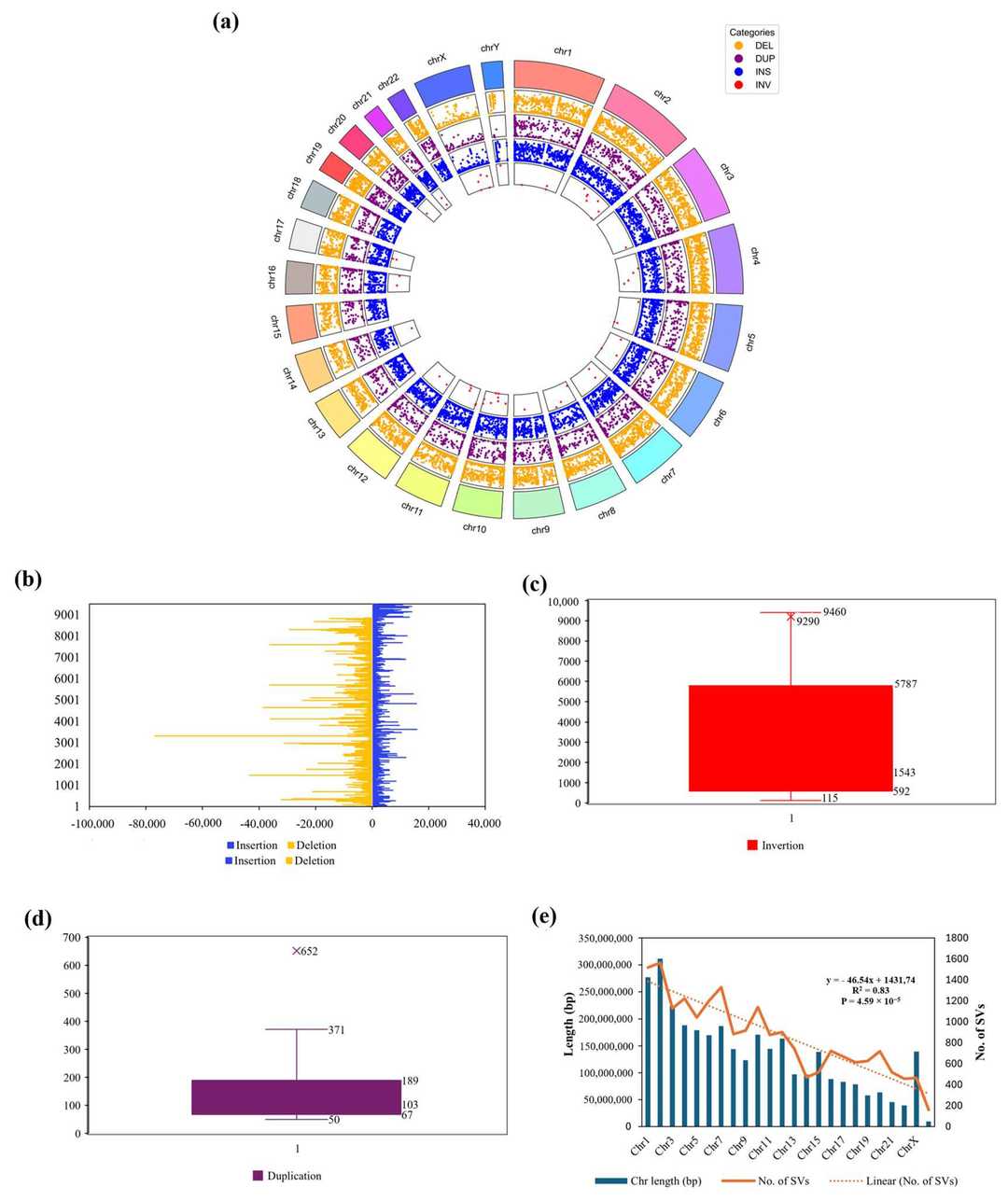 Fig. 1 A summary of structural variants (SVs) detected in the VHG genome.1
Once an initial assembly (draft genome) is generated, further steps are required to identify its functional components and improve its quality.
Genome annotation is the process of locating and describing genes, regulatory regions, repeat elements, and other features within the assembled genome. This involves:
Draft assemblies often contain gaps (regions of unknown sequence between contigs) and local misassemblies or errors.
The ultimate goal is to achieve a "chromosome-level" assembly where scaffolds correspond to entire chromosomes, though this is a significant undertaking, especially for large, complex genomes.
The choice of strategy for de novo sequencing depends on the organism's genome size, complexity (repeat content, heterozygosity), available budget, and desired quality of the final assembly.
Table 2. Strategic Considerations for Short-Read vs. Long-Read De Novo Assembly
| Aspect | Short-Read Only Assembly | Long-Read Only Assembly |
| Genome Complexity | Best for small, simple genomes (e.g., bacteria, viruses) | Suitable for all complexities, excels at complex genomes |
| Assembly Contiguity | Often fragmented (many contigs, low N50) | High contiguity (fewer contigs, high N50, often near-chromosome level with sufficient data) |
| Repeat Resolution | Poor, repeats collapse or break contigs | Excellent, long reads span most repeats |
| Structural Variants | Difficult to detect large SVs accurately | Excellent for comprehensive SV detection |
| Cost | Lower initial sequencing cost | Higher initial sequencing cost (but decreasing rapidly) |
| Accuracy (raw) | Very high per base | Variable (HiFi is very high, ONT/CLR lower but improvable) |
| Bioinformatics | Mature tools, but assembly is complex | Evolving tools, assembly can be computationally intensive |
| Finishing Effort | High, many gaps to close | Lower, fewer gaps, easier to achieve high completeness |
Hybrid assembly aims to leverage the strengths of both short-read and long-read technologies to produce a high-quality, cost-effective genome assembly.
Common hybrid approaches include:
Hybrid strategies often provide a "best of both worlds" scenario: the contiguity afforded by long reads and the accuracy afforded by short reads. For large and complex eukaryotic genomes (e.g., plants, mammals), hybrid approaches have become the standard. The combination of PacBio HiFi or ONT ultra-long reads for scaffolding and Illumina reads for polishing and cost-effective depth has enabled the generation of reference-quality genomes for an increasing number of species. Additional technologies like Hi-C, which provides information about the 3D organization of chromatin, are often integrated to achieve chromosome-level scaffolding.
While "Whole Genome Sequencing" (WGS) is a broad term, in the context of de novo projects, it implies an effort to sequence and assemble the entire nuclear genome, and often organellar genomes (mitochondria, chloroplasts) as well. Key strategic considerations include:
The ability to generate high-quality reference genomes de novo has far-reaching implications across diverse biological disciplines.
De novo sequencing is the primary tool for genomic characterization of newly discovered or unculturable organisms.
De novo sequencing is critical in virology, especially for:
High-quality de novo assemblies enable robust comparative genomics studies:
At Creative Biolabs, we combine decades of experience with cutting-edge technologies and a dedicated team of experts to provide comprehensive de novo sequencing services. We offer de novo antibody sequencing and de novo protein sequencing services, powered by our propriety DASS (Database Assisted Shotgun Sequencing) technology to meet the diverse protein research needs of our clients, driving innovation and advancement in the field of biomedical science.
Learn more about Creative Biolabs' de novo antibody sequencing services:
All listed services and products are For Research Use Only. Do Not use in any diagnostic or therapeutic applications.