
Creative Biolabs is offering the most comprehensive services for antibody development projects. With strict regulation and effective execution, we are dedicated to providing the most valuable solutions to complete your projects.
HighlightsCreative Biolabs is offering the most comprehensive services for antibody development projects. With strict regulation and effective execution, we are dedicated to providing the most valuable solutions to complete your projects.
HighlightsCreative Biolabs has established a broad range of platforms for developing novel antibodies or equivalents. These cutting-edge technologies enable our scientists to meet your demands from different aspects and tailor the most appropriate solution that contributes to the success of your projects.
HighlightsWith deep understanding in antibody-related realms and extensive project experience, Creative Biolabs offers a variety of references to help you learn more about our capacities and achievements, including infographic, flyer, case study, peer-reviewed publications, and all kinds of knowledge that can assist your projects. You are also welcome to contact us directly for more specific solutions.
HighlightsGet a real taste of Creative Biolabs, one of the most professional custom service providers in the world. We are committed to providing highly customized comprehensive solutions with the best quality to advance your projects.
Highlightstreatments for a range of complex diseases. However, the development of any protein-based therapeutic faces the critical challenge of unwanted immunogenicity. The patient's immune system may recognize the biotherapeutic as foreign and generate Anti-Drug Antibodies (ADAs), which can significantly impact drug safety, pharmacokinetics (PK), and efficacy. At Creative Biolabs, we leverage over two decades of bioanalytical expertise to provide a comprehensive suite of Anti-Drug Antibody (ADA) Assay Services. Our state-of-the-art facilities and world-class scientific team are dedicated to helping you navigate the complexities of immunogenicity assessment, ensuring your program's success.
Immunogenicity is the propensity of a substance to trigger an immune response. In the context of drug development, this response can lead to the formation of ADAs. The consequences of an ADA response are varied and potentially severe:
Therefore, a robust and reliable immunogenicity testing strategy is not just a regulatory requirement—it is a cornerstone of a successful and safe biotherapeutic development program.
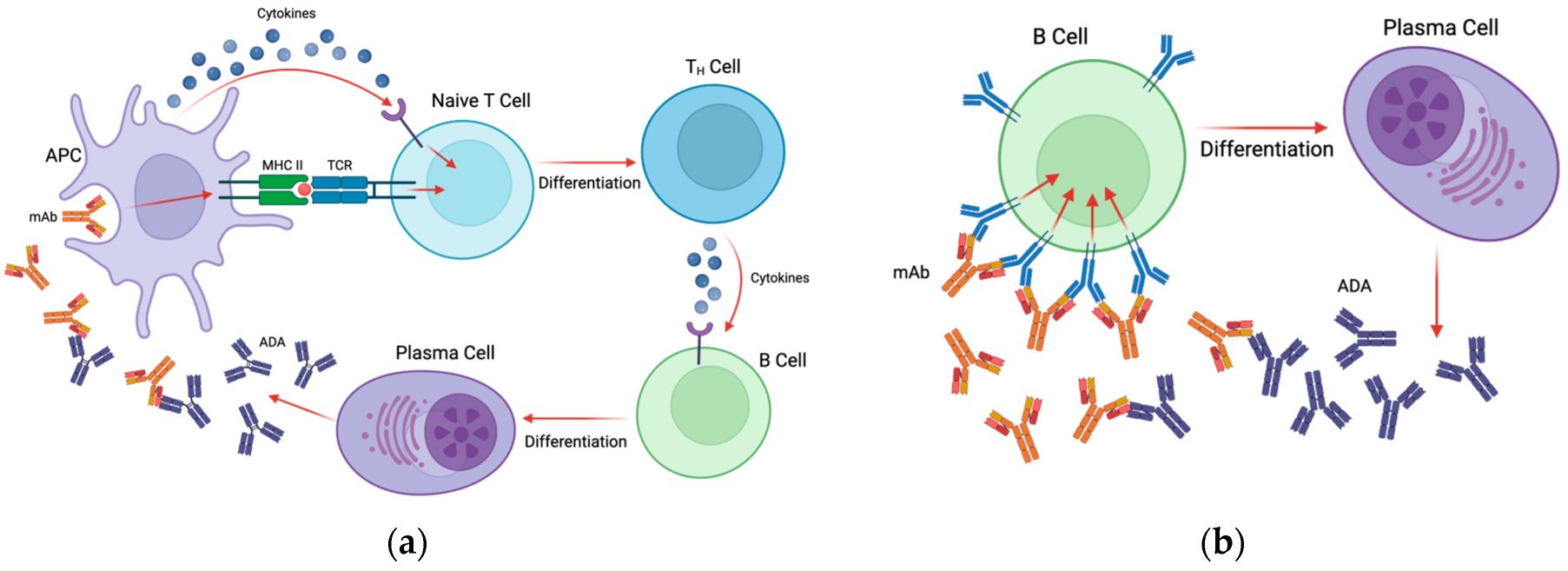 Fig. 1 Overview of the process by which ADAs are formed.1
Global regulatory agencies mandate a multi-tiered approach for immunogenicity assessment. Creative Biolabs has fully integrated this strategy into our service workflow to deliver clear, actionable data
Designed as the first line of immunogenicity detection, our screening assay utilizes highly sensitive platforms to identify all potentially ADA-positive samples. This minimizes false negatives and ensures that no immunogenic response goes undetected.
Key Features:
Samples flagged as potentially positive are subjected to a confirmatory assay to verify the specificity of ADA binding. This typically involves competitive inhibition using excess drug to confirm that detected signals result from true ADA-drug interactions, not matrix effects or non-specific binding.
Key Features:
For all confirmed ADA-positive samples, we proceed to detailed quantitative and functional assessment.
Key Features:
To meet the diverse needs of modern biotherapeutics, we have invested in a portfolio of cutting-edge technology platforms. This allows us to develop highly customized, sensitive, and drug-tolerant ADA assays, which are crucial for detecting ADAs in the presence of high circulating drug concentrations.
| Platform | Technology Principle | Key Advantages for ADA Testing | Best Suited For |
| Meso Scale Discovery (MSD-ECL) | Electrochemiluminescence | Gold Standard. Unmatched sensitivity, high drug tolerance, low background, wide dynamic range, and requires minimal sample volume. | Virtually all biotherapeutics, especially for high-stakes clinical trials. |
| Gyrolab | Nanoliter-scale Immunoassay | Microfluidics-based system minimizes matrix effects, provides rapid results, and conserves precious reagents and samples. | Early discovery, rare sample types, and high-throughput screening. |
| Surface Plasmon Resonance (SPR) | Real-time, Label-free Kinetics | Provides in-depth characterization of ADA binding kinetics (on/off rates) and affinity. Helps in understanding the nature of the immune response. | ADA isotype characterization, epitope binning, detailed mechanistic studies. |
| Advanced ELISA | Colorimetric/Fluorometric | A versatile and robust workhorse. We specialize in developing high-performance Bridging ELISA formats for superior specificity and sensitivity. | Cost-effective screening, preclinical studies, and a wide range of drug modalities. |
| Cell-Based Assays | Functional Bioassays | The definitive method for assessing neutralizing antibody (NAb) function by measuring the actual biological impact on drug activity. | NAb assessment for all biotherapeutics with a measurable biological function. |
Our ADA assay services are a key part of our integrated bioanalytical support for biotherapeutic development. Explore our related services to see how we can support your entire program.
Before ADA assays, suitable positive controls must be obtained. We can prepare polyclonal or monoclonal antibody against the active ingredients that are similar to the actual ADA samples. In addition, drugs labeled with biotin or fluorescent tags can be synthesized.
We will develop proper assays based on currently used ones such as “Bridging”, direct or competitive ELISA, cytokine profile, sensitivity, specificity, and precision evaluation and stay in compliance.
Characterizations of ADAs include the titer, isotype of ADAs, and detection of neutralization status of the ADAs. A general problem with ADA assays is the formation of drug-ADA complexes in the sample. We have developed several approaches such as pre-incubation with ADA assay reagents and acid dissociation to solve this problem.
Evaluation of possible changes in PK/TK that are induced by ADAs.
More SIAT® Immunogenicity Related Services at Creative Biolabs:
Choosing the right CRO partner is paramount. We offer more than just data; we provide a collaborative partnership to guide you through the regulatory landscape.
An Anti-Drug Antibody (ADA) is any antibody that binds to the therapeutic drug. A Neutralizing Antibody (NAb) is a specific subset of ADAs that not only binds to the drug but also directly inhibits its biological function. All NAbs are ADAs, but not all ADAs are NAbs. Assessing for NAbs is a critical part of risk evaluation.
During treatment, both the therapeutic drug and potential ADAs can be present in a patient's sample. A low drug-tolerant assay might fail to detect ADAs because they are already bound by the drug in circulation, leading to a false negative. A high drug-tolerant assay, often using techniques like acid dissociation, can break these complexes and accurately measure the true level of ADAs, providing a much more accurate picture of immunogenicity.
We routinely develop and validate assays for a wide range of biological matrices, including serum, plasma, cerebrospinal fluid (CSF), and tissue homogenates from various species (human, mouse, rat, NHP, etc.).
Our assay validation process is fully compliant with regulatory guidelines. We assess key parameters such as cut point determination, sensitivity, precision, specificity, selectivity, robustness, and stability to ensure the data is reliable, reproducible, and ready for regulatory scrutiny.
Don't let immunogenicity risk derail your development. Partner with the experts at Creative Biolabs to build a robust, regulatory-compliant ADA testing strategy.
All listed services and products are For Research Use Only. Do Not use in any diagnostic or therapeutic applications.








