Creative Biolabs is offering the most comprehensive services for antibody development projects. With strict regulation and effective execution, we are dedicated to providing the most valuable solutions to complete your projects.
HighlightsCreative Biolabs is offering the most comprehensive services for antibody development projects. With strict regulation and effective execution, we are dedicated to providing the most valuable solutions to complete your projects.
HighlightsCreative Biolabs has established a broad range of platforms for developing novel antibodies or equivalents. These cutting-edge technologies enable our scientists to meet your demands from different aspects and tailor the most appropriate solution that contributes to the success of your projects.
HighlightsWith deep understanding in antibody-related realms and extensive project experience, Creative Biolabs offers a variety of references to help you learn more about our capacities and achievements, including infographic, flyer, case study, peer-reviewed publications, and all kinds of knowledge that can assist your projects. You are also welcome to contact us directly for more specific solutions.
HighlightsGet a real taste of Creative Biolabs, one of the most professional custom service providers in the world. We are committed to providing highly customized comprehensive solutions with the best quality to advance your projects.
HighlightsFragment antigen-binding (Fab) antibodies occupy a distinct space between full-length monoclonals and smaller engineered fragments. Their modular composition—paired variable domains with adjacent constant CH1/CL regions—gives Fabs a unique structural responsiveness that can be fine-tuned for environmental cues. Among these cues, pH shifts are gaining importance in fundamental research, especially when scientists want binding events that turn on, off, or switch as local acidity changes.
In recent years, researchers have increasingly explored pH-responsive Fab variants to understand molecular recognition under variable protonation states and to create tools that behave differently in acidic endosomes, vesicles, or extracellular microdomains. Creative Biolabs has long supported this direction, providing phage display-based discovery solutions rooted in biochemical rigor and deep experience with fragment engineering. This page introduces the conceptual framework of pH-sensitive Fab discovery using phage display, outlines key scientific considerations, and discusses the advantages of working with Creative Biolabs for foundational pH-modulated antibody fragment research.
Researchers pursue pH-responsive Fab fragments for several conceptual and mechanistic purposes:
Many biomolecules expose or conceal epitopes when protonation states shift. pH-tuned Fabs help map these transitions more precisely.
Fabs that bind only at low pH, or only at neutral pH, can act as "conformational sensors," supporting studies in protein folding, viral fusion dynamics, endosomal trafficking, and enzyme activation states.
pH-responsive binding provides insights into how noncovalent forces shift under altered electrostatics, helping researchers refine models of antigen recognition.
Fabs engineered to dissociate under acidic or mildly acidic environments serve as useful research tools for controlled antigen capture and release experiments.
Scientists often exploit specific structural characteristics of Fab fragments:
Protonation of histidine side chains can dramatically alter hydrogen-bonding patterns and charge distributions.
Introducing or repositioning ionizable residues can alter pH-dependent stabilization of the antigen-binding site.
Though constant domains are often regarded as stable scaffolds, subtle alterations can propagate conformational effects to variable domains.
pH shifts can weaken hydrophobic packing interactions if neighboring residues gain charge.
These mechanistic aspects make Fabs particularly responsive to environmental acidity, and phage display is one of the few technologies that can interrogate these responses with fine granularity.
Growing interest in pH-tuned molecular tools has shaped several active research themes:

Creative Biolabs closely monitors these developments and continuously updates its screening frameworks so clients benefit from current best practices.
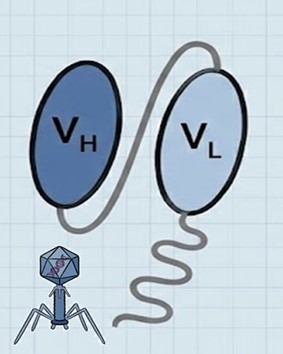
Fabs have separate VH and VL domains linked through constant domains, giving them greater conformational rigidity and more predictable pH-induced shifts.
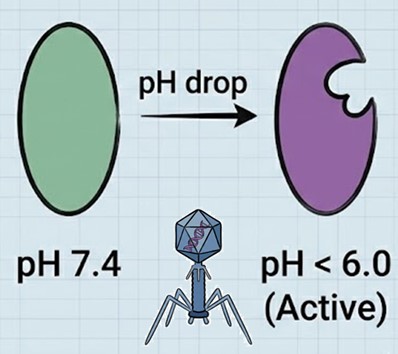
Fabs possess dual-chain architecture, which changes how pH influences hydrophobic packing, interdomain angles, and electrostatic propagation.
To explore how Creative Biolabs can support pH-dependent Fab discovery in your research program, our team is ready to discuss your goals.
Creative Biolabs has developed a robust, modular workflow for pH-dependent Fab discovery using phage display. While the following outlines the conceptual framework—not operational details—it reflects approaches Creative Biolabs applies in foundational research collaborations.
Creative Biolabs places strong emphasis on:
Phage display selections incorporate:
After initial selections:
For knowledge-building rather than product development, Creative Biolabs can assist in:
Working with Creative Biolabs provides several practical benefits for research laboratories:
 Deep Experience in Fragment-Specific pH Tuning
Fine-Grained pH Control Throughout the Workflow
Multidisciplinary Integration
Transparent, Mechanism-Oriented Communication
Deep Experience in Fragment-Specific pH Tuning
Fine-Grained pH Control Throughout the Workflow
Multidisciplinary Integration
Transparent, Mechanism-Oriented Communication
pH-sensitive Fab fragments represent a versatile research tool for probing acid-dependent molecular recognition, mapping conformational changes, and generating reversible binding mechanisms. Their dual-domain organization makes them especially useful for dissecting how protonation events propagate through an antibody's structural network. With the maturity of phage display technologies—and the ability to incorporate precise pH selection pressures—scientists can now uncover Fab variants that respond to subtle chemical cues within biological environments. Creative Biolabs continues to help researchers explore these directions by combining deep fragment engineering expertise with rigorous analytical workflows. Whether the goal is to investigate pH-responsive motifs, characterize acid-dependent affinity landscapes, or identify Fab variants with unique environmental behaviors, Creative Biolabs offers a reliable knowledge partner grounded in scientific precision.
All listed services and products are For Research Use Only. Do Not use in any diagnostic or therapeutic applications.