Close

Introduction for pH-Sensitive Monoclonal Antibody Discovery by Phage Display

Overview Landscape Framework Discovery Branches Advantages

Overview

Concept Relevance to Science Research
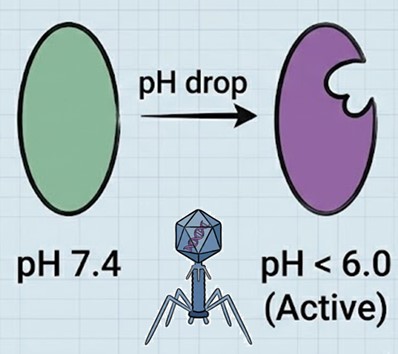
  • pH-sensitive monoclonal antibodies (mAbs) exhibit reversible changes in affinity, conformation, or epitope recognition when exposed to acidic microenvironments.
  • Their behaviors stem from strategically positioned ionizable residues-often histidines-integrated during library diversification.
  • Researchers increasingly use these molecular switches to study vesicular trafficking, receptor recycling, and compartment-specific protein interactions.
  • Acidic microdomains in endosomes, lysosomes, and pathogen-associated vesicles represent unique windows for probing molecular events.
  • pH-tunable mAbs provide higher temporal and spatial resolution than static binders when characterizing these environments.
  • Creative Biolabs' platform focuses purely on research-grade antibody discovery, supporting basic science investigations rather than clinical development.

Phage display provides unparalleled control over selection pressures—including fine pH gradients, temporal exposure, and multi-stage elution strategies. Creative Biolabs employs stringent multi-round screening frameworks to recover clones that maintain structural integrity while demonstrating clear pH-dependent binding shifts.

Scientific Landscape

Growing Interest in pH-Modulated Molecular Recognition

Recent publications highlight how antibodies undergo controlled affinity "release" or "tightening" within narrow pH windows (often 0.3–0.5 unit differences).

This capability is actively used for endocytic pathway mapping, receptor turnover assays, vesicle partitioning studies, and transient biomolecule capture.

Fundamental Drivers of pH Sensitivity in Antibodies

Histidines, aspartates, and glutamates are common engineering targets for modulating proton-responsive interactions.

Conformational flexibility around complementarity-determining regions (CDRs) can be tuned through framework substitutions and loop-length modifications.

Creative Biolabs' scientists integrate specific motif-level insights into rational library design.

Current Research Opportunities

pH-tunable antibodies support selective binding studies, intracellular routing experiments, and reversible antigen engagement models.

This class of antibodies is also used to examine environmental fluctuations in endosomal maturation or pathogen-influenced acidification cycles.

If you would like to explore how Creative Biolabs' science-driven workflows can support your research, please reach out.

Technology Framework at Creative Biolabs

Fig.1 Library Design. (Creative Biolabs AI)

1. Library Design Principles

  • Diversification Around Ionizable Hotspots
    Framework elements are stabilized to prevent structural collapse under mild acidic stress.
  • Balanced Randomization & Sequence Quality
    All antibody formats—Fab, scFv, VHH precursors—are codon-optimized and built with well-distributed amino acid representation.
    Creative Biolabs ensures that libraries avoid unwanted cysteine pairing, aggregation-prone motifs, or biases that could interfere with pH-responsive selection.
  • Format Diversity Available for Screening
    Creative Biolabs provides format-specific library options such as Fab, scFv, and VHH that maintain structural robustness across acidic conditions.

Fig.2 Screening. (Creative Biolabs AI)

2. Screening Methodology

  • pH-Stepwise Biopanning
    Selection pressures adjust pH incrementally to identify clones with sharply defined switching behaviors.
    Dual-condition biopanning cycles (neutral binding followed by acidic elution) enrich candidates with reversible structural responsiveness.
  • Compartment-Inspired Conditions
    Creative Biolabs can mimic early endosomal (pH 6.0–6.5), late endosomal (pH 5.0–5.8), or lysosomal (pH 4.0–4.8) gradients during screening.
    Additional factors such as ionic strength, temperature, or co-factors can be layered into selection rounds for higher biological relevance.
  • Clone Validation under Multi-Parameter Tests
    Creative Biolabs evaluates binder performance across dynamic pH curves, thermal stress points, and structural assays to confirm the robustness of screened variants.

Fig.3 Analytical Framework. (Creative Biolabs AI)

3. Data-Rich Analytical Framework

  • High-Resolution Sequencing & Diversity Profiling
    Next-generation sequencing is used to quantify convergence, diversity retention, and mutation distribution across selection rounds.
    Creative Biolabs correlates sequence patterns with pH-dependent phenotypes to guide rational clone prioritization.
  • Functional Signal Interpretation
    Creative Biolabs supplies comprehensive datasets that researchers can directly integrate into their own mechanistic studies.

To explore these techniques with Creative Biolabs, you are welcome to open a conversation with our team.
Specialized Discovery Branches

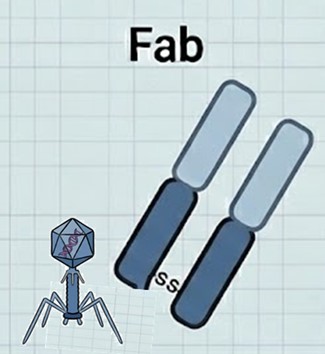
Fig.4 Fab Engineering. (Creative Biolabs AI)

pH-Responsive Fab Engineering

  • Fabs offer modular domains ideal for studying structural consequences of protonation.
  • Creative Biolabs' Fab-focused libraries emphasize CDR mobility and controlled loop rearrangements, frequently producing sharper pH-driven binding transitions than full-length mAbs.
  • This branch is introduced in detail on the pH-Responsive Fab Engineering page, which discusses tailored frameworks, motif optimization, and selection logic for fragment-based monoclonal variants.

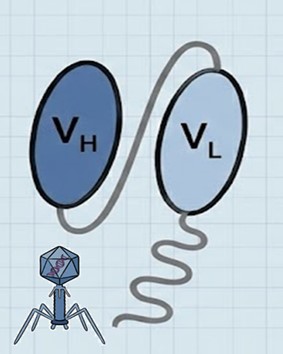
Fig.5 Tunable scFv. (Creative Biolabs AI)

pH-Tunable scFv Discovery

  • scFvs provide lightweight scaffolds with rapid conformational adaptability, enabling tight control over acid-triggered affinity modulation.
  • Creative Biolabs' approach integrates linker composition, CDR cluster selection, and stability scoring to support reproducible scFv performance under acidic conditions.
  • Further insights are provided on the pH-Tunable scFv Discovery page, outlining structural strategies and screening practices specific to this versatile antibody fragment.

Fig.6 VHH Screening. (Creative Biolabs AI)

pH-Sensitive VHH Screening

  • VHHs naturally excel in structural resilience, making them strong candidates for pH-regulated binding research.
  • Creative Biolabs uses single-domain libraries enriched for histidine-centric microenvironments to achieve defined proton-triggered switching.
  • Additional information appears on the pH-Sensitive VHH Screening page, which explains how Creative Biolabs adapts selection pressures to the unique architecture of camelid-derived single domains.

If you are exploring which antibody format best supports your research goals, Creative Biolabs' specialists are available for discussion.

Advantages of Creative Biolabs' pH-Sensitive Monoclonal Antibody Discovery Platform

Expertise in Ionizable Residue Engineering

  • Creative Biolabs' scientists specialize in mapping proton-responsive motifs and integrating them into functional antibody scaffolds.
  • This expertise supports the recovery of clones with tightly defined, predictable pH-dependent transitions.

Fine Control Over Selection Environments

  • Creative Biolabs' screening system enables temperature control, gradient exposure, rapid pH cycling, and multi-phase elution strategies.
  • These capabilities allow researchers to model biological compartments with high fidelity.

High-Quality Data Packages for Mechanistic Research

  • Structural predictions, binding curves, variant distributions, and pH-shift analyses are all included as part of Creative Biolabs' scientific support.
  • Researchers gain insights that directly assist with hypothesis refinement and experimental planning.

Format Flexibility Without Compromising Integrity

  • Creative Biolabs' workflows accommodate full-length mAbs and fragment-based derivatives without losing structural robustness in acidic conditions.
  • This breadth supports diverse basic-science applications, from trafficking studies to intracellular binding models.

Feel free to contact Creative Biolabs to learn how these advantages can support your next study.

Research into pH-responsive monoclonal antibodies continues to open new possibilities for studying compartment-specific biochemical events. By integrating advanced library engineering, carefully orchestrated pH-gradient screening, and data-rich downstream analytics, Creative Biolabs offers a strong foundation for researchers seeking reliable tools for molecular investigation. The page's companion subpages-focusing on Fab, scFv, and VHH discovery-provide deeper insights for those who favor specific antibody architectures. Creative Biolabs remains committed to supporting academically focused investigations with rigor, transparency, and deep technical experience. If you would like assistance planning your next pH-sensitive monoclonal antibody project, Creative Biolabs' team is always available to help.


All listed services and products are For Research Use Only. Do Not use in any diagnostic or therapeutic applications.

Online Inquiry
CONTACT US
USA:
Europe:
Germany:
Call us at:
USA:
UK:
Germany:
Fax:
Email:
Our customer service representatives are available 24 hours a day, 7 days a week. Contact Us
© 2026 Creative Biolabs. | Contact Us