Creative Biolabs is offering the most comprehensive services for antibody development projects. With strict regulation and effective execution, we are dedicated to providing the most valuable solutions to complete your projects.
HighlightsCreative Biolabs is offering the most comprehensive services for antibody development projects. With strict regulation and effective execution, we are dedicated to providing the most valuable solutions to complete your projects.
HighlightsCreative Biolabs has established a broad range of platforms for developing novel antibodies or equivalents. These cutting-edge technologies enable our scientists to meet your demands from different aspects and tailor the most appropriate solution that contributes to the success of your projects.
HighlightsWith deep understanding in antibody-related realms and extensive project experience, Creative Biolabs offers a variety of references to help you learn more about our capacities and achievements, including infographic, flyer, case study, peer-reviewed publications, and all kinds of knowledge that can assist your projects. You are also welcome to contact us directly for more specific solutions.
HighlightsGet a real taste of Creative Biolabs, one of the most professional custom service providers in the world. We are committed to providing highly customized comprehensive solutions with the best quality to advance your projects.
HighlightsLytic peptides that respond specifically to acidic conditions represent a growing class of functional biomolecules with value in basic research, membrane-biophysics studies, synthetic biology, and engineered model-system design. These peptides exhibit negligible membrane perturbation at neutral pH but undergo structural rearrangements-often helix formation, coil-to-helix transitions, or surface charge redistribution-when they encounter lower pH. Because many cellular and subcellular microenvironments fluctuate in acidity, pH-triggered lytic behavior offers scientists a precise way to interrogate compartmental boundaries, vesicular maturation, or controlled disruption of model membranes.
Creative Biolabs has been working with pH-responsive peptide systems for years, integrating advanced phage display methodology with optimized peptide-library engineering. This subpage focuses specifically on discovery workflows for pH-sensitive lytic peptides, describing the conceptual background, research motivations, technology architecture, and Creative Biolabs' practical strengths. It also provides a natural entry point to our broader peptide programs.
If you would like detailed guidance tailored to your research model, our team at Creative Biolabs is readily available to discuss project options.
If you'd like us to share example data formats or assay possibilities, you can contact Creative Biolabs' scientific consultants anytime.
Understanding how peptides transition from an inert state at neutral pH to a membrane-disruptive configuration under acidic conditions has become a central theme in modern peptide biochemistry. Researchers increasingly view lytic peptides not as static entities but as dynamic molecular systems whose activity emerges only when specific physicochemical thresholds are crossed. Several mechanistic elements are recurrent across current studies.
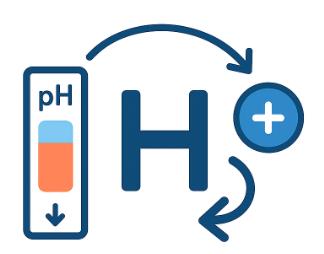
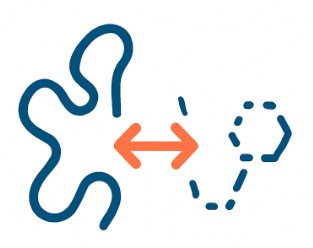

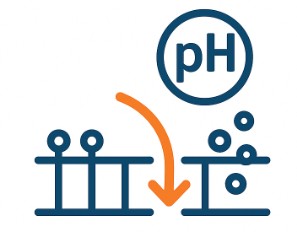
As the field moves toward mechanistic precision, well-controlled in vitro systems and rational sequence exploration continue to refine our understanding. If you would like deeper scientific notes or curated literature digests, Creative Biolabs can share additional research-oriented materials upon request.
If you'd like to explore how our display frameworks can be tailored to your selection criteria, Creative Biolabs' technical support team is available to discuss feasibility.
 Deep Expertise in pH-Regulated Peptide Engineering
High-Quality, High-Diversity Libraries
Selection Strategies That Preserve Scientific Accuracy
Strong Analytical Backbone
Deep Expertise in pH-Regulated Peptide Engineering
High-Quality, High-Diversity Libraries
Selection Strategies That Preserve Scientific Accuracy
Strong Analytical Backbone
If you'd like to learn how these advantages align with your upcoming experiments, Creative Biolabs can provide a tailored consultation.
Creative Biolabs approaches pH-sensitive lytic peptide discovery with a combination of rigorous science, careful library engineering, and transparent communication. Our goal is to provide researchers with reliable, well-characterized tools for studying membrane disruption under acidic conditions. Whether you are mapping pH-regulated structural transitions, building responsive systems in synthetic biology, or exploring membrane mechanics, Creative Biolabs offers a platform built to support precise and reproducible discovery. For discussions, inquiry support, or project planning, Creative Biolabs welcomes you to reach out through your preferred contact channel.
All listed services and products are For Research Use Only. Do Not use in any diagnostic or therapeutic applications.