Creative Biolabs is offering the most comprehensive services for antibody development projects. With strict regulation and effective execution, we are dedicated to providing the most valuable solutions to complete your projects.
HighlightsCreative Biolabs is offering the most comprehensive services for antibody development projects. With strict regulation and effective execution, we are dedicated to providing the most valuable solutions to complete your projects.
HighlightsCreative Biolabs has established a broad range of platforms for developing novel antibodies or equivalents. These cutting-edge technologies enable our scientists to meet your demands from different aspects and tailor the most appropriate solution that contributes to the success of your projects.
HighlightsWith deep understanding in antibody-related realms and extensive project experience, Creative Biolabs offers a variety of references to help you learn more about our capacities and achievements, including infographic, flyer, case study, peer-reviewed publications, and all kinds of knowledge that can assist your projects. You are also welcome to contact us directly for more specific solutions.
HighlightsGet a real taste of Creative Biolabs, one of the most professional custom service providers in the world. We are committed to providing highly customized comprehensive solutions with the best quality to advance your projects.
HighlightsProtein domains that retain structural integrity and functional activity in protease rich environments are essential for many lines of basic biological research. In vitro assays, cellular uptake studies, and mechanistic investigations often expose proteins to endogenous or exogenous proteases that can rapidly compromise molecular integrity. As a result, protease sensitivity rather than binding affinity or specificity frequently becomes the limiting factor in experimental design.
At Creative Biolabs, we apply phage display based screening strategies to identify protein domain variants that exhibit improved resistance to proteolytic degradation while maintaining native folding and molecular function. By integrating thoughtful library construction with carefully tuned selection conditions, our approach allows researchers to assess stability related sequence features in a systematic and reproducible way. This page outlines the scientific rationale, technical principles, and research applications behind Creative Biolabs' protease stability screening expertise. If resistance to enzymatic degradation is limiting your current protein studies, Creative Biolabs offers practical strategies to assess stability focused alternatives.
 Why Anti-Protease Stability Matters Why Anti-Protease Stability Matters
|
 Why Phage Display Is Central to Protease Stability Discovery Why Phage Display Is Central to Protease Stability Discovery
|
To discuss how protease stability screening may fit into your research strategy, contact Creative Biolabs for a technical consultation.

Effective discovery of protease stable variants begins with library design. At Creative Biolabs, library construction is treated as a hypothesis driven process rather than a purely random exercise. Decisions regarding mutation density, positional targeting, and sequence diversity are informed by structural data, domain architecture, and known degradation hotspots. Synthetic libraries allow exploration beyond natural sequence constraints, enabling discovery of unconventional but functional solutions to protease sensitivity. Semi synthetic libraries preserve key structural elements while diversifying flexible or exposed regions that often govern degradation susceptibility. Natural sequence based libraries support evolutionary comparisons and identification of naturally occurring stability features. By aligning library design with downstream screening conditions, Creative Biolabs maximizes the likelihood of identifying variants that are both informative and experimentally useful. For customized library construction strategies, contact Creative Biolabs to discuss your protein system. |

Functional recovery steps ensure that enriched variants retain binding or interaction capacity following protease exposure. This dual selection logic helps distinguish genuine stability improvements from artifacts of over selection. Throughout the process, screening parameters are adjusted based on empirical observations rather than fixed templates. This adaptive approach reflects Creative Biolabs' emphasis on scientific rigor and experimental relevance. To determine screening workflows suited to your application, connect with Creative Biolabs' phage display specialists. |
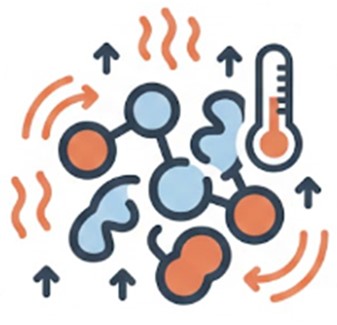
Creative Biolabs can customize thermal selection parameters to match your study design.
Protease stable protein domains enable longer observation windows in serum exposure and other degradation sensitive experimental systems, reducing premature signal loss and improving data continuity.
Enhanced resistance to enzymatic degradation supports more reliable investigation of internalization behavior, intracellular trafficking pathways, and molecular persistence over time.
Stability focused screening provides insight into how sequence features and local structural properties influence susceptibility to proteolytic attack, informing broader protein engineering research.
Identified stable variants often serve as robust starting points for downstream exploratory studies rather than final optimized constructs, supporting iterative scientific investigation.
If your research depends on protein performance under enzymatic stress, Creative Biolabs can help align screening outcomes with experimental needs.
 Robust Library Design
Creative Biolabs constructs synthetic, semi synthetic, and natural sequence based libraries tailored to each protein domain and research objective. These libraries are designed to sample both conserved and exploratory regions, allowing meaningful interrogation of stability relevant sequence space.
Controlled Protease Challenge Conditions
Protease exposure is introduced in a calibrated and hypothesis driven manner rather than as a blunt filter. This ensures that selection pressure reflects realistic experimental scenarios while preserving diversity during early enrichment rounds.
Functional Retention Focus
Selection steps are designed to enrich variants that remain folded and capable of molecular interaction following enzymatic exposure. This emphasis helps avoid enrichment of variants that resist digestion but lose biological relevance.
Multi Species Capability
Creative Biolabs supports library construction and screening across a wide range of species backgrounds. This flexibility enables comparative stability analysis among homologous domains or species specific variants.
Integrated Library Screening Expertise
Our team combines deep experience in phage display screening with iterative optimization of selection parameters. This integration improves enrichment efficiency and reproducibility across independent projects.
Data Informed Interpretation
Sequence outputs are analyzed for convergence patterns, residue frequency shifts, and motif enrichment. These insights support both immediate experimental use and longer term protein engineering decisions.
To learn how these advantages can support your research, reach out to Creative Biolabs for detailed technical guidance.
Protease stability screening by phage display offers a powerful framework for exploring how protein domains respond to enzymatic challenge in biologically relevant contexts. When applied with care, it provides not only robust molecular tools but also insight into the fundamental determinants of protein resilience. Creative Biolabs brings together experience in library construction, screening strategy design, and data interpretation to support stability focused research with rigor and reliability. Our goal is to serve as a collaborative partner for scientists seeking deeper understanding rather than off the shelf solutions. Working with Creative Biolabs allows researchers to approach protease stability challenges with confidence, clarity, and experimental precision.
All listed services and products are For Research Use Only. Do Not use in any diagnostic or therapeutic applications.