Creative Biolabs is offering the most comprehensive services for antibody development projects. With strict regulation and effective execution, we are dedicated to providing the most valuable solutions to complete your projects.
HighlightsCreative Biolabs is offering the most comprehensive services for antibody development projects. With strict regulation and effective execution, we are dedicated to providing the most valuable solutions to complete your projects.
HighlightsCreative Biolabs has established a broad range of platforms for developing novel antibodies or equivalents. These cutting-edge technologies enable our scientists to meet your demands from different aspects and tailor the most appropriate solution that contributes to the success of your projects.
HighlightsWith deep understanding in antibody-related realms and extensive project experience, Creative Biolabs offers a variety of references to help you learn more about our capacities and achievements, including infographic, flyer, case study, peer-reviewed publications, and all kinds of knowledge that can assist your projects. You are also welcome to contact us directly for more specific solutions.
HighlightsGet a real taste of Creative Biolabs, one of the most professional custom service providers in the world. We are committed to providing highly customized comprehensive solutions with the best quality to advance your projects.
HighlightsProtein domains are the fundamental structural and functional units of biological systems. However, many native protein domains exhibit limited stability when exposed to experimental stressors such as elevated temperature, proteolytic environments, mechanical forces, or prolonged incubation. These limitations often restrict their utility in foundational research, structural biology, protein–protein interaction studies, and synthetic biology.
The discovery of stable variants of protein domains, variants that preserve native function while tolerating environmental stress, has therefore become a central research objective across multiple scientific fields. Phage display has emerged as one of the most effective platforms for identifying such variants, enabling the exploration of vast sequence space while applying precise selection pressures. If your research depends on robust protein domains that withstand demanding experimental conditions, Creative Biolabs offers a scientifically grounded pathway forward.
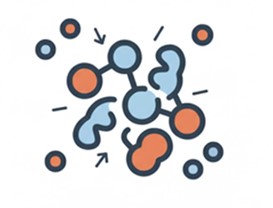 Why Protein Domain Stability Matters in Research Across basic and applied research settings, protein instability presents recurring challenges:
Recent scientific trends have intensified interest in protein domain stability:
|
 Why Phage Display Is Central to Stability Discovery Phage display supports stability focused discovery by offering several key advantages.
|
To discuss how stability focused phage display may enhance your research design, Creative Biolabs welcomes scientific inquiries.
 1. Strategic Library Construction for Stability Exploration Creative Biolabs emphasizes rational diversity design to ensure meaningful screening outcomes:
|
 2. Stability Oriented Phage Display Screening Logic Stability screening differs from affinity driven selection. Creative Biolabs designs screening logic that focuses on survival and integrity:
|
Researchers interested in applying these principles to their own protein domains are encouraged to connect with Creative Biolabs for further discussion.
Protein domains that retain folding integrity, binding competence, or functional activity under stress conditions offer valuable tools for mechanistic studies, molecular engineering, and platform development. By applying carefully designed selection pressures, we help researchers uncover protein domain variants that maintain performance when exposed to thermal stress or proteolytic challenge, conditions commonly encountered in experimental workflows, biophysical assays, and synthetic systems. Building on this expertise, Creative Biolabs supports two complementary discovery directions that focus on distinct but often interrelated aspects of protein robustness.
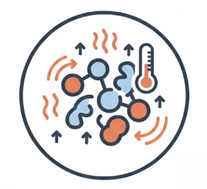 Thermal Stable Protein Domain Screening Thermal stability is a defining property for protein domains used in prolonged assays, elevated temperature reactions, or environments with fluctuating thermal profiles. In this research direction, Creative Biolabs applies phage display screening strategies that expose diversified protein domain libraries to controlled heat challenges prior to selection. Variants that preserve structural integrity and binding capability after thermal stress are preferentially enriched, allowing researchers to identify sequence features associated with enhanced folding resilience. These stabilized domains are particularly valuable for studies involving kinetic measurements, repeated cycling experiments, or integration into engineered molecular systems where temperature tolerance improves experimental reliability. |
 Protease Stable Protein Domain Screening Proteolytic susceptibility often limits the practical use of protein domains in complex biological matrices or during long term experimental studies. Creative Biolabs' protease stability oriented discovery approach addresses this challenge by applying enzymatic degradation pressure during phage display screening. Through iterative rounds of selection, variants that resist proteolytic cleavage while maintaining functional conformations are preferentially enriched from highly diverse libraries. This strategy allows researchers to examine the relationship between sequence and stability and to obtain protein domains suitable for applications involving cellular extracts, surface immobilized systems, or extended incubation conditions where protease activity cannot be completely avoided. |
Researchers interested in either direction can contact Creative Biolabs to access specialized support.
 Domain Specific Engineering Experience
Creative Biolabs has accumulated extensive practical experience working with a broad range of protein domains. This depth of domain familiarity enables Creative Biolabs to anticipate common sources of instability and to tailor discovery strategies accordingly, rather than relying on generic mutagenesis or screening approaches for fundamentally different protein architectures.
Rational Stress Modeling Aligned with Research Reality
Rather than relying on overly simplified or artificial selection conditions, Creative Biolabs designs stability challenges that reflect realistic experimental stresses encountered in basic research. These may include prolonged incubation, gradual temperature shifts, or controlled enzymatic exposure, ensuring that enriched variants remain relevant and informative for downstream mechanistic studies.
Balanced Library Design for Functional Integrity
Creative Biolabs emphasizes stability enhancement without compromising native functionality. Library construction strategies are carefully balanced to preserve key structural and functional elements while exploring stabilizing substitutions elsewhere, reducing the risk of isolating variants that are stable but biologically uninformative or experimentally impractical.
Adaptability Across Species and Platforms
With experience spanning protein domains derived from mammalian, microbial, plant, and synthetic origins, Creative Biolabs is well positioned to adapt stability discovery strategies across diverse biological contexts. This versatility supports comparative studies and enables researchers to transfer stability principles between systems with greater confidence.
Iterative Insight Generation Beyond Variant Selection
Stability focused discovery at Creative Biolabs goes beyond the identification of enriched clones. Sequence trends, convergence patterns, and positional enrichment are examined to generate mechanistic insight into the determinants of stability, providing researchers with data that can guide future protein engineering efforts or hypothesis driven investigations.
Seamless Integration with Broader Research Pipelines
Protein domains with improved stability often act as core building blocks in more complex experimental workflows, including interaction mapping and long duration assays. Creative Biolabs designs its discovery strategy to ensure that selected variants can be smoothly integrated into these broader research settings without the need for extensive re optimization.
If stability is a limiting factor in your protein based research, Creative Biolabs is well positioned to provide scientific guidance.
The discovery of stable variants of protein domains has become an essential pursuit in modern biological research. As experimental systems grow more complex and demanding, the need for protein tools that withstand stress without sacrificing function continues to expand. Phage display offers a uniquely powerful approach to navigating this challenge, enabling the systematic identification of variants optimized for resilience. By integrating carefully designed libraries, condition specific screening approaches, and rigorous analytical interpretation, researchers can obtain both reliable reagents and a deeper understanding of the mechanisms governing protein stability.
Creative Biolabs remains dedicated to advancing this area through technically rigorous and research driven discovery frameworks. Whether your studies involve thermal stress, proteolytic environments, or application within complex biological models, Creative Biolabs offers the expertise and perspective needed to support innovation driven by protein stability. We welcome you to contact Creative Biolabs to explore how stability focused phage display discovery can help strengthen your research goals.
All listed services and products are For Research Use Only. Do Not use in any diagnostic or therapeutic applications.