Creative Biolabs is offering the most comprehensive services for antibody development projects. With strict regulation and effective execution, we are dedicated to providing the most valuable solutions to complete your projects.
HighlightsCreative Biolabs is offering the most comprehensive services for antibody development projects. With strict regulation and effective execution, we are dedicated to providing the most valuable solutions to complete your projects.
HighlightsCreative Biolabs has established a broad range of platforms for developing novel antibodies or equivalents. These cutting-edge technologies enable our scientists to meet your demands from different aspects and tailor the most appropriate solution that contributes to the success of your projects.
HighlightsWith deep understanding in antibody-related realms and extensive project experience, Creative Biolabs offers a variety of references to help you learn more about our capacities and achievements, including infographic, flyer, case study, peer-reviewed publications, and all kinds of knowledge that can assist your projects. You are also welcome to contact us directly for more specific solutions.
HighlightsGet a real taste of Creative Biolabs, one of the most professional custom service providers in the world. We are committed to providing highly customized comprehensive solutions with the best quality to advance your projects.
HighlightsTo systematically study molecular interactions, you need tools that can move through the huge amino acid sequence space with high resolution. Peptide libraries are a key part of this work because they offer a high-throughput way to find bioactive motifs in large groups of random or designed sequences.
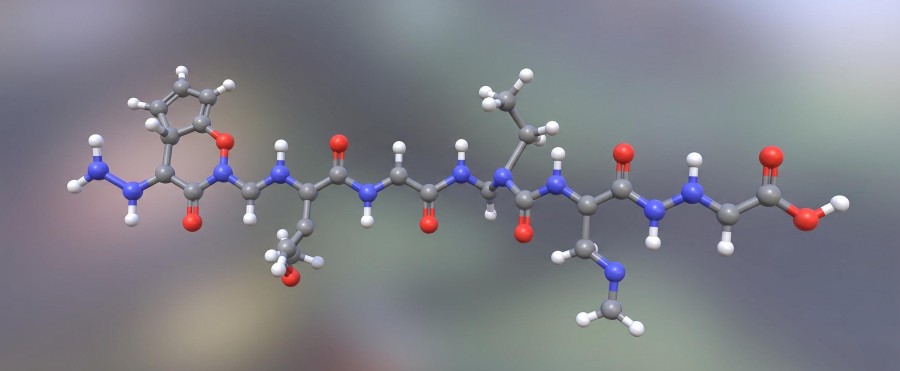
A peptide library is a group of different peptides of different lengths that have a wide range of amino acid combinations. These repertoires are meant to show what short protein fragments can do structurally and functionally. These fragments usually have 5 to 20 residues. A key idea in this field is the mimotope, which is a peptide that looks like a natural antigen epitope but has a different sequence. Peptide libraries are very useful for studying molecular recognition because they can mimic complex biological surfaces with simple linear or cyclic sequences.
The classification of these libraries is dictated by their design and intended use, ensuring that the structural diversity aligns with the experimental goals.
These contain sequences where every position is randomized, providing an unbiased tool for discovering novel ligands for receptors or enzymes without prior structural knowledge.
Mainly used for linear epitope mapping, these libraries consist of sequences that overlap by a set number of residues to cover the entire length of a target protein.
By systematically removing amino acids from the termini of a lead peptide, these libraries help define the minimal sequence required for biological activity.
Each residue in a sequence is sequentially replaced with alanine to identify the contribution of individual side chains to the stability or function of the peptide.
These involve permuting the sequence or fixing specific residues at certain positions to refine binding motifs and enhance affinity.
These collections serve as a bridge between genetic information and functional proteomics, allowing researchers to decode the rules governing protein binding, enzymatic catalysis, and cellular signaling. By utilizing diverse synthesis and display strategies, peptide libraries facilitate the discovery of both natural epitopes and synthetic mimotopes, expanding the possibilities for therapeutic and diagnostic development.
The transition from individual peptide synthesis to screening based on library has revolutionized the speed and precision of molecular discovery. Several distinct advantages make these platforms superior to traditional trial and error methods.
Peptide libraries allow for the simultaneous evaluation of millions or even billions of unique sequences. This scale ensures that even rare, high affinity interactions are captured within a single screening campaign.
The ability to synthesize and screen large pools of candidates in a single reaction vessel reduces the requirement for expensive reagents and intensive purification steps compared to testing individual compounds.
Beyond standard L amino acids, modern library construction can incorporate D amino acids, nonnatural residues, and post translational modifications like PEGylation or acetylation. This expands the chemical diversity beyond what is available in the natural genetic code.
Because these libraries are not restricted to existing biological sequences, they can uncover synthetic ligands that outperform natural binders in terms of stability, specificity, or ease of production.
Peptide libraries are useful in almost every area of modern biotechnology. They are important reagents for both basic research and clinical use.
 Finding and Making New Drugs
Peptides are being used more and more as starting points for making drugs that work against G protein coupled receptors (GPCRs) and other cell surface targets.
Cancer Immunotherapy
Libraries help find tumor-associated antigens and make peptide-based vaccines that are meant to get certain T cells to respond.
Analysis of Protein-Protein Interactions
Peptides from these libraries can be used to break up or stabilize complex formations by copying the interfaces of proteins that interact with each other. This can help us understand how cells work.
Screening for Enzyme Substrates and Inhibitors
Peptide repertoires are perfect for figuring out how specific proteases, kinases, and phosphatases are, which helps make very selective inhibitors.
Making Diagnostic Reagents
Mimotopes derived from these libraries can substitute intricate antigens in ELISA or flow cytometry assays, providing more stable and reproducible diagnostic instruments for infectious diseases and autoimmune disorders.
At Creative Biolabs, we provide a world class Phage Display Platform that serves as the engine for our peptide library construction and screening services. This technology bridges the gap between genotype and phenotype by displaying the peptide on the surface of a bacteriophage while keeping the encoding DNA inside the viral particle.
Our platform utilizes various phage vectors depending on the required display density and peptide length. The selection process, known as biopanning, involves several iterative rounds of binding, washing, and amplification. By increasing the stringency of the wash steps in each round, we ensure the isolation of clones with the highest specificity. Our integrated approach also includes Next Generation Sequencing (NGS) to monitor the enrichment process, providing a data driven view of the library diversity and the selection dynamics.

To support the global scientific community, Creative Biolabs offers an integrated suite of services designed to move projects from target identification to lead optimization. Our core focus is on Phage Display based Binder Discovery, which includes several specialized modules:
We build massive, high quality repertoires to serve as a baseline for discovery.
Our team performs rigorous biopanning against proteins, peptides, small molecules, or whole cells to identify high affinity binders.
In addition to antibody formats, we provide tailored services for diverse molecular scaffolds:
Specialized screening for bioactive peptides, including linear, constrained, and modified formats.
Engineering binders with enhanced thermostability and resistance to proteolysis for use in challenging environments.
Developing peptides or antibodies that exhibit conditional binding, which is essential for intracellular targeting and endosomal escape.
Antibodies capable of inducing receptor-mediated internalization can be identified under selection conditions that favor endocytosis.
All listed services and products are For Research Use Only. Do Not use in any diagnostic or therapeutic applications.