Creative Biolabs is offering the most comprehensive services for antibody development projects. With strict regulation and effective execution, we are dedicated to providing the most valuable solutions to complete your projects.
HighlightsCreative Biolabs is offering the most comprehensive services for antibody development projects. With strict regulation and effective execution, we are dedicated to providing the most valuable solutions to complete your projects.
HighlightsCreative Biolabs has established a broad range of platforms for developing novel antibodies or equivalents. These cutting-edge technologies enable our scientists to meet your demands from different aspects and tailor the most appropriate solution that contributes to the success of your projects.
HighlightsWith deep understanding in antibody-related realms and extensive project experience, Creative Biolabs offers a variety of references to help you learn more about our capacities and achievements, including infographic, flyer, case study, peer-reviewed publications, and all kinds of knowledge that can assist your projects. You are also welcome to contact us directly for more specific solutions.
HighlightsGet a real taste of Creative Biolabs, one of the most professional custom service providers in the world. We are committed to providing highly customized comprehensive solutions with the best quality to advance your projects.
HighlightsPolynomial antibodies represent a diverse mix of antibody molecules generated from multiple B cell lines in an animal. Multiple epitopes on a single antigen trigger responses from these B cell clones. The immune system of an animal identifies multiple parts called epitopes when exposed to an antigen through immunization. Activated B cell clones generate antibodies that recognize specific epitopes. The purified immunoglobulin fraction that results from this process harbors multiple antibodies which bind uniquely to different epitopes present on the target antigen. Monoclonal antibodies are produced from one B cell clone and target only one particular epitope.
| Feature | Monoclonal Antibodies (mAbs) | Polyclonal Antibodies (pAbs) |
| Origin | Single B cell clone | Multiple B cell clones |
| Specificity | Binds to a single epitope on an antigen | Binds to multiple epitopes on an antigen |
| Homogeneity | Homogeneous population | Heterogeneous mixture |
| Production | Hybridoma technology, recombinant methods | Immunization of animals |
| Batch Variation | Generally low | Can be significant |
| Sensitivity | High specificity, potentially lower sensitivity for complex antigens | Can be highly sensitive due to binding multiple epitopes |
| Applications | Therapeutics, diagnostics, research (specific targeting) | Research (broad detection), immunoprecipitation, Western blot |
While mAbs offer exquisite specificity crucial for targeted therapies and diagnostics, pAbs provide a broader recognition profile, which can be advantageous in applications requiring the detection of multiple forms or epitopes of a target, or for capturing complex protein structures.
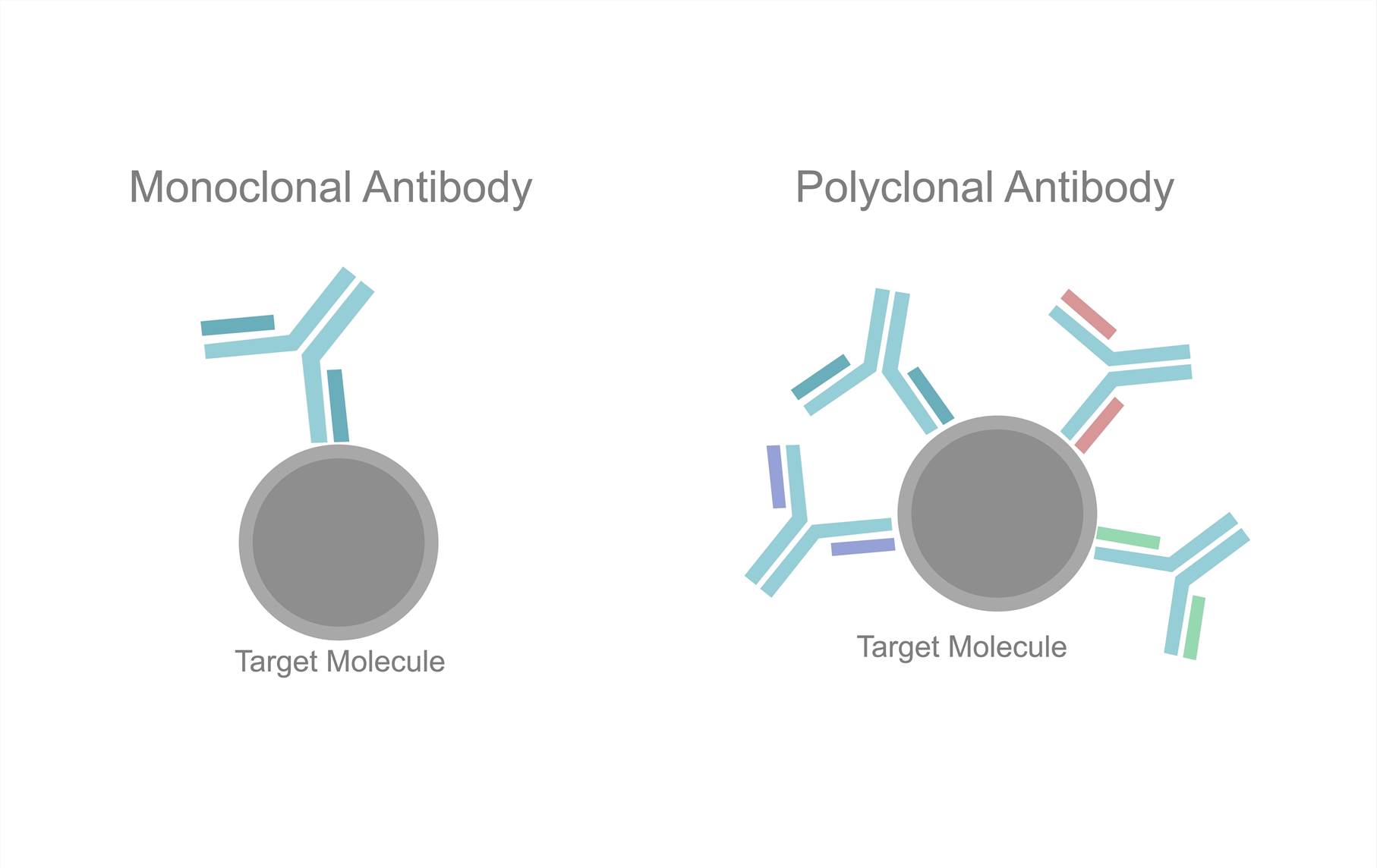 Fig. 1 Comparison of specific binding site on target molecule between monoclonal and polyclonal antibodies.
The main challenge lies in the natural variation present among different batches of polyclonal antibodies. The production of pAbs through animal immunization introduces variability because each animal's immune response and genetic makeup alongside health conditions and minor protocol changes affect the antibody characteristics between batches. Experimental outcomes and research reliability suffer when batch-to-batch variability affects antibody production.
Batch variability directly creates difficulties in obtaining high reproducibility levels when working with traditional polyclonal antibodies. Scientists working with multiple batches of an identical polyclonal antibody may detect variations in signal intensity and background levels along with different patterns of epitope recognition.
Polyclonal antibody sequencing represents a de novo sequencing method that utilizes mass spectrometry technology and finds extensive application in biomedical research as well as medical science. Researchers can obtain antibody protein sequences straight from polyclonal antibodies (pAb) in blood samples and other materials while also being able to isolate full-length monoclonal antibody (mAb) sequences from complex polyclonal mixtures. This emerging technology uses the latest mass spectrometry-based proteomics and big data bioinformatics to profile, sequence and characterize polyclonal populations straight from immunized animals' serum or purified polyclonal protein mixtures.
The sequencing of polyclonal antibodies enables researchers to advance past the constraints faced in conventional pAb production methods. The study of genetic or protein sequences within individual antibody components of a polyclonal mixture unveils new information about immune response composition, diversity, and functionality. This information is vital for:
Analyzing the extensive variety within polyclonal antibody populations needs advanced technologies that can process large numbers of samples with high sensitivity. Next-Generation Sequencing (NGS) and Mass Spectrometry-based sequencing remain the two main methods employed today.
High-throughput sequencing technology, which scientists call NGS, has transformed how researchers study antibody repertoires. The DNA-based method sequences the reorganized immunoglobulin genes found in B cells and the mRNA produced from these particular genes.
Process Overview:
Mass spectrometry (MS) offers a complementary approach by directly analyzing the protein sequences of the antibodies present in the polyclonal mixture.
Process Overview:
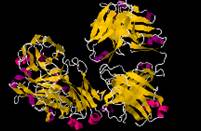
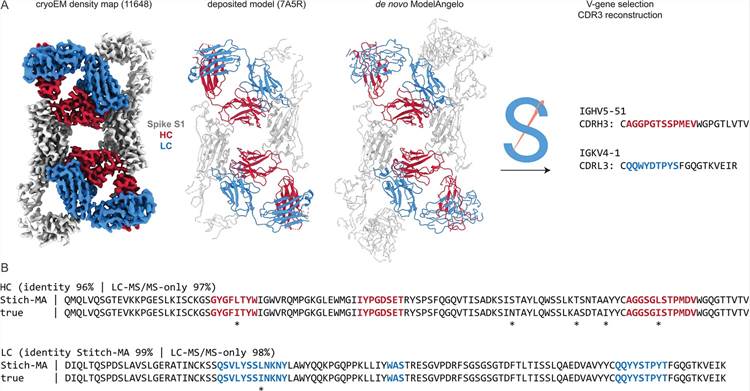 Fig. 2 Sequencing CR3022 with integrated cryoEM and LC-MS/MS data.1
NGS techniques and MS-based methods both provide powerful tools on their own but together they enable a more complete characterization of polyclonal antibody mixtures. The combination of data from both methods enables researchers to bypass the individual limitations while reaching greater confidence levels in assembled antibody sequences.
A successful combined approach requires smart integration along with cross-referencing between NGS genetic data and MS peptide-level information.
The combination of peptide fragmentation patterns from MS and translated nucleotide sequences from NGS enables researchers to construct more precise and complete amino acid sequences of polyclonal antibodies. The integrated approach ensures greater certainty for antibody clones and their protein sequences which becomes essential for subsequent applications including recombinant expression and antibody engineering.
The sequencing process facilitates thorough examination of antibody populations in polyclonal samples. We can perform diversity quantification and clonal distribution analysis while identifying V(D)J gene usage patterns and examining somatic hypermutation trends.
Researchers can analyze immune responses to specific antigens by sequencing the antibodies generated against those antigens. Researchers can identify immunodominant epitopes while understanding the response kinetics over time and comparing the immune responses generated by various immunization strategies across different animal models.
Companies working on antibody-based products or research instruments use polyclonal antibody mixture sequencing as a strategy to establish intellectual property protection. Defining the sequence composition enables scientists to identify specific antibody clones that contribute to desired functionality for potential patenting.
The sequencing process establishes the foundational molecular blueprint of antibodies while advancing past functional characterization. Sequence data plays a critical role in building precise structural models and understanding sequence-function relationships while identifying weaknesses or opportunities for antibody enhancement.
| Application Area | Example Use Case | Key Information Gained from Sequencing |
| Research | Studying immune response to a novel pathogen | Repertoire diversity, clonal expansion, V(D)J usage, identification of protective clones |
| Diagnostics (R&D) | Identifying antibody targets for a disease | Identification of immunodominant epitopes and corresponding antibody sequences |
| Therapeutics (Discovery) | Finding potent antibodies from immunized animals | Identification and sequencing of high-affinity, neutralizing antibody clones |
| Biomarker Discovery | Profiling antibody response in a disease cohort | Changes in repertoire composition, identification of disease-associated clones |
| Antibody Engineering | Improving the performance of a polyclonal reagent | Sequence information for recombinant expression and modification of key components |
Polyclonal antibody sequencing represents a significant leap forward in our ability to analyze and leverage the complex power of the natural immune response. At Creative Biolabs, we are at the forefront of applying these advanced sequencing technologies to unlock the full potential of polyclonal antibodies, driving new discoveries and accelerating the development of next-generation antibody-based solutions. Meanwhile, we offer de novo antibody sequencing and de novo protein sequencing services, powered by our propriety DASS (Database Assisted Shotgun Sequencing) technology to meet the diverse protein research needs of our clients, driving innovation and advancement in the field of biomedical science.
Learn more about Creative Biolabs' de novo antibody sequencing services:
All listed services and products are For Research Use Only. Do Not use in any diagnostic or therapeutic applications.