Creative Biolabs is offering the most comprehensive services for antibody development projects. With strict regulation and effective execution, we are dedicated to providing the most valuable solutions to complete your projects.
HighlightsCreative Biolabs is offering the most comprehensive services for antibody development projects. With strict regulation and effective execution, we are dedicated to providing the most valuable solutions to complete your projects.
HighlightsCreative Biolabs has established a broad range of platforms for developing novel antibodies or equivalents. These cutting-edge technologies enable our scientists to meet your demands from different aspects and tailor the most appropriate solution that contributes to the success of your projects.
HighlightsWith deep understanding in antibody-related realms and extensive project experience, Creative Biolabs offers a variety of references to help you learn more about our capacities and achievements, including infographic, flyer, case study, peer-reviewed publications, and all kinds of knowledge that can assist your projects. You are also welcome to contact us directly for more specific solutions.
HighlightsGet a real taste of Creative Biolabs, one of the most professional custom service providers in the world. We are committed to providing highly customized comprehensive solutions with the best quality to advance your projects.
HighlightsProtein sequencing is the analytical process of determining the primary structure of a protein, which refers to the linear order of its constituent amino acids. This sequence dictates the protein's three-dimensional structure, function, and interactions within a biological system. Accurate protein sequencing is critical for:
What is Mass Spectrometry (MS)?
Mass Spectrometry is an analytical technique that measures the mass-to-charge ratio (m/z) of ions. It works by ionizing chemical compounds to generate charged molecules or molecule fragments and measuring their m/z ratios. The resulting spectrum provides information about the molecular weight, elemental composition, and structural characteristics of the sample. A typical mass spectrometer consists of three main components:
The advent of "soft" ionization techniques in the late 1980s, such as Electrospray Ionization (ESI) and Matrix-Assisted Laser Desorption/Ionization (MALDI), enabled the transfer of large, fragile biomolecules like proteins and peptides into the gas phase without significant degradation. This breakthrough paved the way for MS to become the cornerstone of modern proteomics.
Prior to MS, Edman degradation was the gold standard for protein sequencing. While effective for short peptides, it suffered from significant limitations.
Table 1. Comparison of Edman Degradation and Mass Spectrometry for Protein Sequencing
| Feature | Edman Degradation | Mass Spectrometry |
| Throughput | Low; sequential removal of one amino acid at a time. | High; parallel analysis of multiple peptides/proteins. |
| Sensitivity | Requires microgram quantities. | Nanogram to femtogram quantities. |
| Speed | Slow; takes hours to days for a single sequence. | Fast; minutes to hours for complex mixtures. |
| PTM Analysis | Limited ability to detect and localize PTMs. | Excellent for identifying and localizing various PTMs. |
| Sample Purity | Highly sensitive to contaminants; requires pure samples. | More tolerant to sample complexity. |
| Sequence Length | Typically limited to 50-60 amino acids. | Can sequence full proteins (top-down) or long peptides. |
| Sample Consumption | Destructive. | Can be non-destructive or consume minimal sample. |
MS-based protein sequencing is central to proteomics, the large-scale study of proteins. Its versatility allows for:
The power of MS in protein analysis stems from its ability to precisely measure molecular masses and, critically, to fragment molecules and analyze the masses of the resulting fragments.
Two primary ionization methods are dominant in protein and peptide MS:
Tandem Mass Spectrometry, or MS/MS, is the cornerstone of protein sequencing by MS. It involves multiple stages of mass analysis, allowing for the fragmentation of selected precursor ions and the subsequent mass analysis of these fragment ions.
In MS/MS, a precursor ion (e.g., a peptide ion) is first selected in the mass analyzer. This selected ion is then subjected to controlled fragmentation in a collision cell. The fragmentation breaks specific bonds within the molecule, generating a series of product ions. For peptides, fragmentation typically occurs along the peptide backbone, yielding characteristic fragment ions that contain sequence information.
The nomenclature for peptide fragment ions is standardized:
The mass difference between consecutive b-ions or y-ions corresponds to the mass of an individual amino acid residue, allowing for de novo sequence determination.
Collision-Induced Dissociation (CID), also known as Collisionally Activated Dissociation (CAD), is the most common fragmentation technique used in proteomics.
Other fragmentation techniques include Electron Capture Dissociation (ECD), Electron Transfer Dissociation (ETD), and Higher-Energy Collisional Dissociation (HCD), each offering unique advantages for specific applications, particularly for PTM analysis and top-down proteomics.
Different strategies are employed for protein sequencing by MS, each with its own strengths and applications.
Bottom-up proteomics is the most widely adopted approach for protein identification and characterization. It involves digesting proteins into smaller, more manageable peptides before MS analysis.
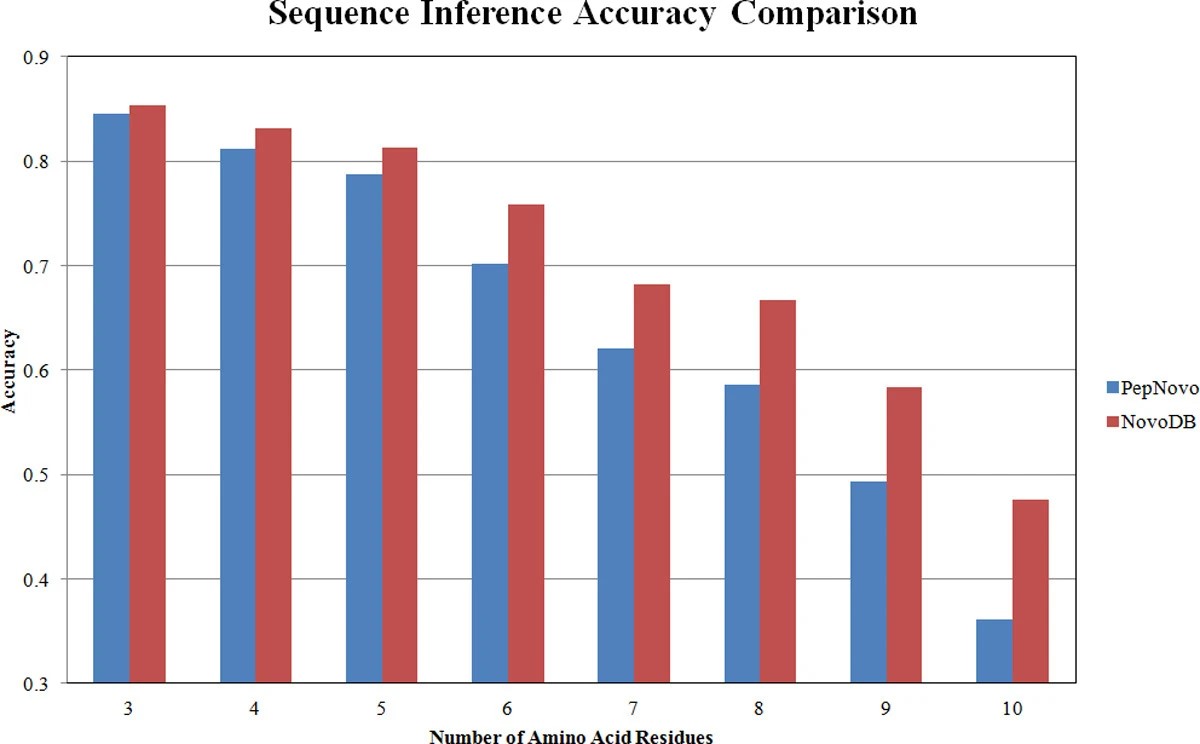 Fig. 1 Results of sequence inference accuracy comparison on CPTAC.1
The resulting peptide mixture is highly complex and requires separation before MS analysis.
The acquired MS/MS spectra contain the sequence information of the fragmented peptides. This information is then used for protein identification:
Top-down proteomics involves the analysis of intact proteins without prior enzymatic digestion.
Middle-down proteomics is an intermediate approach where proteins are partially digested into larger peptide fragments (typically 10-50 kDa) before MS/MS analysis.
De novo protein sequencing is the process of determining the amino acid sequence of a peptide or protein directly from its MS/MS spectrum without prior knowledge of its sequence or a protein database.
The capabilities of MS-based protein sequencing extend across numerous biological and biotechnological applications.
The most fundamental application is the identification of proteins present in a sample. By matching experimental peptide sequences to known protein sequences in databases, researchers can rapidly identify thousands of proteins from complex biological matrices, such as cell lysates, tissues, or biofluids. This is crucial for:
PTMs are covalent modifications to proteins that occur after translation, significantly expanding the functional diversity of the proteome. MS is indispensable for identifying and localizing PTMs.
Antibodies are complex glycoproteins with critical roles in immunity and as therapeutic agents. Accurate sequencing of antibody variable regions (Fab and Fc) is crucial for drug development, intellectual property, and biosimilar characterization.
While MS primarily provides primary sequence information, it can also contribute to understanding higher-order protein structure and function.
Quantitative proteomics aims to measure the relative or absolute abundance of proteins in different biological samples. MS-based methods are highly effective for this.
From fundamental protein identification to intricate PTM analysis, antibody characterization, and quantitative proteomics, MS continues to drive advancements in our understanding of the proteome and its profound impact on health and disease. At Creative Biolabs, we offer de novo antibody sequencing and de novo protein sequencing services, powered by our propriety DASS (Database Assisted Shotgun Sequencing) technology to meet the diverse protein research needs of our clients, driving innovation and advancement in the field of biomedical science.
Learn more about Creative Biolabs’ de novo antibody sequencing services:
All listed services and products are For Research Use Only. Do Not use in any diagnostic or therapeutic applications.