Creative Biolabs is offering the most comprehensive services for antibody development projects. With strict regulation and effective execution, we are dedicated to providing the most valuable solutions to complete your projects.
HighlightsCreative Biolabs is offering the most comprehensive services for antibody development projects. With strict regulation and effective execution, we are dedicated to providing the most valuable solutions to complete your projects.
HighlightsCreative Biolabs has established a broad range of platforms for developing novel antibodies or equivalents. These cutting-edge technologies enable our scientists to meet your demands from different aspects and tailor the most appropriate solution that contributes to the success of your projects.
HighlightsWith deep understanding in antibody-related realms and extensive project experience, Creative Biolabs offers a variety of references to help you learn more about our capacities and achievements, including infographic, flyer, case study, peer-reviewed publications, and all kinds of knowledge that can assist your projects. You are also welcome to contact us directly for more specific solutions.
HighlightsGet a real taste of Creative Biolabs, one of the most professional custom service providers in the world. We are committed to providing highly customized comprehensive solutions with the best quality to advance your projects.
HighlightsAt Creative Biolabs, with over two decades of pioneering experience in antibody engineering, we provide a state-of-the-art Single Domain Antibody (SdAb) based Intrabody Discovery Service. Our platform is meticulously designed to identify and validate high-affinity intrabodies that can precisely target and modulate intracellular proteins in their native environment, offering unprecedented tools for functional genomics, target validation, and innovative therapeutic development.
While various antibody fragments can be used to create intrabodies, Single Domain Antibodies (SdAbs), also known as VHHs, offer a unique combination of properties that make them the ideal scaffold for intracellular applications. Their superior performance over traditional formats like scFv is a key reason why leading researchers choose SdAbs.
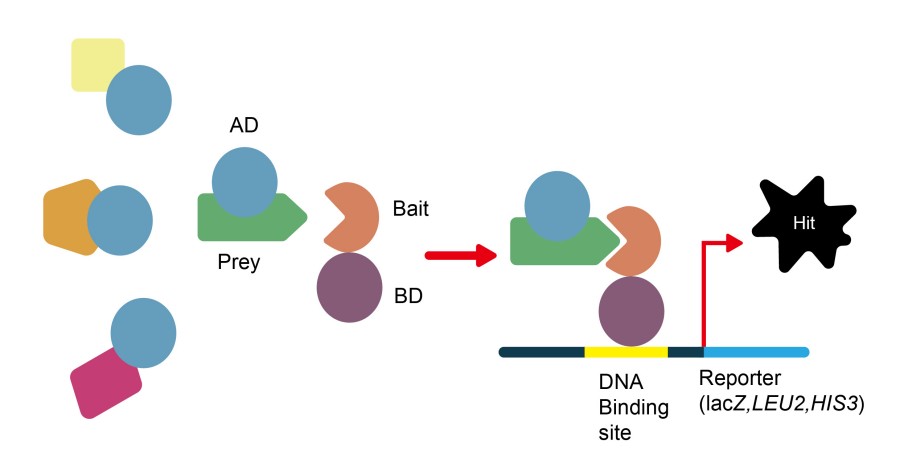 Fig. 1 Schematic representation of yeast two-hybrid method.
| Feature | Single Domain Antibody (SdAb) | Conventional Fragments (e.g., scFv) |
| Size | ~15 kDa. Exceptionally small, allowing for superior intracellular diffusion and access to sterically hindered epitopes. | ~25-30 kDa. Larger size can limit mobility and target accessibility within crowded cellular compartments. |
| Stability | High thermal and chemical stability. Robustly folds in the reducing cytoplasmic environment without needing disulfide bonds. | Prone to misfolding and aggregation in the reducing intracellular environment. Often requires complex engineering to improve stability. |
| Solubility | Excellent solubility. Highly resistant to aggregation, ensuring high functional concentrations within the cell. | Hydrophobic surfaces can lead to aggregation and insolubility, causing cellular toxicity. |
| Epitope Recognition | Unique elongated CDR3 loop. Can recognize and bind to unique, concave, or cleft-like epitopes (e.g., enzyme active sites) inaccessible to conventional antibodies. | Binding is typically restricted to convex or flat surfaces on the target protein. |
| Genetic Simplicity | Single genetic construct. Easy to clone and express as a single, stable domain. Ideal for fusion with reporter proteins (e.g., GFP) or functional domains (e.g., ubiquitin ligases). | Requires a linker peptide to connect VH and VL domains, which can be unstable and prone to proteolysis. |
| Immunogenicity | Low immunogenicity. Especially when using our humanized or camelized frameworks. | Can be immunogenic, and requires significant humanization efforts. |
We understand that every research project is unique. Therefore, we offer a flexible, modular service portfolio that allows you to build a discovery plan that perfectly fits your scientific goals and budget.
Choose the in vivo screening system that best suits your target and cell type.
Gain access to our world-class, high-diversity libraries.
From initial hit confirmation to full functional validation, choose the level of characterization you need.
Phase 1: Project Initiation & Strategy
Phase 2: "Bait" Construction & Library Preparation
Phase 3: High-Throughput In Vivo Screening
Phase 4: Hit Confirmation and Identification
Phase 5: In-depth Validation & Characterization
Phase 6: Final Deliverables
Unmatched Expertise: Over 20 years of leadership in antibody engineering and therapeutic discovery.
Creative Biolabs offers a complete, end-to-end solution for single domain antibody development. Explore our related services to seamlessly advance your project from discovery to application.
Contact our team of experts to discuss your project. Let us help you unlock the potential of intracellular targets with our cutting-edge SdAb-based intrabody discovery platform.
Q: What is the main advantage of an SdAb intrabody over an scFv intrabody?
A: The primary advantages are superior stability and solubility. SdAbs are single, robust domains that fold correctly in the reducing intracellular environment, whereas scFvs often misfold and aggregate, leading to non-functionality and toxicity.
Q: What starting material do I need to provide?
A: Typically, you will need to provide the target protein sequence or a plasmid encoding the target antigen. Our scientific team will work with you to determine the exact requirements based on your project.
Q: Can you target a specific post-translational modification (PTM)?
A: Yes. Our systems are capable of identifying intrabodies that recognize specific PTMs, such as phosphorylation or ubiquitination, allowing for the study of PTM-dependent protein functions.
Q: What is the typical timeline for an intrabody discovery project?
A: While timelines vary based on project complexity, a standard project from library screening to delivery of validated hits can typically be completed within 12-18 weeks, depending on the validation tier selected.
All listed services and products are For Research Use Only. Do Not use in any diagnostic or therapeutic applications.