Creative Biolabs is offering the most comprehensive services for antibody development projects. With strict regulation and effective execution, we are dedicated to providing the most valuable solutions to complete your projects.
HighlightsCreative Biolabs is offering the most comprehensive services for antibody development projects. With strict regulation and effective execution, we are dedicated to providing the most valuable solutions to complete your projects.
HighlightsCreative Biolabs has established a broad range of platforms for developing novel antibodies or equivalents. These cutting-edge technologies enable our scientists to meet your demands from different aspects and tailor the most appropriate solution that contributes to the success of your projects.
HighlightsWith deep understanding in antibody-related realms and extensive project experience, Creative Biolabs offers a variety of references to help you learn more about our capacities and achievements, including infographic, flyer, case study, peer-reviewed publications, and all kinds of knowledge that can assist your projects. You are also welcome to contact us directly for more specific solutions.
HighlightsGet a real taste of Creative Biolabs, one of the most professional custom service providers in the world. We are committed to providing highly customized comprehensive solutions with the best quality to advance your projects.
HighlightsAt Creative Biolabs, we stand at the forefront of antibody engineering, leveraging over two decades of pioneering expertise to unlock the revolutionary potential of Single Domain Antibodies (SdAbs). Our end-to-end platform for Single Domain Antibody (SdAb) Library Construction and Screening is engineered to provide you with unparalleled access to high-affinity, target-specific SdAbs with superior developability characteristics. We integrate state-of-the-art molecular biology, advanced display technologies, and next-generation sequencing (NGS) to build and interrogate vast, diverse SdAb libraries, ensuring the highest probability of identifying lead candidates against your most challenging targets.
A high-quality library is the cornerstone of any successful antibody discovery campaign. We offer the construction of three distinct types of SdAb libraries, each with strategic advantages. Our platform leverages advanced cloning techniques and is rigorously monitored by next-generation sequencing (NGS) to guarantee maximum diversity and coverage.
This is the gold standard for generating high-affinity antibodies against a specific target. By immunizing camelids (Llama, Alpaca, or Camel) with your antigen, we trigger in vivo affinity maturation, naturally selecting for VHH domains with superior binding characteristics and low immunogenicity.
Our Process:
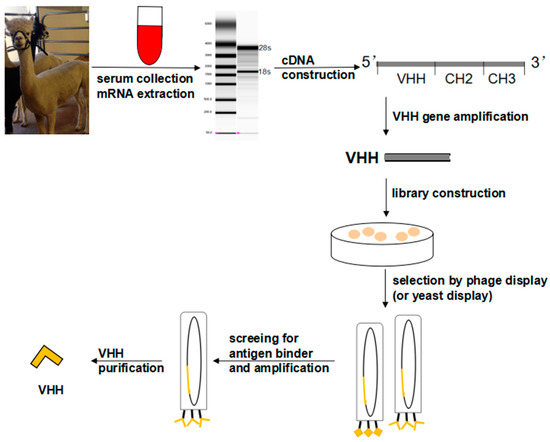 Fig. 1 Overview of VHH generation from camelid.1
Constructed from non-immunized healthy camelids, our naïve VHH libraries represent a vast, natural repertoire of VHH domains. This "off-the-shelf" resource is ideal for rapid screening campaigns, particularly against toxic or non-immunogenic targets, without the time required for animal immunization.
For ultimate control and rationally designed diversity, our synthetic libraries are unparalleled. Using sophisticated computational algorithms and AI-driven design, we construct VHH frameworks with tailored diversity incorporated into the complementarity-determining regions (CDRs). This approach allows for the creation of novel specificities not present in nature and frameworks optimized for developability from the outset.
Creative Biolabs employs cutting-edge display and screening technologies to isolate high-value SdAb candidates from our vast libraries. Our goal is to move beyond simple binding and identify clones with functional activity and favorable characteristics.
Our proprietary phage display platform is a robust and proven method for isolating high-affinity binders. We have optimized our biopanning strategies to meet diverse project needs.
Our Phage Display Biopanning Strategies Include:
Yeast display screening offers significant advantages for screening, particularly for quantitative analysis and fine-tuning. Because the VHH is displayed on the surface of a eukaryotic cell, it is subject to eukaryotic quality control and allows for:
NGS has revolutionized library screening. We integrate NGS analysis throughout the panning process to provide unprecedented insight into binder enrichment. This data-driven approach allows us to:
Explore our specialized services to advance your research:
Let our expertise accelerate your research and development. Partner with Creative Biolabs to build a superior single domain antibody library and screen for candidates with game-changing potential.
Q: How do I choose between an immune, naïve, or synthetic SdAb library for my project?
A: This is an excellent and critical question. The choice depends entirely on your project's specific goals, timeline, and the nature of your target antigen.
Our scientific team will consult with you to analyze your needs and recommend the most strategic and cost-effective library type for your project's success.
Q: What is the typical timeline for a complete SdAb library construction and screening project?
A: The project timeline varies depending on the type of library constructed.
We provide a detailed project timeline with clear milestones at the start of every project.
Q: My target is a difficult membrane protein (e.g., a GPCR or ion channel). Can you still find binders?
A: Absolutely. This is a core area of our expertise. Single domain antibodies are uniquely suited for difficult membrane protein targets due to their small size and convex paratope, which allows them to access cryptic epitopes often hidden from larger conventional antibodies.
Our strategy for such targets includes:
All listed services and products are For Research Use Only. Do Not use in any diagnostic or therapeutic applications.