Creative Biolabs is offering the most comprehensive services for antibody development projects. With strict regulation and effective execution, we are dedicated to providing the most valuable solutions to complete your projects.
HighlightsCreative Biolabs is offering the most comprehensive services for antibody development projects. With strict regulation and effective execution, we are dedicated to providing the most valuable solutions to complete your projects.
HighlightsCreative Biolabs has established a broad range of platforms for developing novel antibodies or equivalents. These cutting-edge technologies enable our scientists to meet your demands from different aspects and tailor the most appropriate solution that contributes to the success of your projects.
HighlightsWith deep understanding in antibody-related realms and extensive project experience, Creative Biolabs offers a variety of references to help you learn more about our capacities and achievements, including infographic, flyer, case study, peer-reviewed publications, and all kinds of knowledge that can assist your projects. You are also welcome to contact us directly for more specific solutions.
HighlightsGet a real taste of Creative Biolabs, one of the most professional custom service providers in the world. We are committed to providing highly customized comprehensive solutions with the best quality to advance your projects.
Highlights
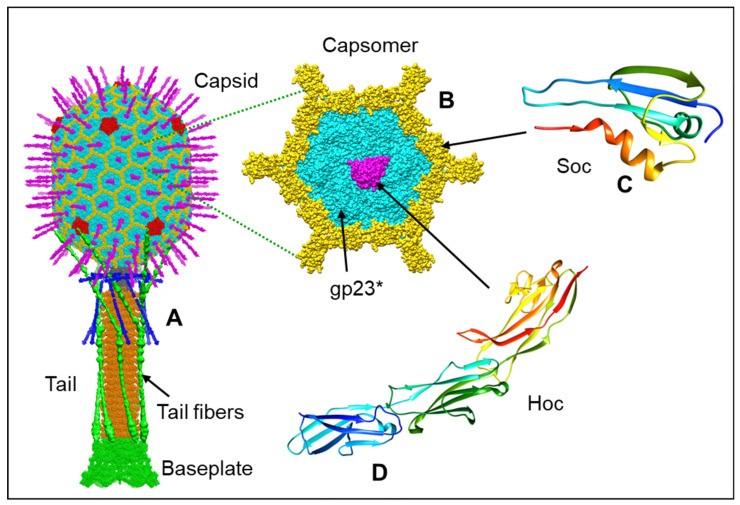
The landscape of molecular evolution and protein engineering has been altered by the advent of phage display technology. Since its inception, this methodology has transitioned from a niche laboratory technique to a cornerstone of modern biopharmaceutical development, particularly within the realms of immunology and drug discovery. While the M13 filamentous phage system has long served as the workhorse for such endeavors, the limitations regarding insert size and the necessity for periplasmic secretion have necessitated the exploration of more robust scaffolds. Among these, the T4 bacteriophage has emerged as a superior alternative, primarily due to its unique structural plasticity and the capability for dual display.
The shift toward dual display is driven by several distinct biophysical advantages that exceed the capabilities of traditional monovalent display systems:
The primary advantage is the sheer number of display sites. With nearly 1,000 SOC sites and over 150 HOC sites, the T4 system achieves a display density far exceeding that of M13 pIII or pVIII systems. This high valency is critical for detecting low affinity interactions through the avidity effect.
Unlike filamentous phages, T4 assembly occurs in the cytoplasm, and display can be achieved in vitro. This bypasses the constraints of the Escherichia coli secretory pathway, allowing for the display of large, complex, and even toxic proteins that would otherwise fail to incorporate into M13.
The ability to display two different proteins simultaneously opens new avenues for research. For instance, one site can display a targeting peptide while the other carries an enzyme or an imaging agent. This has profound implications for the development of targeted vaccine delivery systems and theranostic agents.
SOC display can be achieved through homologous recombination or in vitro assembly due to its high affinity for the capsid surface. HOC display is typically realized through in vitro packaging. This modularity allows for the integration of SOC fusion genes into the genome while using the HOC site for transient, highly controlled protein loading.
Discover How We Can Support Your Dual Display Needs.
At Creative Biolabs, we have developed a high throughput phage display platform designed to fully leverage the strengths of filamentous and lytic phage systems for advanced binder discovery.
By combining robust phage biology with flexible display strategies, our platform enables efficient and versatile presentation of peptides, antibodies, and protein scaffolds, providing a powerful solution for a broad range of discovery and optimization applications.
Built upon decades of expertise in antibody engineering, protein chemistry, and phage biology, the platform is particularly well suited for antibody discovery, peptide screening, protein engineering, and affinity maturation, even against challenging targets.
Our infrastructure integrates advanced molecular cloning workflows with optimized phage packaging and assembly processes, allowing controlled display architecture, ligand orientation, and functional valency.
To minimize development risk and accelerate timelines, we apply structure and information design principles and in silico evaluation to assess construct feasibility and display compatibility prior to experimental execution.
Multiple display configurations can be flexibly adopted depending on project needs, enabling accommodation of ligands with diverse molecular weights, conformations, and structural complexities. This adaptability supports exploration of targets that may be difficult to address using conventional screening approaches.
To ensure consistent and reliable outcomes, all phage libraries are generated under rigorous quality control standards. Each library is evaluated for diversity, stability, and functional performance to support downstream screening and lead optimization.
Creative Biolabs provides M13 phage display–based binder discovery services, supporting the entire workflow from rational library design to validated lead candidates. Our integrated solutions are tailored for antibody, peptide, and protein binder discovery, as well as downstream optimization and affinity maturation.
We design and construct high diversity M13 phage display libraries, including naïve, immune, synthetic, and focused libraries, with diversity ranging from 1010 to 1012 variants, to support a wide spectrum of discovery strategies..
References
All listed services and products are For Research Use Only. Do Not use in any diagnostic or therapeutic applications.