Creative Biolabs is offering the most comprehensive services for antibody development projects. With strict regulation and effective execution, we are dedicated to providing the most valuable solutions to complete your projects.
HighlightsCreative Biolabs is offering the most comprehensive services for antibody development projects. With strict regulation and effective execution, we are dedicated to providing the most valuable solutions to complete your projects.
HighlightsCreative Biolabs has established a broad range of platforms for developing novel antibodies or equivalents. These cutting-edge technologies enable our scientists to meet your demands from different aspects and tailor the most appropriate solution that contributes to the success of your projects.
HighlightsWith deep understanding in antibody-related realms and extensive project experience, Creative Biolabs offers a variety of references to help you learn more about our capacities and achievements, including infographic, flyer, case study, peer-reviewed publications, and all kinds of knowledge that can assist your projects. You are also welcome to contact us directly for more specific solutions.
HighlightsGet a real taste of Creative Biolabs, one of the most professional custom service providers in the world. We are committed to providing highly customized comprehensive solutions with the best quality to advance your projects.
Highlights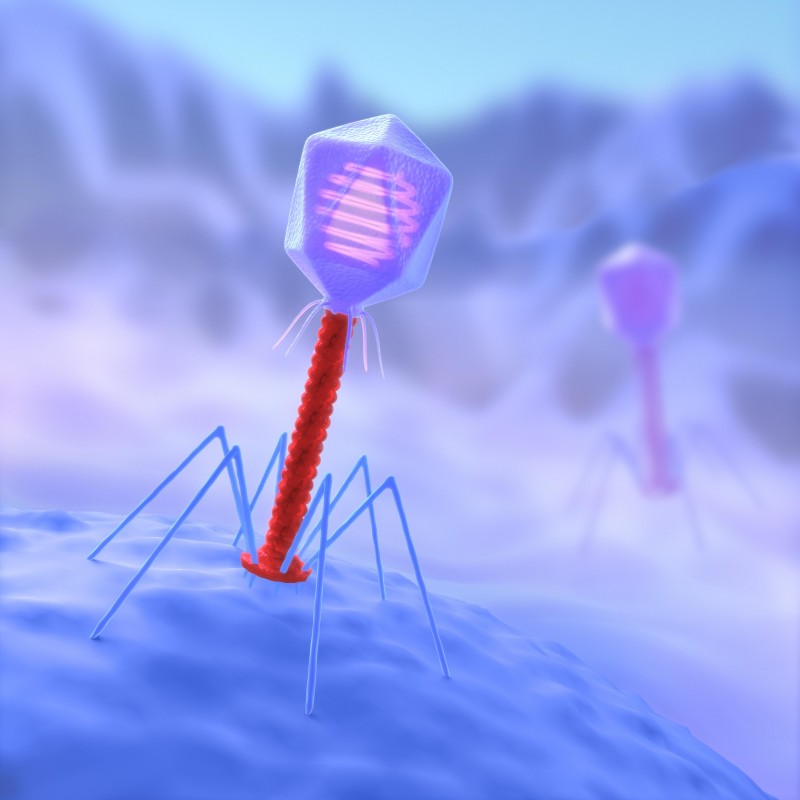
The T4 bacteriophage is a large, complex, and iconic virus that infects Escherichia coli. T4 possesses a distinctive lytic life cycle and a formidable structure that confers several advantages for heterologous display.
The mature T4 virion is characterized by a prominent prolate head (an elongated icosahedron, ~120 nm in length and ~86 nm in width) containing a substantial 172 kbp double-stranded DNA genome. This head is constructed from three primary essential proteins: gp23, gp24, and gp20. Crucially for display applications, the surface of this capsid is further stabilized and decorated by two non-essential, highly abundant outer capsid proteins: HOC (Highly Antigenic Outer Capsid protein, ~40 kDa) and SOC (Small Outer Capsid protein, ~9 kDa).
The sheer size and structural robustness of the T4 phage provide an unparalleled capacity to display large or complex foreign peptides and proteins. Furthermore, the non-essential nature of the decoration proteins (HOC and SOC) means their modification does not compromise the phage's fundamental infectivity or viability, a critical feature for successful library construction and screening. This inherent stability and high copy number display potential set the T4 system apart, particularly when displaying targets that are challenging for smaller phages.
Unlock the Power of T4 Phage Display. Request a Consultation Today.
The utility of the T4 system stems directly from its multifaceted structure, which offers several distinct locations for the incorporation of foreign genetic elements. These varied display sites allow for tailored system design, optimizing the display characteristics (e.g., size, copy number, orientation) for the specific binder discovery goal.
Present in an extremely high copy number (~960 copies per capsid particle), the SOC protein provides an excellent platform for high-density display of peptides and small, conformationally robust protein domains. The high valency can significantly increase the avidity of the phage particle for the target, a crucial factor in isolating low-affinity or rare binders.
With a substantial copy number (~160 copies per capsid particle) and a larger molecular weight, HOC is generally favored for the display of larger foreign proteins, complex domains, or scFv antibody fragments. Its structure can often tolerate more extensive insertions while maintaining the overall integrity of the display particle.
The non-essential nature and independent integration mechanism of the two decorative proteins permit a sophisticated architecture known as SOC & HOC Dual Display. This system allows for the simultaneous display of two different foreign peptides or proteins on the same phage particle.
Ready to Construct Your T4 Phage? Speak With Our T4 Display Experts.

Creative Biolabs maintains a state-of-the-art platform specifically engineered to harness the distinct advantages of the T4 display system. Our proprietary technology platform transcends standard display methodologies, providing a refined and reliable pipeline critical for projects aiming for high-impact scientific publication and translational relevance.
Our T4 Display Platform is founded upon several technical pillars that ensure rigor and performance:
 Genomic and Expression Vector Engineering
We utilize specialized T4 shuttle vectors and genomic modification techniques that facilitate high-efficiency homologous recombination, ensuring the stable and homogeneous integration of the foreign gene into the T4 genome. This control is vital for reproducible library construction.
High-Fidelity Library Construction
Leveraging the large capacity of the T4 genome and the high-copy potential of the SOC/HOC sites, we routinely construct libraries of immense size and diversity. Our stringent quality control measures verify the insert fidelity and diversity before screening, eliminating potential bias.
Controlled Display Strategy
We offer expert consultation on the optimal display site (SOC, HOC, or Dual Display) based on the size, hydrophobicity, and known folding characteristics of the target molecule, ensuring maximum presentation and minimal aggregation.
In Vitro Reconstitution Expertise
Our mastery of in vitro T4 capsid assembly and reconstitution allows for the precise display of challenging inserts that may be poorly tolerated in vivo, offering unparalleled control over the final phage particle composition.
Accelerate Your Discovery Pipeline with T4 Phage Display — Contact Us to Get Started.

Creative Biolabs translates this advanced platform into a comprehensive suite of high-level services designed to accelerate the discovery of novel therapeutic and diagnostic agents. Our Phage Display services are benchmarked against the rigorous standards expected by leading scientific and biomedical institutions.
Generating custom, ultra-large libraries (typically 109 unique clones) from synthetic, immune, or naïve sources, optimized for maximal diversity and display homogeneity.
Implementing high-stringency panning protocols, including subtractive, competitive, and whole-cell screening, specifically adapted to the T4 system's unique properties to isolate high-affinity binders.
Utilizing for the discovery of human and humanized scFvs, Fabs, and alternative antibody scaffolds, leveraging the system's capacity to display large antibody domains with stability.
Focused on identifying high-affinity peptide ligands, often using the high valency of the display system to maximize signal and binding strength.
Employing proprietary selection protocols designed to isolate binders with enhanced stability, often against challenging conditions like high temperature or specific pH ranges.
A specialized service for identifying binders (e.g., antibodies) that exhibit pH-dependent binding kinetics, a critical feature for developing therapeutics capable of enhanced target release within the acidic tumor microenvironment or endosomes.
The screening strategy is designed to enrich antibody candidates that promote receptor-dependent cellular uptake, thereby serving as carriers for intracellular delivery of functional payloads.
The combination of the phage's intrinsic structural advantages and Creative Biolabs' refined technical expertise offers an unparalleled path for researchers seeking to publish high-impact findings and advance translational research.
Transform Your Target Binder Discovery with Our T4 System. Let's Discuss Your Project.
Not Sure Whether T4 Display Fits Your Application? Get Professional Technical Guidance.
All listed services and products are For Research Use Only. Do Not use in any diagnostic or therapeutic applications.