
This is the most mature application, primarily through Antibody-Drug Conjugates (ADCs) which deliver highly potent cytotoxins directly to tumor cells. It is also used to guide drug-loaded nanoparticles (liposomes, polymeric NPs) to solid tumor sites expressing markers like HER2, EGFR, or PD-L1, maximizing local killing while mitigating systemic chemotherapy side effects.
Antibody based Targeted Drug Delivery Solutions
The quest for therapeutic precision often fails due to systemic toxicity, poor pharmacokinetics, and off-target effects. Our Antibody Targeting Delivery Solution helps you accelerate therapeutic development and minimize off-target toxicity through innovative bioconjugation strategies and highly specific antibody-ligand design. We engineer your therapeutic payload (gene, small molecule, or imaging agent) to recognize and engage specific disease markers, ensuring maximum efficacy precisely where it is needed, turning complex delivery challenges into targeted therapeutic success.
Click Here to View more about our Services
Introduction of Antibody based Targeting Delivery Solution
Antibody targeting delivery is a sophisticated strategy that harnesses the exquisite specificity of monoclonal antibodies (mAbs) to direct therapeutic payloads to a predetermined site in the body, typically a diseased cell or tissue. An antibody is a Y-shaped protein produced by the immune system, characterized by its two Fragment antigen-binding (Fab) regions, which recognize and bind to a unique antigen, and the Fragment crystallizable (Fc) region, which interacts with host immune cells.
In targeted delivery, mAbs are chemically linked to various therapeutic entities—such as small molecule drugs, nucleic acids (siRNA, mRNA), radionuclides, or imaging agents—often through a biocompatible linkers and nanocarriers. A critical example of this is the Immunoliposome, where antibodies are conjugated to the surface of a liposome to provide targeted delivery of encapsulated drugs. This conjugation facilitates active targeting, a mechanism that goes beyond the passive accumulation observed in tumors due to the enhanced permeability and retention (EPR) effect.
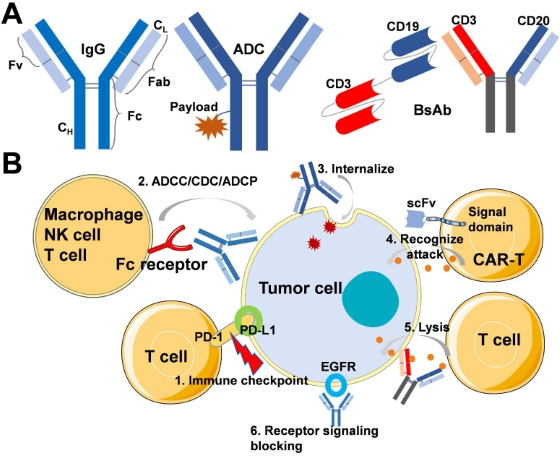 Fig.1 Antibody-based drug delivery systems for cancer therapy.1
The mechanism relies on the selective overexpression of specific antigens (e.g., cell surface receptors, protein markers) on diseased cells relative to normal cells. Upon systemic administration, the antibody-conjugated system specifically locks onto these overexpressed antigens. This binding event often triggers receptor-mediated endocytosis, internalizing the entire complex into the target cell. Once inside, the linker breaks down (often triggered by acidic pH or high glutathione levels specific to the diseased intracellular environment), releasing the active drug payload. This precision delivery is essential for highly potent cytotoxic drugs, minimizing their exposure to healthy organs and dramatically improving the therapeutic window.
Table: Key Antibody Targeting Ligands and Their Therapeutic Applications
| Target Antigen/Receptor | Cellular Location/Targeted Disease | Delivery Purpose |
|---|---|---|
| HER2 (Human Epidermal Growth Factor Receptor 2) | Breast, Gastric, Lung Cancer Cells | ADC development, delivering cytotoxic agents |
| CD30 (Tumor Necrosis Factor Receptor Superfamily Member 8) | Hodgkin Lymphoma, Anaplastic Large Cell Lymphoma | ADC for hematologic malignancies |
| CD20 (B-lymphocyte Antigen) | B-cell Lymphomas, Autoimmune Diseases | Delivery of radionuclides or cytotoxic agents via immunoliposomes |
| EGFR (Epidermal Growth Factor Receptor) | Colorectal, Head & Neck, Lung Cancer | Nanoparticle targeting for signal blockade & drug delivery |
| CD3 (T-cell Receptor Complex Subunit) | T-cells (for T-cell engagement/recruitment) | Bispecific antibody/nanoparticle for immune activation |
| Transferrin Receptor | Cells with high proliferation rates (e.g., certain cancer cells, blood-brain barrier crossing) | Nanocarrier delivery across biological barriers |
Application
The specificity afforded by antibody targeting has made it a cornerstone of next-generation medicine, moving beyond traditional small-molecule drugs and "naked" antibodies. The applications are extensive and rapidly expanding across multiple therapeutic areas:
Oncology (Cancer Therapy)
Autoimmune and Inflammatory Diseases
Antibodies can deliver immunomodulatory agents specifically to immune cells (like T or B cells expressing CD3 or CD20, respectively) in affected tissues, allowing for localized immunosuppression and avoiding the broad immune suppression of conventional therapies.
Infectious Diseases
Antibody targeting can deliver antiviral agents or gene therapy components (mRNA/DNA) to specific cells infected by a virus, potentially improving the treatment of chronic infections or intracellular bacterial pathogens.
Neurodegenerative Disorders
Engineering antibodies or antibody fragments (scFv, Fab) that can traverse the Blood-Brain Barrier (BBB) is a critical application. By targeting receptors highly expressed on the BBB endothelial cells (e.g., Transferrin Receptor), payloads can be ferried into the central nervous system (CNS) to treat conditions like Alzheimer's or Parkinson's disease.
Imaging and Diagnostics (Theranostics)
Antibodies conjugated with diagnostic agents (e.g., fluorescent dyes, radionuclides) are used to precisely locate disease sites in vivo, enabling guided surgery and personalized treatment monitoring.
What We Can Offer
Achieving selective accumulation of a therapeutic agent at the disease site is the single most critical factor distinguishing a viable drug from a failed candidate. Creative Biolabs' Antibody Targeting Delivery Solution provides the technological precision necessary to overcome this barrier. We transform passive drug carriers into actively homing 'guided missiles' using monoclonal antibodies (mAbs) or their engineered fragments. This active targeting strategy ensures a superior therapeutic index by maximizing the local concentration of the payload while simultaneously reducing systemic exposure.
Our primary focus is solving three core customer problems:
Enhancing Specificity
We identify and utilize high-affinity antibodies that bind to receptors (antigens) highly overexpressed on target cells (e.g., cancer, inflamed tissues), ensuring negligible binding to healthy cells.
Improving Internalization
We select or engineer antibodies that promote receptor-mediated endocytosis, facilitating the rapid and efficient uptake of the drug-loaded carrier into the target cell, maximizing intracellular drug release.
Optimizing Pharmacokinetics (PK)
By conjugating antibodies to nanocarriers, we shield the drug, extend its circulation half-life, and improve its biodistribution profile compared to free drug administration.
Our deliverable is a fully optimized, stable, and high-performing antibody-nanocarrier complex—be it an Antibody-Drug Conjugate (ADC), immunoliposome, or immuno-nanoparticle—ready for in vivo validation and clinical translation.
FAQs
How do targeted delivery systems compare to traditional small molecule drugs in terms of efficacy and safety?
Targeted delivery systems offer a significant advantage by concentrating the therapeutic agent precisely at the disease site. This localized delivery means less drug is needed systemically, often resulting in higher efficacy within the target tissue and dramatically lower side effects in healthy organs. It transforms potent, but toxic, molecules into viable therapies with improved safety profiles.
What is the main challenge associated with coupling an antibody to a nanocarrier, and how is it overcome?
The main challenge is maintaining the antibody's bioactivity after conjugation while ensuring the final complex is stable. Random coupling can block the antibody's binding site or cause aggregation. This is overcome through advanced techniques like site-specific conjugation (targeting specific residues away from the binding site) or using specialized linkers that are robust in circulation but readily cleave upon reaching the target cell.
Can these targeted systems deliver fragile payloads like nucleic acids (mRNA or siRNA)?
Absolutely. This is one of the most powerful applications. Antibodies are often conjugated to highly protective carriers, such as Lipid Nanoparticles (LNPs) or immunoliposomes, which encapsulate and shield the nucleic acid payload. The antibody then serves as the homing mechanism to deliver this protected cargo to the desired cell type, facilitating cell-specific gene silencing or expression.
How do researchers determine the optimal antibody or targeting fragment for their specific disease marker?
The optimal ligand is determined by the antigen's expression profile: it must be highly and consistently expressed on the target cells but minimally or absent on healthy cells. Researchers screen various candidates based on binding affinity (KD value), internalization rate, and the specific epitope recognized. Often, smaller fragments (scFv or Fab) are chosen for better tissue penetration in dense tumors, while full-length IgGs are used for their long half-life and immune effector functions.
Are there any precautions needed regarding the immune response to the delivery system itself?
Yes, the immune system can recognize both the carrier (if foreign) and the antibody (if non-human or improperly modified). To mitigate this, systems are often "humanized" or "pegylated" (using PEG chains) to cloak the carrier and prevent rapid clearance by the reticuloendothelial system (RES). We employ highly humanized or fully human antibody components and biocompatible carriers to minimize immunogenicity and ensure long-term clinical viability.
Creative Biolabs is committed to advancing precision medicine through targeted delivery. Our Antibody Targeting Delivery Solution provides the comprehensive expertise, customized chemistry, and state-of-the-art nanocarrier platforms necessary to ensure your therapeutic payload reaches its intended destination with maximum efficacy and safety. Partner with us to define the next generation of therapeutic success.
Reference
- Chen, Zhoujiang et al. "Antibody-based drug delivery systems for cancer therapy: Mechanisms, challenges, and prospects." Theranostics vol. 12,8 3719-3746. 1 May. 2022, Distributed under Open Access license CC BY 4.0, without modification. https://doi.org/10.7150/thno.72594.
Our services are For Research Use Only. We do not provide services to individuals.
Online Inquiry