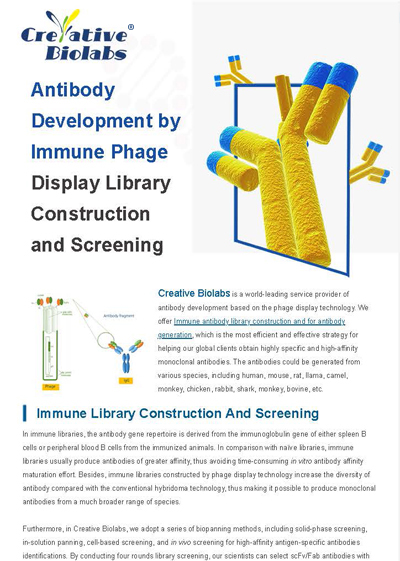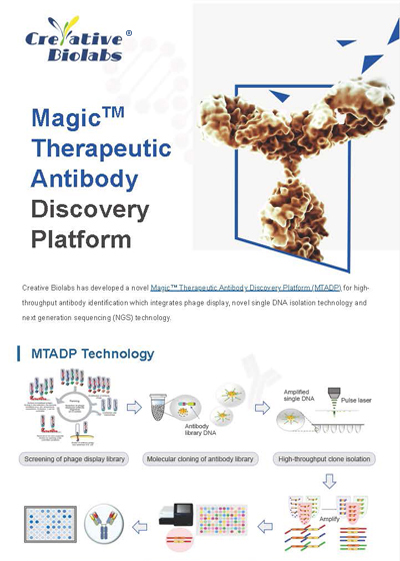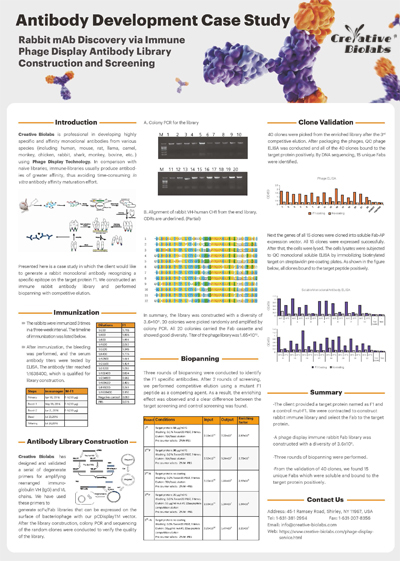
Creative Biolabs is offering the most comprehensive services for antibody development projects. With strict regulation and effective execution, we are dedicated to providing the most valuable solutions to complete your projects.
HighlightsCreative Biolabs is offering the most comprehensive services for antibody development projects. With strict regulation and effective execution, we are dedicated to providing the most valuable solutions to complete your projects.
HighlightsCreative Biolabs has established a broad range of platforms for developing novel antibodies or equivalents. These cutting-edge technologies enable our scientists to meet your demands from different aspects and tailor the most appropriate solution that contributes to the success of your projects.
HighlightsWith deep understanding in antibody-related realms and extensive project experience, Creative Biolabs offers a variety of references to help you learn more about our capacities and achievements, including infographic, flyer, case study, peer-reviewed publications, and all kinds of knowledge that can assist your projects. You are also welcome to contact us directly for more specific solutions.
HighlightsGet a real taste of Creative Biolabs, one of the most professional custom service providers in the world. We are committed to providing highly customized comprehensive solutions with the best quality to advance your projects.
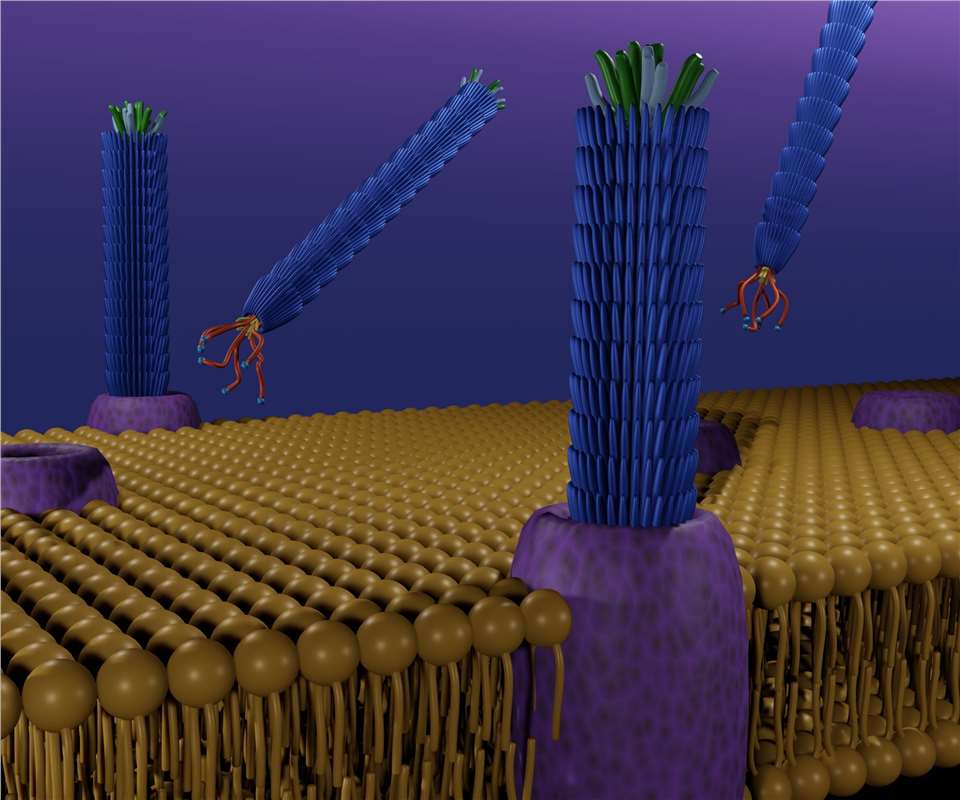
HighlightsThe vascular endothelium plays a central role in regulating vascular homeostasis and is involved in a wide range of pathological conditions, from inflammation and thrombosis to tumor angiogenesis and atherosclerosis. Developing molecules that can selectively home to endothelial cells in vivo is key for the advancement of targeted therapeutics and diagnostics. Creative Biolabs offers a cutting-edge in vivo phage display screening service focused specifically on vascular endothelium targeting. With a proven track record and deep expertise in peptide-based targeting, Creative Biolabs helps academic and pharmaceutical researchers uncover novel endothelial-binding ligands with high functional relevance.
At Creative Biolabs, our vascular-targeting phage display service combines technical sophistication with robust biological relevance:

Tailored selection campaigns involve the strategic use of systemic intravenous administration of phage libraries in various animal models. This approach allows researchers to effectively deliver a diverse range of phage particles directly into the bloodstream, enabling the identification of specific phage clones that can target particular tissues or cells. By customizing these campaigns based on the desired therapeutic or diagnostic outcomes, scientists can enhance the efficacy of phage display technology in identifying novel binders for targeted applications.

The isolation and enrichment of phage clones is a critical step in the phage display process. This involves selecting phage clones that exhibit specific binding affinity to the endothelial linings of different vascular beds, including arterial, venous, and microvascular systems. By employing techniques such as affinity chromatography and biopanning, researchers can isolate phage clones that demonstrate high specificity for target vascular components. This process not only increases the yield of desired clones but also improves the potential for developing targeted therapies or imaging agents for vascular diseases.

Utilizing disease-relevant models is essential for discovering context-specific binders that are relevant to various pathological conditions. Models such as inflammation, tumor angiogenesis, and diabetic vasculopathy provide a realistic environment for studying the interactions between phage clones and target tissues. By mimicking the biological complexities of these diseases, researchers can identify phage clones that bind selectively to disease-associated markers. This approach enhances the translational potential of the findings, paving the way for the development of targeted interventions that can address specific disease mechanisms.
In-house validation services play a crucial role in confirming the specificity and efficacy of identified phage clones. These services include histological co-localization, which allows researchers to visualize the binding of phage clones to target tissues at the microscopic level. Additionally, in vivo imaging techniques provide real-time insights into the distribution and targeting of phage clones within living organisms. Furthermore, target protein identification ensures that the specific proteins recognized by the phage clones are accurately characterized. Together, these validation methods enhance the reliability of the findings and support the advancement of phage-based therapies.
We are here to help you find the best solutions for your needs—get in touch!
Creative Biolabs follows a rigorously optimized workflow to ensure reliability and reproducibility in each vascular targeting project:









Let us know your project details, and we'll provide a tailored quote.
 Real Physiological Context
Unlike cell-based panning, our in vivo approach ensures phage-peptide interactions occur under physiological blood flow, immune surveillance, and intact vascular barriers, capturing interactions that would be missed in vitro.
Precision Across Vascular Beds
Creative Biolabs enables site-specific phage recovery, whether you're targeting arterial walls, venous sinusoids, microcapillaries, or inflamed vasculature—allowing for unmatched targeting resolution.
Pathology-Tailored Models
We offer a wide range of pathological contexts, including inflammation, ischemia, tumor angiogenesis, and diabetes-induced vascular dysfunction, supporting discoveries relevant to human disease.
NGS-Driven Insights
Our NGS analytics allow deep coverage of clone diversity and real-time enrichment tracking, accelerating candidate prioritization with data-backed confidence.
We're eager to assist you with any questions regarding our services.
At the end of a vascular endothelium phage screening campaign, Creative Biolabs provides:
Contact Creative Biolabs' project team today to discuss how our vascular endothelium-targeting phage display service can support your next therapeutic or diagnostic breakthrough.
Use the resources in our library to help you understand your options and make critical decisions for your study.

All listed services and products are For Research Use Only. Do Not use in any diagnostic or therapeutic applications.