Creative Biolabs is offering the most comprehensive services for antibody development projects. With strict regulation and effective execution, we are dedicated to providing the most valuable solutions to complete your projects.
HighlightsCreative Biolabs is offering the most comprehensive services for antibody development projects. With strict regulation and effective execution, we are dedicated to providing the most valuable solutions to complete your projects.
HighlightsCreative Biolabs has established a broad range of platforms for developing novel antibodies or equivalents. These cutting-edge technologies enable our scientists to meet your demands from different aspects and tailor the most appropriate solution that contributes to the success of your projects.
HighlightsWith deep understanding in antibody-related realms and extensive project experience, Creative Biolabs offers a variety of references to help you learn more about our capacities and achievements, including infographic, flyer, case study, peer-reviewed publications, and all kinds of knowledge that can assist your projects. You are also welcome to contact us directly for more specific solutions.
HighlightsGet a real taste of Creative Biolabs, one of the most professional custom service providers in the world. We are committed to providing highly customized comprehensive solutions with the best quality to advance your projects.
HighlightsFor over two decades, Creative Biolabs has stood at the forefront of interaction discovery technology. We proudly offer our advanced Yeast Three-Hybrid (Y3H) Service, a powerful in vivo platform designed to identify and characterize transient and stable trimolecular interactions with exceptional sensitivity and reliability. Our state-of-the-art Y3H screening services provide a direct path to understanding the complex interplay between proteins, RNA, and small molecules, driving innovation in drug discovery and fundamental research.
The Yeast Three-Hybrid (Y3H) system is a sophisticated genetic method derived from the well-established Yeast Two-Hybrid (Y2H) technology. While Y2H is the gold standard for detecting direct protein-protein interactions, the Y3H system is uniquely engineered to detect interactions mediated by a third "bridge" molecule. This third molecule can be either an RNA molecule or a small molecule, making the Y3H system an incredibly versatile tool.
The core principle involves the reconstitution of a functional transcription factor (typically Gal4) in yeast. When the three components—two proteins of interest and a bridging molecule—come together, they activate the transcription of a reporter gene, leading to a detectable phenotype.
The fundamental principle of the Y3H system relies on the reconstitution of a functional transcription factor in the nucleus of yeast cells. A transcription factor typically consists of two separable domains: a DNA-binding domain (DBD) and a transcription activation domain (AD). Individually, these domains cannot activate reporter gene expression. However, if they are brought into close physical proximity, they can reconstitute a functional transcription factor, leading to the activation of downstream reporter genes.
In the Y3H system, this proximity is achieved not by direct protein-protein interaction, but by an RNA molecule acting as a bridge between two fusion proteins, or by a small molecule acting as a bridge between two proteins.
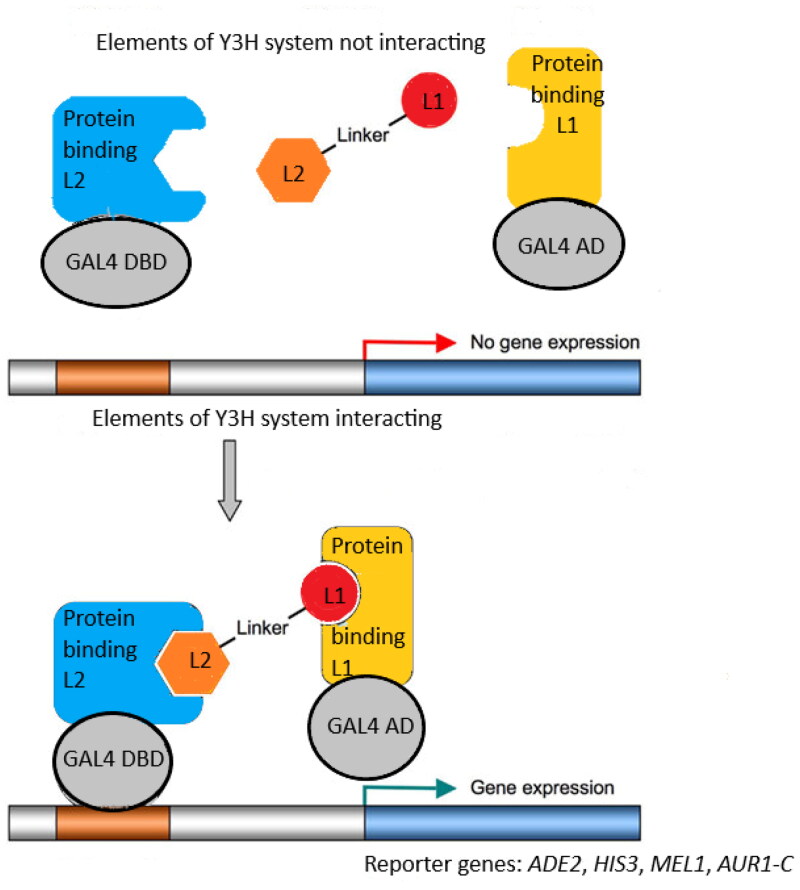 Fig.1 General strategy of the Y3H system.1
At Creative Biolabs, we go beyond the standard. We have developed specialized Y3H platforms to meet the most demanding research needs.
For unparalleled depth and quantitative analysis, we integrate Next-Generation Sequencing (NGS) with our Y3H screening. Instead of relying solely on colony survival, we use deep sequencing to identify and quantify the frequency of "hit" prey clones.
Advantages:
While standard Y3H identifies molecules that form a complex, the R-Y3H system is designed to screen for molecules (e.g., small molecules, peptides, or RNA aptamers) that disrupt a pre-existing ternary complex.
We discuss your goals, select the optimal bait/prey/bridge strategy, and design the constructs.
Cloning of the bait construct and preparation/QC of the prey cDNA library.
Introduction of bait and prey library constructs into the appropriate yeast strains.
Plating on dual selective media to identify initial positive colonies.
Re-streaking, control matings, and reporter gene assays (e.g., lacZ) to validate true interactors.
Identification of the interacting partner proteins by sequencing the prey plasmids from validated positive clones.
Comprehensive bioinformatics analysis and a final, detailed report.
We offer a comprehensive, end-to-end Y3H service tailored to your specific project goals. Our expert team works closely with you from experimental design to final data analysis. Other optional protein-nucleic acid interaction (PNI) assay services:
A: Y2H detects a direct interaction between two proteins. Y3H detects an interaction between two molecules (usually proteins) that is mediated or bridged by a third molecule, such as an RNA or a small molecule.
A: Absolutely. Our RNA-bait Y3H system is specifically designed for this purpose. It is one of the most powerful methods available for identifying proteins that bind to a specific lncRNA, miRNA, or other non-coding RNA.
A: We aim to screen at least 1 x 10^7 clones to ensure comprehensive coverage of the library, maximizing the probability of identifying all relevant biological interactors.
A: We employ a multi-step validation process. Initial hits are re-tested on more stringent selective media. We then perform control experiments, such as testing for auto-activation of the reporter by the bait or prey alone, and often use a second reporter gene (like lacZ) to confirm the interaction.
A: You will receive a full project report detailing the entire experimental procedure, raw data, a list of confirmed positive interactors with their DNA sequences and GenBank accession numbers, and a bioinformatics analysis of the hits.
Don't let the complexity of trimolecular interactions be a barrier to your next breakthrough. Partner with Creative Biolabs to leverage the power of our Yeast Three-Hybrid platform.
All listed services and products are For Research Use Only. Do Not use in any diagnostic or therapeutic applications.