Creative Biolabs is offering the most comprehensive services for antibody development projects. With strict regulation and effective execution, we are dedicated to providing the most valuable solutions to complete your projects.
HighlightsCreative Biolabs is offering the most comprehensive services for antibody development projects. With strict regulation and effective execution, we are dedicated to providing the most valuable solutions to complete your projects.
HighlightsCreative Biolabs has established a broad range of platforms for developing novel antibodies or equivalents. These cutting-edge technologies enable our scientists to meet your demands from different aspects and tailor the most appropriate solution that contributes to the success of your projects.
HighlightsWith deep understanding in antibody-related realms and extensive project experience, Creative Biolabs offers a variety of references to help you learn more about our capacities and achievements, including infographic, flyer, case study, peer-reviewed publications, and all kinds of knowledge that can assist your projects. You are also welcome to contact us directly for more specific solutions.
HighlightsGet a real taste of Creative Biolabs, one of the most professional custom service providers in the world. We are committed to providing highly customized comprehensive solutions with the best quality to advance your projects.
Highlights
The emergence of single-domain antibodies (sdAbs)—a class of antibody fragments comprising a single monomeric variable domain—has redefined the boundaries of therapeutic and diagnostic targeting. The unique architecture of sdAb endows VHHs with extended CDR3 loops (16–24 residues) stabilized by intra-loop disulfide bonds, enabling deep penetration into cryptic epitopes such as enzyme active sites and GPCR ligand-binding pockets.
Advantages of SdAbs:
-Access hard-to-reach targets, increasing specificity for hard-to-target antigens.
-Simplify the development of dual-target therapies, enhancing versatility and therapeutic potential.
-Small size, short plasma half-life, precise drug delivery, and reduced off-target effects improve ADC efficacy and safety.
-Aids in protein crystallization, supporting structural studies for drug development.
Creative Biolabs' camelids single-domain antibody discovery service integrates species-specific immunization protocols, phage display library and antibody screening and engineering to deliver sdAbs with unmatched specificity and therapeutic potential. Validated in dozens of projects targeting disease-related proteins, neuroinflammatory biomarkers, and pathogens, our platform bridges the gap between antibody discovery and clinical translation.
Creative Biolabs' streamlined workflow is designed to deliver camelid-derived sdAbs with precision and efficiency, structured into six phases:
Objective
Collaborate with clients to define target-specific antigen designs (proteins, peptides, haptens) and select optimal camelid species (alpaca, llama, camel) based on epitope complexity.
Client Value
Access to proprietary immunization protocols validated for challenging targets, including membrane proteins and post-translationally modified antigens.
Options
|
|
Pre-validated camelids VHH / Humanized VHH libraries (>1010 capacity) enabling immediate screening. |
Client Value
Flexibility to balance project speed (premade libraries) with target-specific optimization (custom libraries).
Tailored Screening Strategies for:
Client Value
Guaranteed binder identification through protocols, including library diversity expansion and multi-species cross-screening.
Scope
Client Value
| Case One: Cross-Reactive sdAb Discovery From Immune sdAb Library |
|
Challenges The client sought to discover sdAbs targeting a specific protein that is conserved across multiple species. The goal was to identify sdAbs that could bind to the same target across different species, ensuring therapeutic versatility and broad applicability. |
|
Solutions We worked closely with the client to develop a customized strategy, optimizing immunization and screening to discover high-affinity sdAbs suitable for multiple species.
|
Optimized Immunization & Titration Testing 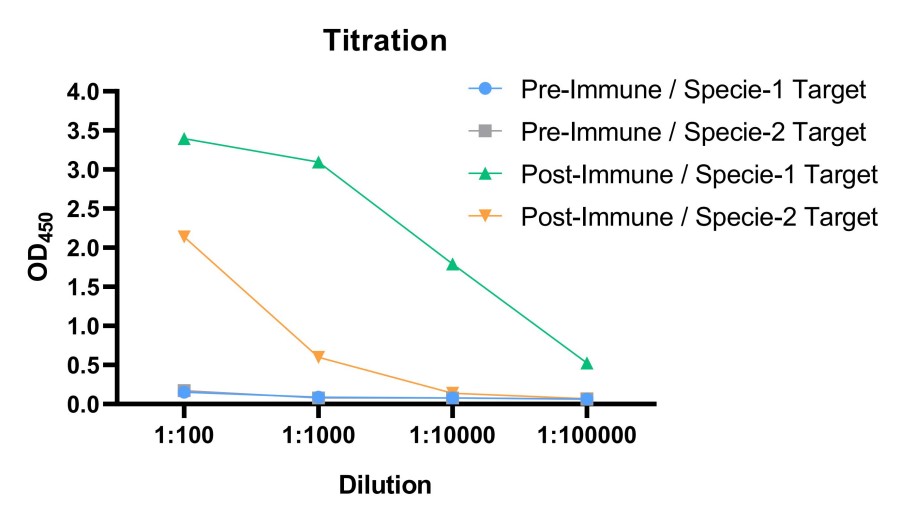 We immunized llamas against the target proteins and conducted titration tests against the cross-species target proteins. |
|
Construction of Immune sdAb Library
Library Capacity >109
Library Accuracy > 95%
High Library Diversity
|
Cross-Species Screening & Clonal Selection 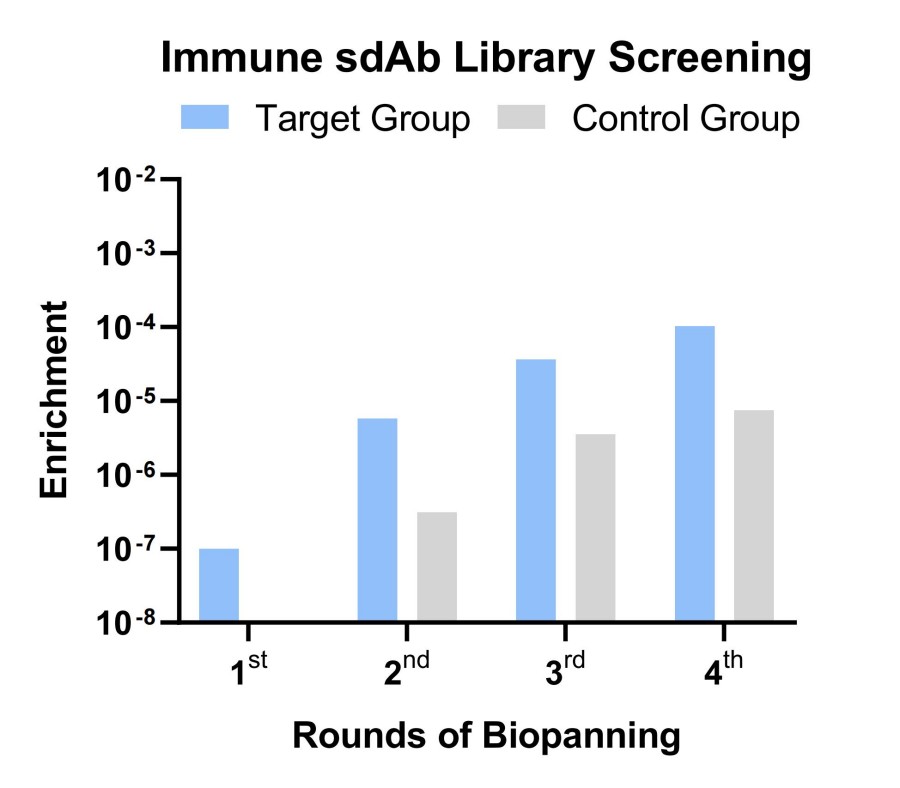 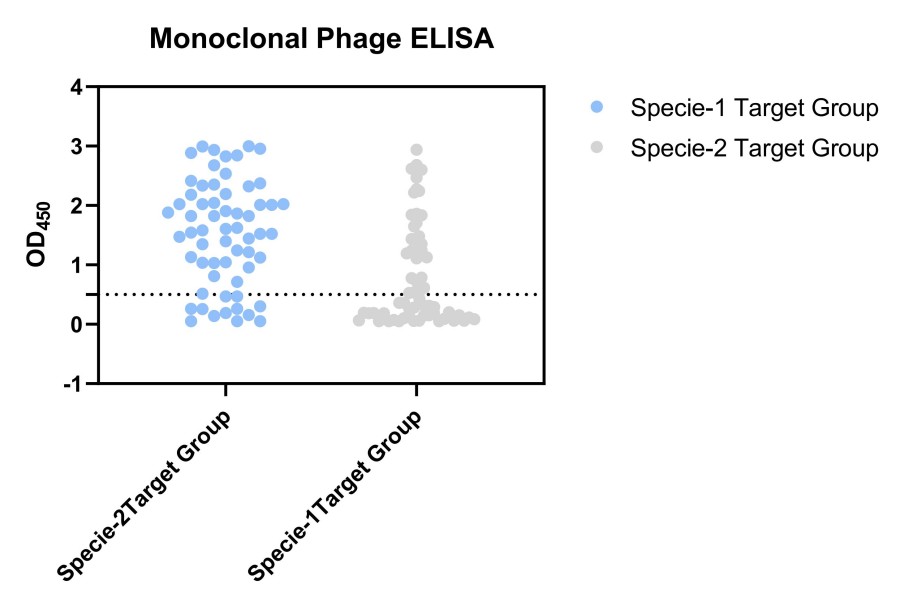 We performed cross-species screening to identify sdAb clones that bind to the across species targets. |
Pilot Production & Activity Testing 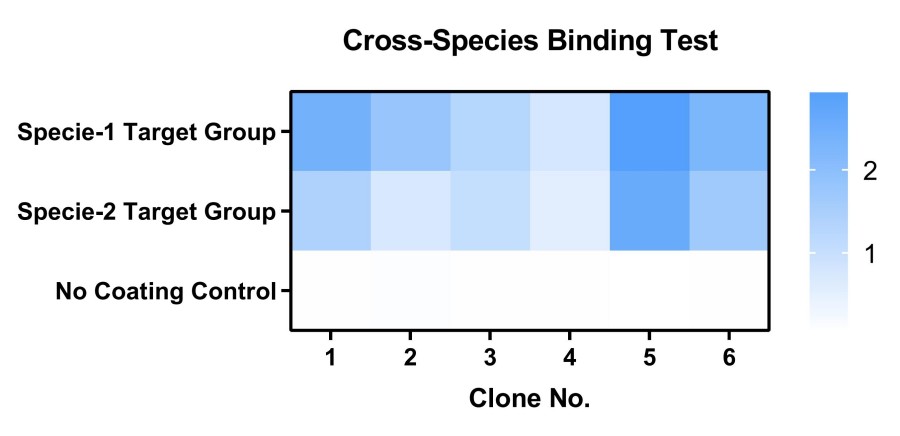 We produced pilot batches of the top clones and tested their affinity and activity using ELISA and SPR, refining the best candidates. |
|
Final Candidate Selection After screening and analysis, we identified 3-5 top-performing sdAb clones for future client use. |
Creative Biolabs' Camelid Antibody Discovery Platform is a unified ecosystem engineered to overcome the limitations of conventional antibody development. By harmonizing species-specific immunobiology with cutting-edge discovery workflows, we deliver sdAbs with unparalleled precision for complex therapeutic and diagnostic challenges.
Optimized frameworks for alpaca, llama and camels sdAbs enable tailored solutions based on target class (e.g., deep cavity epitopes).
Phage display workflows interoperate with single B cell sorting to maximize epitope coverage and binder diversity.
Repertoire diversification enhances the probability of isolating sdAbs against low-immunogenicity targets.
Cross-disciplinary validation bridges in silico predictions with functional outcomes, ensuring sdAbs engage targets in disease-relevant conformations.
Creative Biolabs' Camelid Single-Domain Antibody Discovery Service represents a paradigm shift in targeting structurally intractable epitopes. By integrating camelid immunobiology with phage display precision and antibody optimization and engineering, we deliver sdAbs that combine high affinity, stability, and therapeutic versatility. Validated in dozens of projects across oncology, neurology, and infectious disease research, our platform empowers researchers to transcend traditional antibody limitations.




to explore how our camelids monoclonal antibody discovery engine can advance your next therapeutic or diagnostic breakthrough.
In addition to developing camelids monoclonal antibody on our advanced phage display platform, we also provide a species list for customers to choose target species. If you also need to develop monoclonal antibodies for other species, please click and learn more.
All listed services and products are For Research Use Only. Do Not use in any diagnostic or therapeutic applications.