Chicken IgY Monoclonal Antibody Discovery Service
Services Workflow Cases Features Related Services FAQs
Chicken Antibody Innovation: Unlocking the Potential of Chicken IgY Using Phage Display Technology
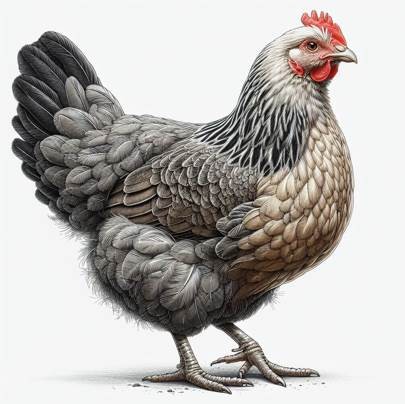
While mammalian-derived antibodies (e.g., murine, humanized IgG) have dominated the field of antibody development, avian IgY antibodies represent a paradigm shift in specificity, avidity, and cross-reactivity profiles. Chicken IgY, the avian functional homolog of mammalian IgG, offers distinct advantages:
|
Reduced Cross-Reactivity
|
Less interaction with human proteins ensures higher specificity in targeted applications.
|
|
Diverse Epitope Recognition
|
Extended CDR3 allows for a broader range of epitopes to be recognized.
|
|
High Thermal Stability
|
Maintains functionality across various temperatures and experimental conditions.
|
|
Targeting Conserved Epitopes
|
Effectively identifies and binds to conserved epitopes and post-translational modifications.
|
Phage display technology, a cornerstone of in vitro antibody engineering, synergizes with the unique immunological properties of chickens. By decoupling antibody selection from in vivo constraints, phage display enables systematic mining of avian antibody repertoires while preserving conformational epitope recognition—a critical factor for functional therapeutics. Creative Biolabs harnesses this synergy through its chicken IgY monoclonal antibody discovery service, a platform that integrates phage display with proprietary library screening, antibody validation and engineering. Our service is designed to deliver high-affinity, species-specific IgY antibodies for applications spanning infectious disease diagnostics, oncology biomarker discovery, and therapeutic lead development.
Workflow of Chicken IgY Antibody Discovery
Creative Biolabs' end-to-end workflow combines precision antigen design, advanced library construction, and optimized biopanning to generate functionally validated IgY mAbs. The process is structured into five integrated phases:
Binder Validation
Antibody Engineering
Antibody Production & Characterization
|
Immune Libraries
|
-
Generated from chickens hyperimmunized with target antigens.
-
Capture affinity-matured VH/VL pairs enriched through natural immune responses.
|
|
Synthetic Libraries
|
-
Engineered in silico using codon-optimized CDR diversification.
-
Targeting non-immunogenic antigens (e.g., glycans, small molecules) with tailored paratope diversity.
|
|
Naïve Libraries
|
-
Derived from non-immunized chickens.
-
Unbiased access to the germline repertoire for de novo epitope discovery.
|
Online Inquiry
Libraries undergo iterative selection using different biopanning strategies:
Online Inquiry
|
Affinity Profiling
|
Advanced quantitative techniques to quantify binding kinetics.
|
|
Epitope Binning
|
High-throughput competitive ELISA map non-overlapping epitopes for multiplex assay development.
|
|
Functional Screening
|
Neutralization assays (e.g., viral entry inhibition) and cross-reactivity testing across species homologs.
|
Online Inquiry
|
Chimerization
|
scFv/Fab fragments reformatted into full-length IgY or human-IgG chimeras for enhanced in vivo stability.
|
|
Affinity Maturation
|
Error-prone PCR and site-saturation mutagenesis refine CDR regions to achieve picomolar affinity.
|
Online Inquiry
|
Chicken Antibody Production
|
Milligram-to-gram scale expression in mammalian systems (CHO or HEK293) with ≥95% purity.
|
|
Stability Testing
|
Thermal shift assays and accelerated aggregation studies under stress conditions.
|
Customized Libraries, Tangible Outcomes: Our Project Successes in Focus
Neutralizing Chicken scFv Antibody Development
Through a combination of chicken immunization, cutting-edge library construction, high-throughput screening, and comprehensive functional validation, we successfully developed a neutralizing antibody from a chicken scFv library.
|
Client Request
The client provided an enzyme-related antigen and requested the development of neutralizing antibodies to target this specific antigen.
|
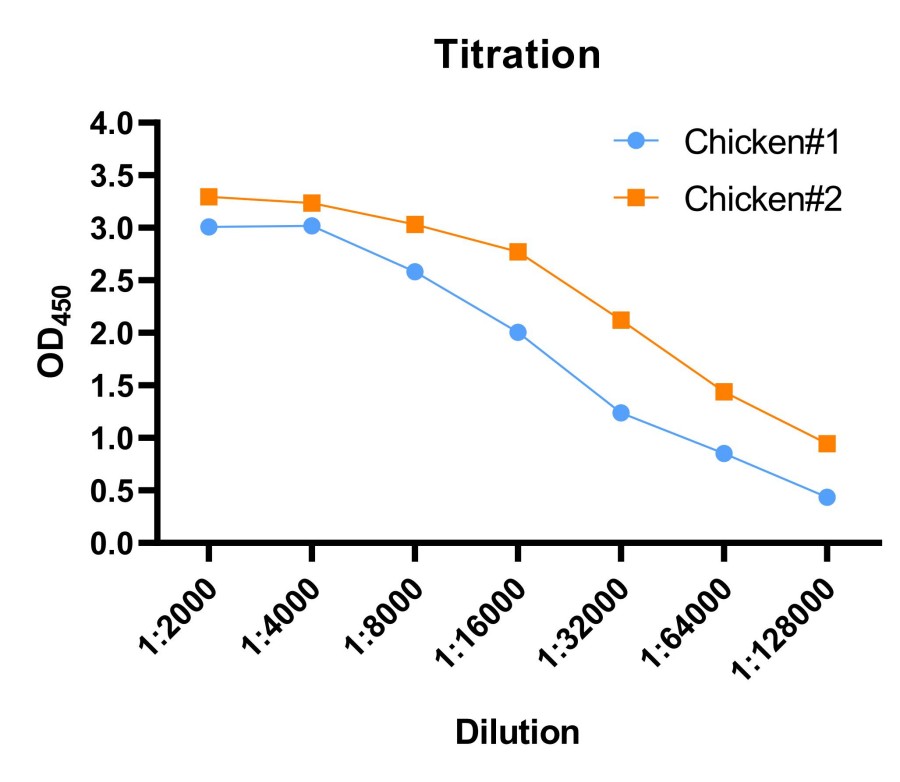
1. Chicken Immunization
-
Immunized two chickens with the provided antigen.
-
Administered four immunization cycles to ensure a strong immune response.
-
Conducted two titration assays to monitor and assess antibody titers.
-
Achieved robust antibody titers in both chickens.
-
Collected eggs throughout the process to serve as material for subsequent library construction.
|
|
2. Chicken IgY Library Construction
-
Utilized the immunized egg material to construct a chicken scFv library.
-
Performed rigorous QCs on the library to ensure its diversity and quality.
-
Verified that the library contained a sufficient number of unique clones for effective screening and discovery.
|
|
Library Capacity
|
>109
|
|
Library Accuracy
|
>90%
|
|
Library Diversity
|
High
|
|
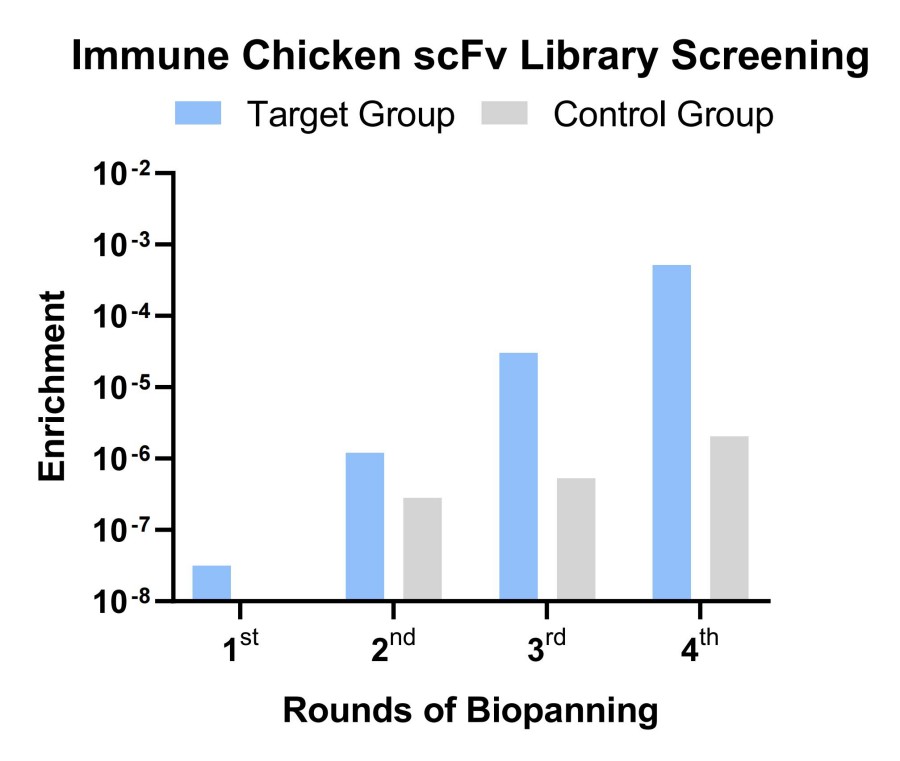
3. Library Screening
-
Developed a tailored screening strategy specifically focused on identifying neutralizing antibodies.
-
Enriched the library for high-affinity binders through four rounds of biopanning.
-
Ensured the identification of relevant clones with potential neutralizing activity.
|
|
4. Binder Validation and Sequencing
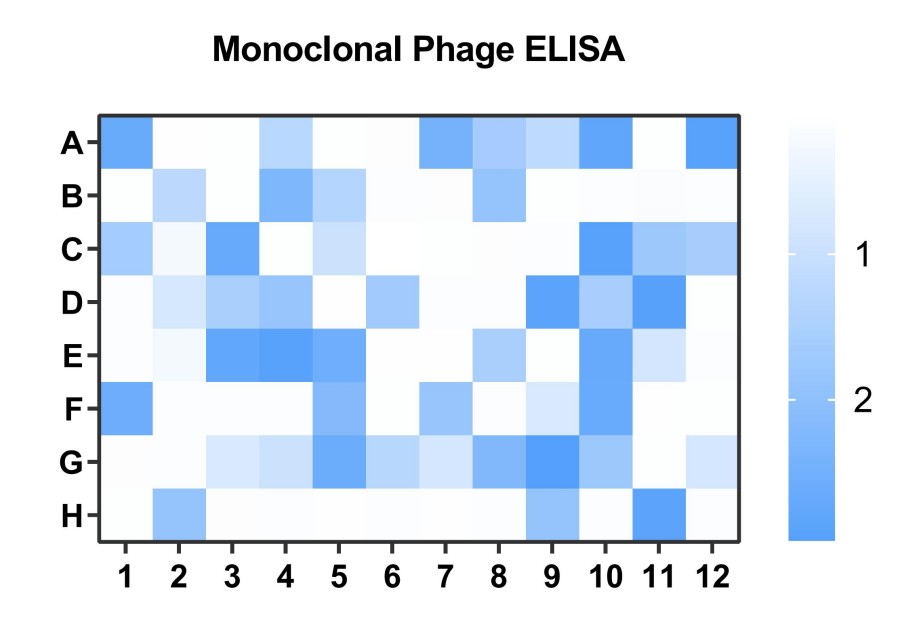 
-
Phage-based validation after library screening.
-
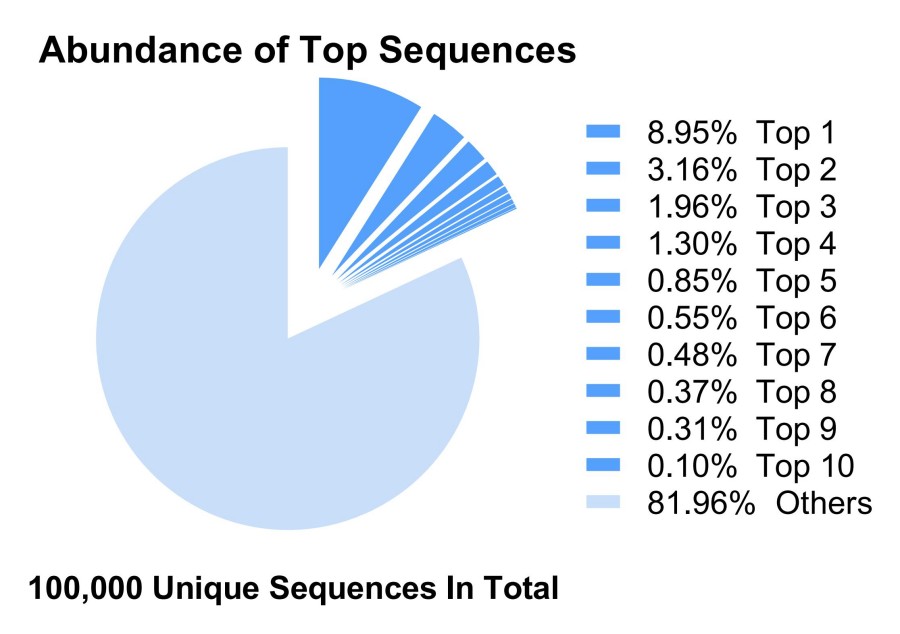
Performed NGS on the enriched library to assess the diversity and quality of the selected clones.
-
Analyzed the sequencing data to identify the top enriched sequences.
-
Selected the most promising candidates for further development.
|
5. Antibody Production & Functional Assays
-
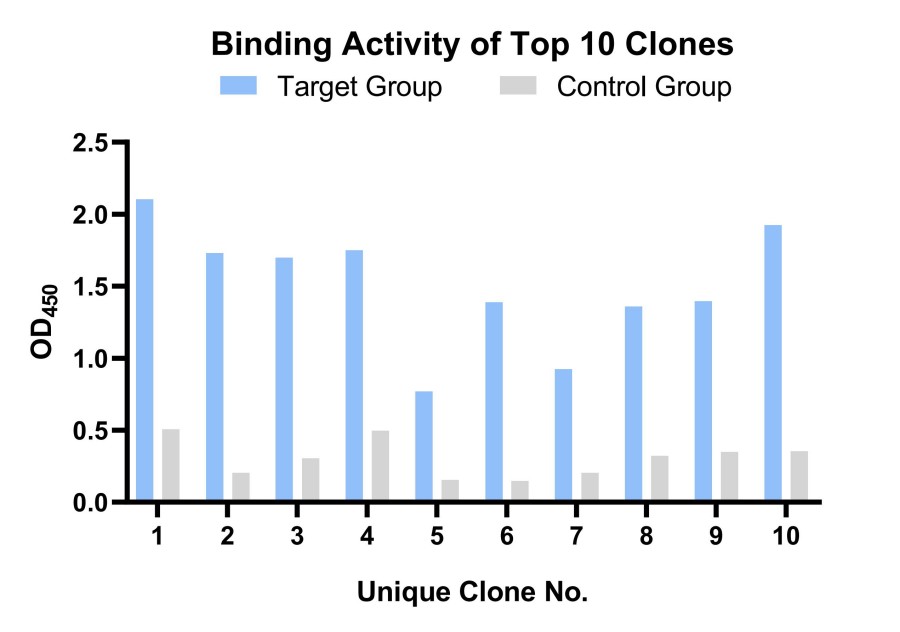
Produced full-length IgY antibodies from the selected top 10 clones.
-
Conducted preliminary functional assays to assess the neutralization activity of the antibodies.
-
Delivered the top 10 clones to the client, ready for their internal testing of neutralizing efficacy.
|
|
Take the Next Step – Request Your Quote Today
Competitive Advantages: Speed, Specificity, and Scalability
Creative Biolabs' Chicken IgY Monoclonal Antibody Discovery Service redefines the boundaries of antibody engineering by uniting avian immunological diversity with phage display precision. Our platform is engineered for researchers demanding antibodies that combine high specificity, thermal resilience, and minimal cross-reactivity—whether for diagnostic innovation or therapeutic development. Partner with us to leverage a technology pipeline validated by 1500+ antigens and a success rate exceeding industry benchmarks.
Unmatched Avian Expertise
-
Collaboration with pioneers in avian immunology ensures access to optimized immunization protocols and rare chicken breeds (e.g., MHC-defined lines).
-
Cross-Reactant Minimization: IgY's evolutionary divergence from mammals eliminates interference in human tissue staining or serum-based assays.
Advanced Library Design
-
Gene Conversion Optimization
Leveraging chickens' unique pseudogene-driven diversification mechanism, we amplify CDR3 diversity while minimizing primer bias.
-
Synthetic Design
Machine learning-guided CDR randomization maximizes structural paratope diversity for cryptic epitopes.
Customized Screening Strategies
-
Design tailored workflows to efficiently evaluate dozens to hundreds of candidate clones.
-
Combines targeted small-batch validation with comprehensive next-generation sequencing (NGS) for deep insight into library diversity and clone quality.
Related Services
In addition to the advanced chicken IgY monoclonal antibody discovery service using phage display, we also provide monoclonal antibody services targeting other species for customers to choose their own target species.
FAQs
-
Q: Why choose chicken IgY antibodies over mammalian antibodies for conserved or challenging targets?
A: The evolutionary distance between avian and mammalian species is a significant immunological advantage. This allows the chicken immune system to mount a robust and specific immune response against antigens that are highly conserved among mammals, which would typically be poorly immunogenic to a mammalian host like a mouse or rabbit. Furthermore, IgY possesses a unique heavy chain structure and longer CDR3 loops, enabling it to bind to cryptic or difficult-to-access epitopes that are often inaccessible to conventional mammalian IgGs. This makes chicken IgY an ideal solution for discovering novel antibodies against challenging, highly conserved, or complex protein targets.
-
Q: What is the process of generating IgY antibodies using phage display?
A: Our process begins with the immunization of chickens with the target antigen. After a robust immune response is confirmed, we isolate lymphocytes and amplify the antibody variable region genes. These genes are then cloned into a phage display vector to create a high-diversity IgY antibody library. Through multiple rounds of biopanning and stringent selection, we isolate phages displaying high-affinity IgY antibody fragments that specifically bind to the target. The positive clones are then sequenced and validated for binding and functional properties.
-
Q: Can IgY antibodies be used directly in mammalian assays or therapeutics?
A: IgY antibodies offer distinct advantages in mammalian assays. Due to their structural differences, IgY does not bind to mammalian Fc receptors (FcRs) or complement proteins, effectively eliminating non-specific background signals and cross-reactivity in applications like immunohistochemistry and ELISA. However, for therapeutic use in humans, direct application of IgY is not recommended due to potential immunogenicity.
-
Q: What are the key advantages of using phage display for IgY antibody discovery?
A: Phage display bypasses the limitations of traditional hybridoma technology. It enables the creation of vast, high-diversity IgY antibody libraries, allowing for the isolation of specific binders that may be present at extremely low frequencies in vivo. The in vitro selection process allows for precise control over screening conditions, enabling the identification of antibodies with tailored characteristics, such as binding to specific epitopes or possessing high affinity against difficult-to-handle antigens. This platform significantly accelerates the discovery timeline and enhances the success rate for challenging IgY antibody projects.
-
Q: What deliverables can I expect for my IgY antibody discovery project?
A: Our deliverables are designed to provide a comprehensive and transparent package for seamless downstream development. Upon project completion, clients receive the sequence-verified plasmid DNA for their candidate antibody genes (in scFv/Fab formats and as a full-length IgG vector). We also provide a sample of the purified IgY antibody (typically 1–5 mg with >95% purity) for immediate use. A detailed data package is also included, containing critical information on binding kinetics, specificity, and stability profiles, empowering you to make informed decisions for future applications.
All listed services and products are For Research Use Only. Do Not use in any diagnostic or therapeutic applications.