Creative Biolabs is offering the most comprehensive services for antibody development projects. With strict regulation and effective execution, we are dedicated to providing the most valuable solutions to complete your projects.
HighlightsCreative Biolabs is offering the most comprehensive services for antibody development projects. With strict regulation and effective execution, we are dedicated to providing the most valuable solutions to complete your projects.
HighlightsCreative Biolabs has established a broad range of platforms for developing novel antibodies or equivalents. These cutting-edge technologies enable our scientists to meet your demands from different aspects and tailor the most appropriate solution that contributes to the success of your projects.
HighlightsWith deep understanding in antibody-related realms and extensive project experience, Creative Biolabs offers a variety of references to help you learn more about our capacities and achievements, including infographic, flyer, case study, peer-reviewed publications, and all kinds of knowledge that can assist your projects. You are also welcome to contact us directly for more specific solutions.
HighlightsGet a real taste of Creative Biolabs, one of the most professional custom service providers in the world. We are committed to providing highly customized comprehensive solutions with the best quality to advance your projects.
HighlightsThe capability to unravel the essential components of life through DNA and proteins has transformed both biological research and biotechnology fields. DNA sequencing reveals the exact nucleotide arrangement within DNA molecules to deliver an organism's genetic blueprint. The sequencing of proteins identifies the sequential arrangement of amino acids which determines its primary structure and ultimately its function. The two technologies serve as essential instruments for studying biological functions at the molecular level.
The flow of genetic information in biological systems is elegantly described by the Central Dogma of Molecular Biology: DNA is transcribed into ribonucleic acid (RNA), which is then translated into protein. The single-way direction of genetic information transfer reveals the fundamental link between genetic code and its resultant functional output.
The widespread application of sequencing technologies makes them fundamental pillars of contemporary biological research.
DNA Sequencing Applications:
Protein Sequencing Applications:
From Sanger Sequencing to Next-Gen DNA Sequencing:
Evolution of Protein Sequencing Methods:
DNA sequencing reveals the precise sequence of four nucleotide bases which include adenine (A), guanine (G), cytosine (C), and thymine (T) within a DNA molecule. The genetic sequence includes the specific instructions that control how an organism develops its traits and performs its biological functions. Life's basic code relies on the sequence of nucleotides. The specific order of nucleotide bases along the DNA backbone functions as the genetic code which directs the construction and sustenance of an organism.
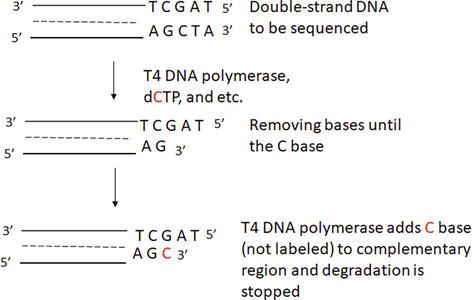 Fig. 1 DNA sequencing analysis at 3' termini of dsDNA using the T4 DNA polymerase-directed hydrolytic method by Paul T. Englund.1, 3
NGS offers several key advantages over traditional Sanger sequencing:
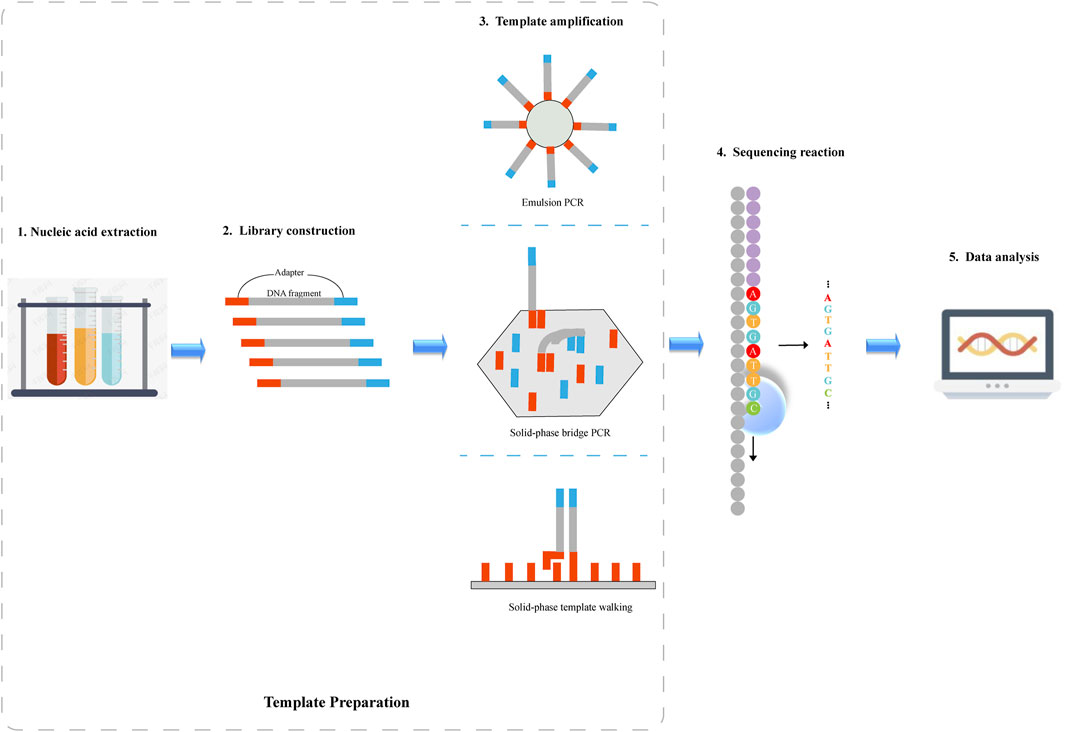 Fig. 2 Schematic diagram of next-generation sequencing.2, 3
The process of DNA sequencing shows genetic information directly, but it also allows scientists to indirectly determine protein amino acid sequences. The gene encoding the protein undergoes sequencing which allows the theoretical amino acid sequence to be determined using genetic code rules.
This prediction excludes post-translational modifications (PTMs) which refer to chemical changes that proteins undergo after synthesis and which can greatly influence protein function. DNA sequencing delivers the primary amino acid sequence but direct protein sequencing remains essential for detecting PTMs and verifying the true protein sequence.
Protein sequencing involves using methods to establish the sequential arrangement of amino acid residues within a protein molecule. The protein sequence determines its three-dimensional structure and interactions with other molecules which leads to its biological function.
Protein sequence analysis requires both the determination of amino acid order and the identification of PTMsv including phosphorylation, glycosylation, and acetylation. Critical functions of protein activity regulation along with stability maintenance and localization control are determined by these modifications.
Edman degradation formed the basis of traditional protein sequencing methods. The advanced analysis methods of today depend significantly on mass spectrometry (MS)-based tools including tandem mass spectrometry (MS/MS) to accurately identify peptides and their modifications with exceptional sensitivity. During MS/MS analysis peptides break into fragments which are analyzed through their mass-to-charge ratios to determine the amino acid sequence.
Traditional methods of protein sequencing encounter multiple obstacles even though MS-based proteomics has advanced.
Next-Generation Protein Sequencing targets these limitations through the creation of new technologies that provide:
Next-Generation Protein Sequencing remains in its developmental phase yet exhibits tremendous possibilities to transform proteomics research alongside its practical uses.
DNA and protein sequencing share the goal of deciphering biological sequences but they analyze different molecules and yield different types of information.
| Feature | DNA Sequence | Protein Sequence |
| Molecule | Deoxyribonucleic acid (DNA) | Protein (amino acid chain) |
| Building Blocks | Nucleotides (A, T, C, G) | Amino acids (20 standard types) |
| Information | Genetic code, blueprint for protein synthesis | Primary structure, dictates protein function |
| Modifications | Primarily epigenetic modifications | Post-translational modifications (PTMs) |
| Relationship | Encodes the information for protein sequence | Product of gene expression (translation) |
DNA sequencing instruments represent high-throughput devices which detect fluorescent nucleotide incorporation during DNA synthesis. The latest generation protein sequencers employ multiple methods which frequently concentrate on single-molecule analysis to identify amino acids by their specific characteristics like mass and charge. The fundamental differences in the technologies reflect the distinct chemical properties of DNA molecules compared to protein molecules.
The choice between DNA and protein sequencing depends on the specific biological question being addressed.
DNA to Protein (In Silico Prediction): Scientists frequently use DNA sequencing followed by translation to predict the amino acid sequence of a protein from its gene sequence. The approach helps determine the primary structure of proteins but fails to identify post-translational modifications.
Protein to Nucleotide (Reverse Transcription): Researchers employ reverse transcription PCR (RT-PCR) to establish the DNA or RNA sequence that encodes a protein. Degenerate primers for nucleic acid amplification may be designed based on the protein sequence.
To determine the RNA sequence of a target protein you need to follow several steps.
DNA and protein sequencing function as complementary methods that deliver distinct yet linked perspectives on biological systems.
DNA sequencing produces the genetic blueprint but protein sequencing shows the actual functional expression of this blueprint including modifications that DNA sequencing alone cannot foresee. When researchers combine data from DNA sequencing and protein sequencing they gain comprehensive insights into gene expression patterns along with protein functionality.
The central dogma demonstrates how genetic information moves from nucleotide sequences to protein sequences. With DNA sequencing we can determine nucleotide arrangements while genetic code knowledge lets us forecast the matching protein sequence. The primary amino acid sequence prediction fails to include essential information regarding PTMs.
The technological development of DNA and protein sequencing methods advances at a fast pace. DNA sequencing technology has evolved with longer read lengths alongside improved accuracy, single-cell sequencing capabilities and nanopore sequencing advancements. Protein sequencing research focuses on creating high-throughput single-molecule technologies that sequence whole proteins and identify PTMs.
Biological research will probably move towards combining DNA sequencing data with protein sequencing results in its future progress. Studying proteins alongside genomic data delivers enhanced insights into cellular functions as well as disease progression and treatment outcomes. The combination of different scientific methods is essential for progress in personalized medicine as well as new therapeutic development.
The advancement of Next-Generation Protein Sequencing technologies will create significant growth opportunities within the protein sequencing industry. Proteomics research and biopharmaceuticals as well as diagnostic and biotechnology sectors will benefit from organizations that create and market Next-Generation Protein Sequencing technologies because they will become essential catalysts for progress. Enhanced protein sequencing technologies will produce deeper proteomic understanding and stimulate innovation in research instruments and medical treatment methods.
For generations DNA sequencing has remained fundamental in biological research yet the breakthroughs in Next-Generation Protein Sequencing stand to usher in an unprecedented period of proteomic discovery. Creative Biolabs offers de novo antibody sequencing and de novo protein sequencing services, powered by our propriety DASS (Database Assisted Shotgun Sequencing) technology to meet the diverse protein research needs of our clients, driving innovation and advancement in the field of biomedical science.
Learn more about Creative Biolabs' de novo antibody sequencing services:
All listed services and products are For Research Use Only. Do Not use in any diagnostic or therapeutic applications.