
Creative Biolabs is offering the most comprehensive services for antibody development projects. With strict regulation and effective execution, we are dedicated to providing the most valuable solutions to complete your projects.
HighlightsCreative Biolabs is offering the most comprehensive services for antibody development projects. With strict regulation and effective execution, we are dedicated to providing the most valuable solutions to complete your projects.
HighlightsCreative Biolabs has established a broad range of platforms for developing novel antibodies or equivalents. These cutting-edge technologies enable our scientists to meet your demands from different aspects and tailor the most appropriate solution that contributes to the success of your projects.
HighlightsWith deep understanding in antibody-related realms and extensive project experience, Creative Biolabs offers a variety of references to help you learn more about our capacities and achievements, including infographic, flyer, case study, peer-reviewed publications, and all kinds of knowledge that can assist your projects. You are also welcome to contact us directly for more specific solutions.
HighlightsGet a real taste of Creative Biolabs, one of the most professional custom service providers in the world. We are committed to providing highly customized comprehensive solutions with the best quality to advance your projects.
HighlightsCreative Biolabs provides hybridoma cell line optimization services, aiming to offer a lifeline for your valuable antibody-producing cells. With our extensive experience, we expertly rescue and enhance underperforming hybridomas. Clients receive revitalized, stable, and high-producing cell lines, ensuring a consistent antibody supply and accelerating research progress through our dedicated scientific support.
Hybridoma technology enables the large-scale production of monoclonal antibodies (mAbs) specific to selected antigens. This process involves the fusion of splenocytes from immunized animals with immortalized myeloma cell lines. The resulting hybridoma cells are then screened, and single cells are cloned to establish stable cell lines capable of long-term production of specific mAbs. Over recent decades, advancements in cell culture practices, including optimized growth supplements and cell medium formulations, have significantly enhanced the consistency of mAb production via hybridoma technology.
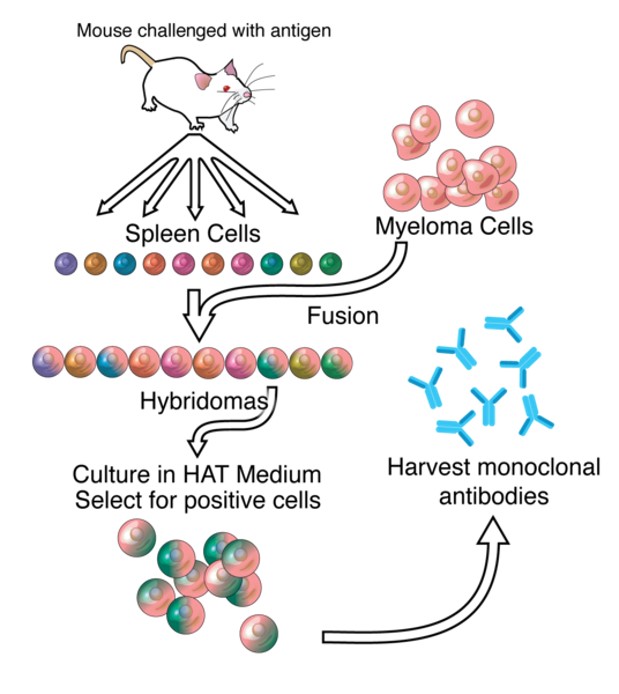 Fig.1 Overview of hybridoma technology and monoclonal antibody creation. Distributed under Open Access license CC BY-SA 3.0, from Wiki, without modification.
Despite their utility, hybridoma cell lines are notoriously prone to instability over time. Issues such as genetic drift can lead to the loss of antibody-encoding chromosomes, resulting in diminished or completely abolished antibody production. Furthermore, non-producing or low-producing variants can gain a growth advantage, gradually overtaking the desired high-producing cells within a culture. Contamination, particularly by mycoplasma, can subtly alter cellular metabolism and antibody output. Suboptimal culture conditions or improper cryopreservation and revival techniques can also severely compromise cell viability and productivity. These challenges underscore the critical necessity for robust hybridoma cell line optimization and rescue strategies to maintain the integrity and utility of these valuable biological assets, preventing costly delays and loss of irreplaceable clones.
Creative Biolabs provides dependable and economical services for hybridoma cell line optimization and prevention of cell line drift, designed to support diverse research endeavors. We develop bespoke optimization strategies to generate superior hybridoma lines for each antibody produced. Concurrently, extensive seed stocks for each hybridoma cell line are meticulously maintained and rigorously monitored for viability, microbial contamination, antibody expression, and isotype uniformity.
Our optimization service is a meticulous process designed to recover and improve the performance of your existing hybridoma cell lines. We address issues ranging from low antibody yield to poor viability, transforming problematic cultures into robust, high-producing assets. The process involves several key stages:
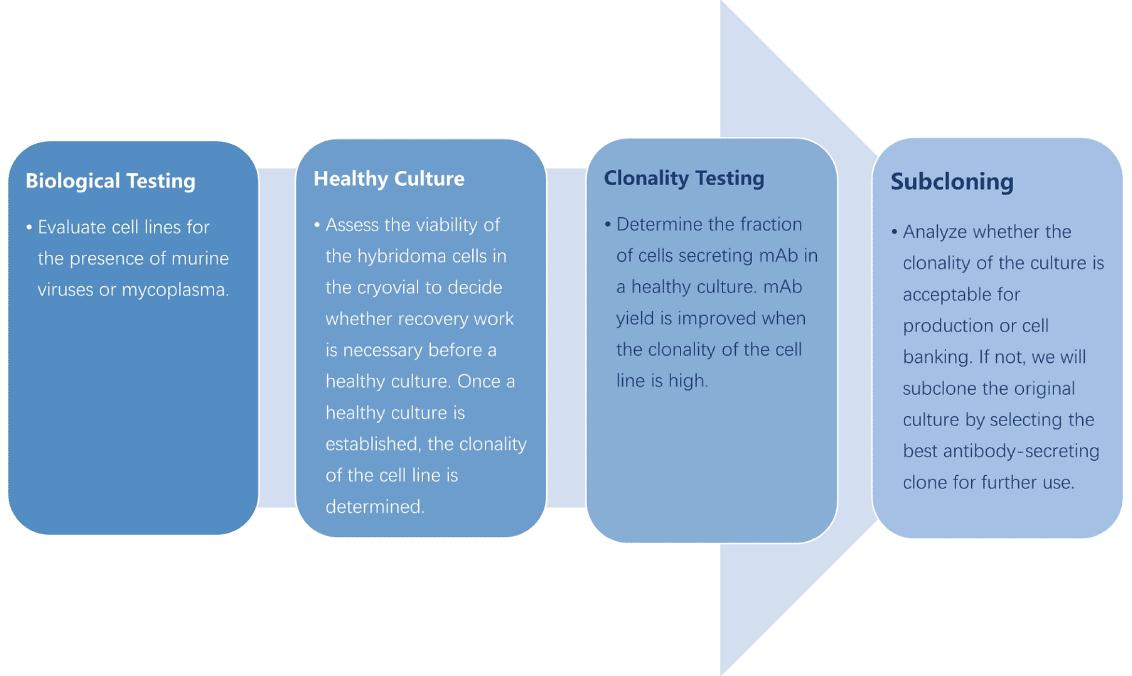
Comprehensive Biological Testing: The initial step involves a thorough diagnostic evaluation of your hybridoma. This includes assessing current growth characteristics, confirming antibody production levels, and conducting rigorous screening for common contaminants, with a particular emphasis on detecting mycoplasma using highly sensitive PCR-based assays.
Establishment of Healthy Cultures: Following diagnostics, our efforts focus on nurturing the cells back to optimal health. This may involve adapting cells to improved culture media, implementing specialized recovery protocols for low-viability stocks, and refining passaging techniques to minimize stress.
Rigorous Clonality Testing: To ensure consistent antibody production and characteristics, verifying the monoclonality of the hybridoma population is essential. We employ methods to confirm that the antibody-producing cells originate from a single, stable clone.
Targeted Subcloning for Enhancement: Utilizing techniques like limiting dilution cloning, we isolate individual, high-performing cells. These selected subclones are then expanded and meticulously evaluated for superior antibody productivity, stability, and desired growth characteristics, ensuring the selection of the most robust candidates.
To ensure the enduring stability and high productivity of your optimized hybridoma, this service focuses on rigorous post-optimization characterization and secure cell banking. After reviving an optimized cell line, its percent viability is carefully determined, often using a trypan blue contrast assay. Antibody activity is thoroughly assessed with an immunoassay, and the percent of specific antibody expression is calculated to ensure performance consistency.
Critically, before the development of a new, certified hybridoma bank, all cell lines are comprehensively screened for mold, fungi, microbial growth, mycoplasma, and viruses. Only meticulously characterized, high-performing, and contaminant-free cells are used to create Master and Working Cell Banks. These securely stored aliquots ensure the long-term security and integrity of your valuable cell line, providing a reliable resource against future drift. We also provide recommendations for optimal long-term culture maintenance and offer periodic re-evaluation of cell line performance to detect and mitigate any signs of declining productivity or stability early on.
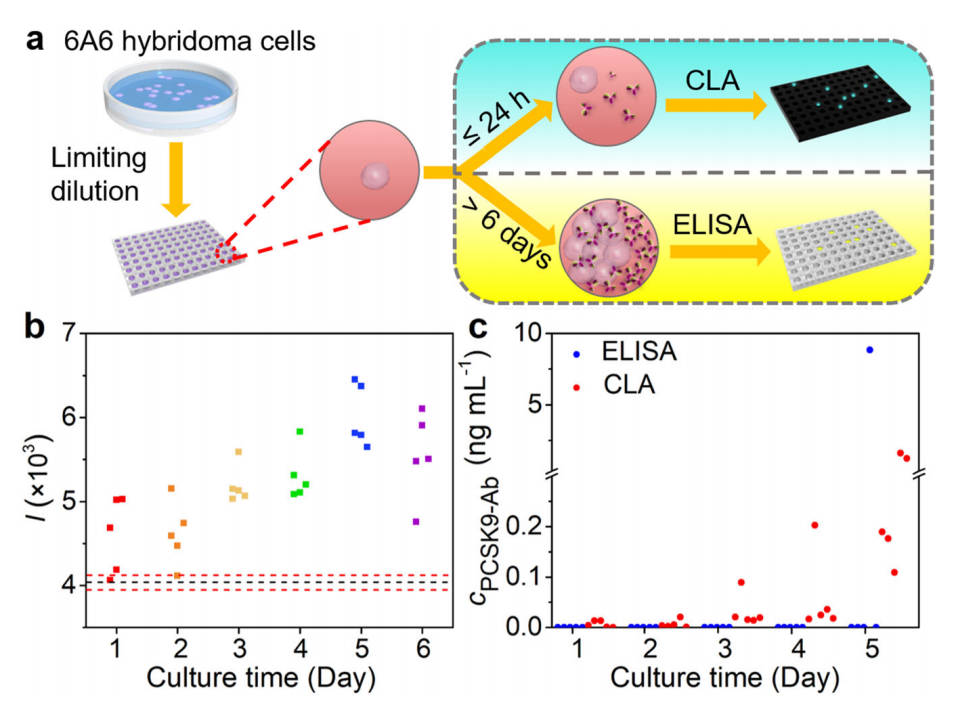 Fig.2 Assay of PCSK9-Ab secreted from 6A6 hybridoma cells.1
The hybridoma technique traditionally utilizes the ELISA method to detect antibodies secreted into the supernatant of specific hybridoma cells after a culture period of 1-2 weeks. During this time, the cells undergo clonal expansion and antibody secretion to attain concentrations detectable by ELISA, a process that significantly hinders the efficiency of the technique. However, the proposed CLA, enhanced with P-RCAES, offers a superior alternative to ELISA due to its high sensitivity and specificity. In this study, Ao, Hang, et al. evaluated the performance of the CLA in detecting PCSK9-Ab secreted by 6A6 hybridoma cells.1 A single cell was isolated using limiting dilution on a 96-well plate, and supernatants from 6A6 hybridoma cells cultured for various durations were tested with both the CLA and ELISA. Notably, ELISA could not detect PCSK9-Ab from 6A6 hybridoma cells until six days post-culture, whereas the CLA successfully detected PCSK9-Ab from a single 6A6 hybridoma cell after just one day of culture. This provides a rapid method for screening specific hybridoma cells.
By significantly increasing the antibody yield per cell, our optimization service can drastically decrease the overall costs associated with your recombinant protein production, making your research more economical.
The optimized hybridoma cell lines we deliver are adapted to thrive under standard culture conditions. This means no disruptive changes to your established laboratory culture habits or protocols are required.
We ensure that the antibody products from the optimized cell lines retain the same crucial immunological characteristics, including specificity and affinity, as your original clone, guaranteeing consistent experimental outcomes.
Our optimization process selects for robust and stable clones, providing you with a reliable source of monoclonal antibodies for extended research projects and manufacturing needs.
Besides, Creative Biolabs is capable of providing optimized mouse myeloma cell lines (NS0, SP2/0, etc.) for cell fusion during the process of mAb preparation. Since each hybridoma development project is unique, successful projects will often require that immunization and screening protocols be tailored to the unique needs of the client. If you are interested in our hybridoma cell line optimization services, please feel free to contact us for more information.
All listed services and products are For Research Use Only. Do Not use in any diagnostic or therapeutic applications.








