Creative Biolabs is offering the most comprehensive services for antibody development projects. With strict regulation and effective execution, we are dedicated to providing the most valuable solutions to complete your projects.
HighlightsCreative Biolabs is offering the most comprehensive services for antibody development projects. With strict regulation and effective execution, we are dedicated to providing the most valuable solutions to complete your projects.
HighlightsCreative Biolabs has established a broad range of platforms for developing novel antibodies or equivalents. These cutting-edge technologies enable our scientists to meet your demands from different aspects and tailor the most appropriate solution that contributes to the success of your projects.
HighlightsWith deep understanding in antibody-related realms and extensive project experience, Creative Biolabs offers a variety of references to help you learn more about our capacities and achievements, including infographic, flyer, case study, peer-reviewed publications, and all kinds of knowledge that can assist your projects. You are also welcome to contact us directly for more specific solutions.
HighlightsGet a real taste of Creative Biolabs, one of the most professional custom service providers in the world. We are committed to providing highly customized comprehensive solutions with the best quality to advance your projects.
HighlightsMonoclonal antibodies are foundational tools in molecular biology, biochemical analysis, and cell based research systems. As experimental workflows become more complex and time intensive, antibody behavior under elevated or fluctuating temperature conditions has gained increasing attention. Thermal stability influences not only structural integrity, but also binding consistency, signal reliability, and experimental reproducibility.
At Creative Biolabs, we focus on phage display based discovery strategies that allow researchers to identify monoclonal antibody variants with improved resistance to thermal stress. Rather than treating stability as a downstream optimization task, our approach integrates temperature related selection logic early in the discovery process. This page outlines the scientific context, discovery framework, and research value of thermal stable monoclonal antibody identification, while introducing how Creative Biolabs supports stability oriented antibody research across multiple formats.
Even in non thermal studies, antibodies may encounter elevated temperatures during incubation, intracellular trafficking assays, extended imaging sessions, or protein handling steps. These conditions can subtly destabilize antibody domains, affecting data quality.
Research groups increasingly seek antibody variants that demonstrate inherent stability rather than relying solely on post discovery engineering. Early stability screening helps reduce experimental variability and optimization time.
Variable domains and interdomain interfaces can respond differently to heat exposure. Identifying variants that tolerate thermal stress offers insight into folding robustness and sequence level stability drivers.
Thermal resilience supports antibody performance in complex cellular environments, where temperature changes and prolonged exposure are common during uptake and imaging experiments.
To discuss how temperature considerations apply to your antibody research, Creative Biolabs encourages direct scientific consultation.
Thermal stable monoclonal antibody discovery at Creative Biolabs is built upon a modular and adaptable phage display framework. Rather than relying on a single fixed protocol, our approach allows screening conditions to be tuned according to antibody format, target properties, and experimental goals.

Libraries are designed to balance diversity with structural plausibility, ensuring that sampled variants remain compatible with proper antibody folding. Creative Biolabs applies sequence design principles informed by known stability determinants, while preserving sufficient variability to capture novel stabilizing features. |
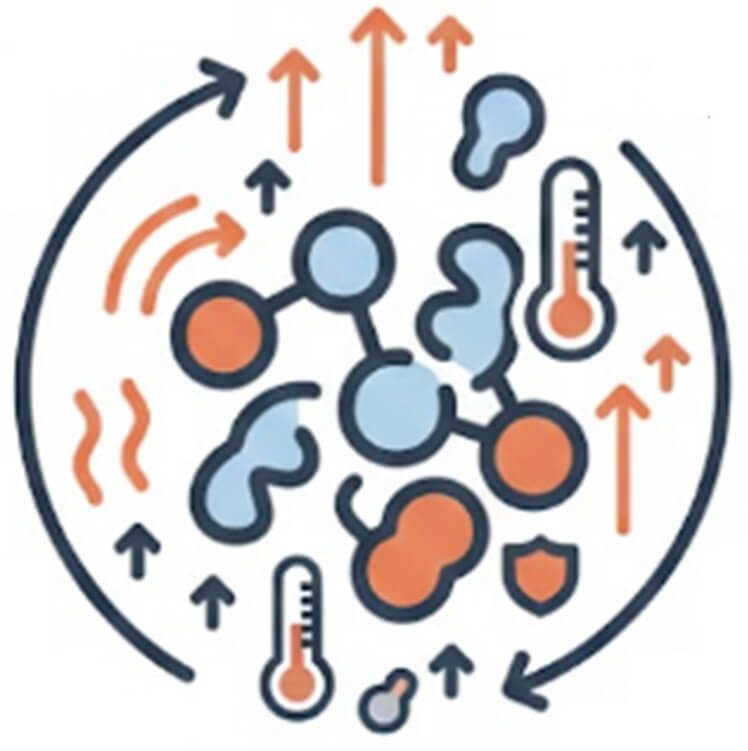
Controlled heat exposure is introduced at defined stages of the selection process. These conditions are selected to stress antibody domains without fully denaturing them, allowing discrimination between marginally stable and genuinely robust variants. |

Binding capability is evaluated after temperature exposure, ensuring that enriched candidates maintain both structural integrity and target interaction capacity. This functional focus prevents enrichment of variants that survive heat exposure but lose experimental utility. |
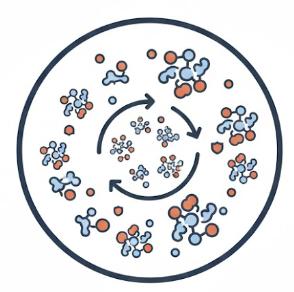
Multiple rounds of selection progressively refine the population toward higher stability while preserving specificity. Each cycle provides additional resolution into sequence features that support thermal resilience. |
If you would like to discuss how these elements can be combined for your research objectives, Creative Biolabs scientists are available for consultation.
Thermal stability can be examined across different antibody architectures, each presenting distinct folding behaviors and sequence constraints. To support more focused investigations, Creative Biolabs applies its phage display expertise to format specific screening strategies that build upon the same stability driven principles described above.
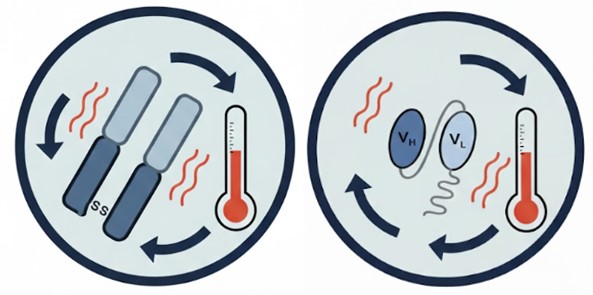
These antibody fragment formats allow researchers to evaluate how domain pairing, linker design, and interface stability contribute to thermal resilience. Creative Biolabs' screening workflows help identify variants that retain binding performance after controlled heat exposure while preserving format specific structural features. Learn more about strategies for discovering thermally stable antibody fragments at Creative Biolabs. |
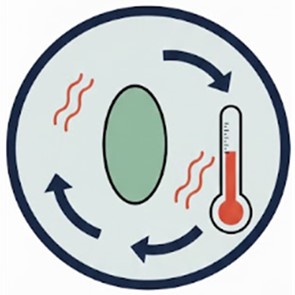
Single domain antibody architectures offer a compact and highly informative system for studying intrinsic thermal robustness. Creative Biolabs supports phage display screening approaches tailored to VHH libraries, enabling the identification of variants with enhanced folding stability under elevated temperature conditions. Explore Creative Biolabs' approach to thermal stable VHH screening. |
 Stability First Selection Logic
Thermal stability is treated as a primary selection dimension from the earliest stages of discovery rather than a secondary optimization step. By embedding thermal challenges directly into the screening workflow, Creative Biolabs helps researchers focus on candidates whose structural resilience is intrinsic to their sequence composition. This approach reduces dependence on later stage engineering and supports more reliable structure function interpretation.
Balanced Selection Pressure
Temperature conditions are deliberately tuned to reveal meaningful differences in thermal behavior while preserving functional diversity within the library. Instead of applying overly harsh stress that risks eliminating informative variants, Creative Biolabs designs screening conditions that maintain sensitivity to subtle stability shifts. This balance allows researchers to identify genuinely robust domains without introducing artificial enrichment effects.
Multi Species Compatibility
Creative Biolabs supports library construction across a broad range of species frameworks, including human, camelid, murine, and fully synthetic origins. This flexibility enables comparative stability assessments that account for evolutionary background and scaffold dependent behavior. Researchers can evaluate how sequence context influences thermal performance across homologous domains or distinct antibody architectures.
Reproducible Screening Design
Screening workflows are carefully structured to promote consistency across experimental rounds and independent studies. Parameters such as heat exposure duration, recovery conditions, and selection thresholds are standardized and well documented. This design philosophy allows results to be interpreted with confidence and facilitates downstream validation or iterative screening campaigns.
Researchers seeking a thoughtful and controlled approach to stability oriented antibody discovery may benefit from engaging with Creative Biolabs.
Thermal stable monoclonal antibody discovery represents a growing area of interest within basic research, reflecting the need for robust molecular tools that perform consistently under demanding conditions. By integrating temperature challenge into phage display discovery workflows, researchers can identify antibody variants that offer both functional reliability and structural resilience. Creative Biolabs brings practical experience, flexible design strategies, and analytical depth to this area of research. We view thermal stability not as an isolated metric, but as part of a broader framework for understanding antibody behavior at the molecular level. Researchers seeking dependable discovery pathways and thoughtful scientific support are invited to engage with Creative Biolabs to advance their antibody research with confidence.
All listed services and products are For Research Use Only. Do Not use in any diagnostic or therapeutic applications.