Creative Biolabs is offering the most comprehensive services for antibody development projects. With strict regulation and effective execution, we are dedicated to providing the most valuable solutions to complete your projects.
HighlightsCreative Biolabs is offering the most comprehensive services for antibody development projects. With strict regulation and effective execution, we are dedicated to providing the most valuable solutions to complete your projects.
HighlightsCreative Biolabs has established a broad range of platforms for developing novel antibodies or equivalents. These cutting-edge technologies enable our scientists to meet your demands from different aspects and tailor the most appropriate solution that contributes to the success of your projects.
HighlightsWith deep understanding in antibody-related realms and extensive project experience, Creative Biolabs offers a variety of references to help you learn more about our capacities and achievements, including infographic, flyer, case study, peer-reviewed publications, and all kinds of knowledge that can assist your projects. You are also welcome to contact us directly for more specific solutions.
HighlightsGet a real taste of Creative Biolabs, one of the most professional custom service providers in the world. We are committed to providing highly customized comprehensive solutions with the best quality to advance your projects.
HighlightsPhage-immunoprecipitation sequencing (PhIP-Seq) combines phage display with next-generation sequencing (NGS) to analyze antibody responses and identify protein biomarkers. Scientists engineer bacteriophages to display multiple peptide libraries on their surfaces which allow them to bind antibodies present in any tested sample. The specific interaction between peptides and antibodies allows researchers to perform high-throughput screening of antibody-peptide complexes. The essential interaction between peptides and antibodies drives immunoprecipitation to achieve both specificity and sensitivity during the capture of antibody-target interactions. Scientists sequence the captured complexes to gain molecular level understanding of immune responses. PhIP-Seq serves as an essential method for biomarker discovery which targets autoantibodies in autoimmune conditions and profiles antibodies linked to tumors in cancer research. The identification of antibodies that bind to specific peptides or antigens helps create diagnostic tools and develop therapeutic approaches and vaccines. This technique has become a standard across immunology studies and research into autoimmune diseases and cancers while supporting vaccine development through its complete approach to investigate immune system actions in different medical conditions.
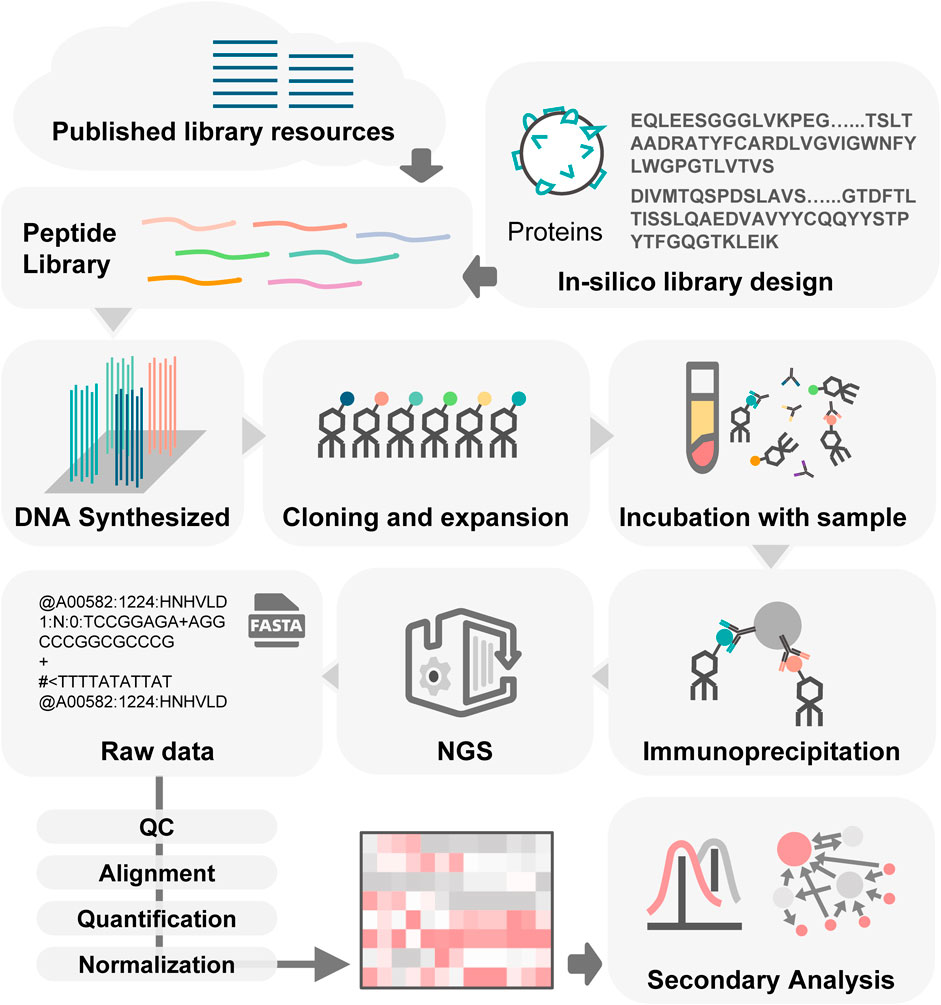 Fig. 1 Workflow of PhIP-Seq.1, 3
Researchers utilize multiple types of libraries for phage display assays such as peptide libraries along with antibody and DNA libraries. The process of library screening involves displaying thousands of peptides or antibodies on phage surfaces. Scientists isolate and identify the peptides or antibodies that attach to the target antigen.
Phage display utilizes biopanning and affinity enrichment as its principal methods for selection. Biopanning requires multiple selection steps to gather phages with high specificity for the target antigen. Affinity enrichment targets the isolation of phages which display the greatest binding affinity to the antigen.
Immunoprecipitation protocols play a vital role in targeting and capturing specific interactions between antibodies and peptides. Phage display libraries are incubated with the sample, and antibody-target complexes are captured using Protein A/G-coated magnetic beads. After capture the phage-antibody complexes undergo elution followed by analysis.
Immunoprecipitation requires essential reagents such as Protein A/G that attaches to the Fc segment of antibodies along with magnetic beads that enable straightforward complex separation. Optimal binding conditions and reduced nonspecific interactions are achieved through the use of dedicated buffers.
Researchers utilize ELISA alongside PhIP-Seq to measure antibody titers and validate binding interactions. ELISA serves as an additional validation method by quantifying the binding strength between antibodies and antigens.
The Biolayer Interferometry (BLI) method enables scientists to track antibody-antigen interactions as they happen. The method delivers kinetic measurements of antibody response characteristics including binding affinity and dissociation rates along with additional functional metrics.
BLI stands out because it enables real-time interaction monitoring without requiring any labeling. Researchers can evaluate binding kinetics and affinity dynamically and non-invasively through this method.
NGS is at the core of PhIP-Seq analysis, providing high-throughput sequencing of antibody-bound phages. This allows for the identification of peptide sequences that interact with specific antibodies, leading to the discovery of immune targets and biomarkers.
Next-generation sequencing techniques are employed to analyze peptide-antibody binding interactions. These methods generate massive amounts of data, which are processed to identify the specific peptides that interact with antibodies.
Maintaining data quality control during PhIP-Seq analysis is crucial to obtain precise results. The process begins with the removal of low-quality sequences and continues through data normalization to control for sequencing depth before eliminating background noise and non-specific interactions.
Bioinformatics platforms function as primary tools for processing and analyzing PhIP-Seq data. Scientists now use machine learning methods more frequently to identify antibody epitopes and biomarkers.
Following the sequencing of peptide-antibody complexes scientists interpret the data to determine which epitopes the antibodies recognize. The analysis needs bioinformatics applications to align peptide sequences with existing proteins or antigens. Understanding immune responses and developing therapeutic interventions depends heavily on successful epitope identification. Antibody profiling results enable scientists to evaluate immune response breadth and specificity which supports vaccine development research and autoimmune disease studies.
PhIP-Seq serves as an effective technology to find biomarkers suitable for early detection and monitoring disease advancement. Through clinical sample antibody profiling, researchers discover potential antigens linked to diseases including cancer and infectious diseases alongside autoimmune disorders. The discovery of these biomarkers provides essential information to craft both diagnostic tests and therapeutic approaches.
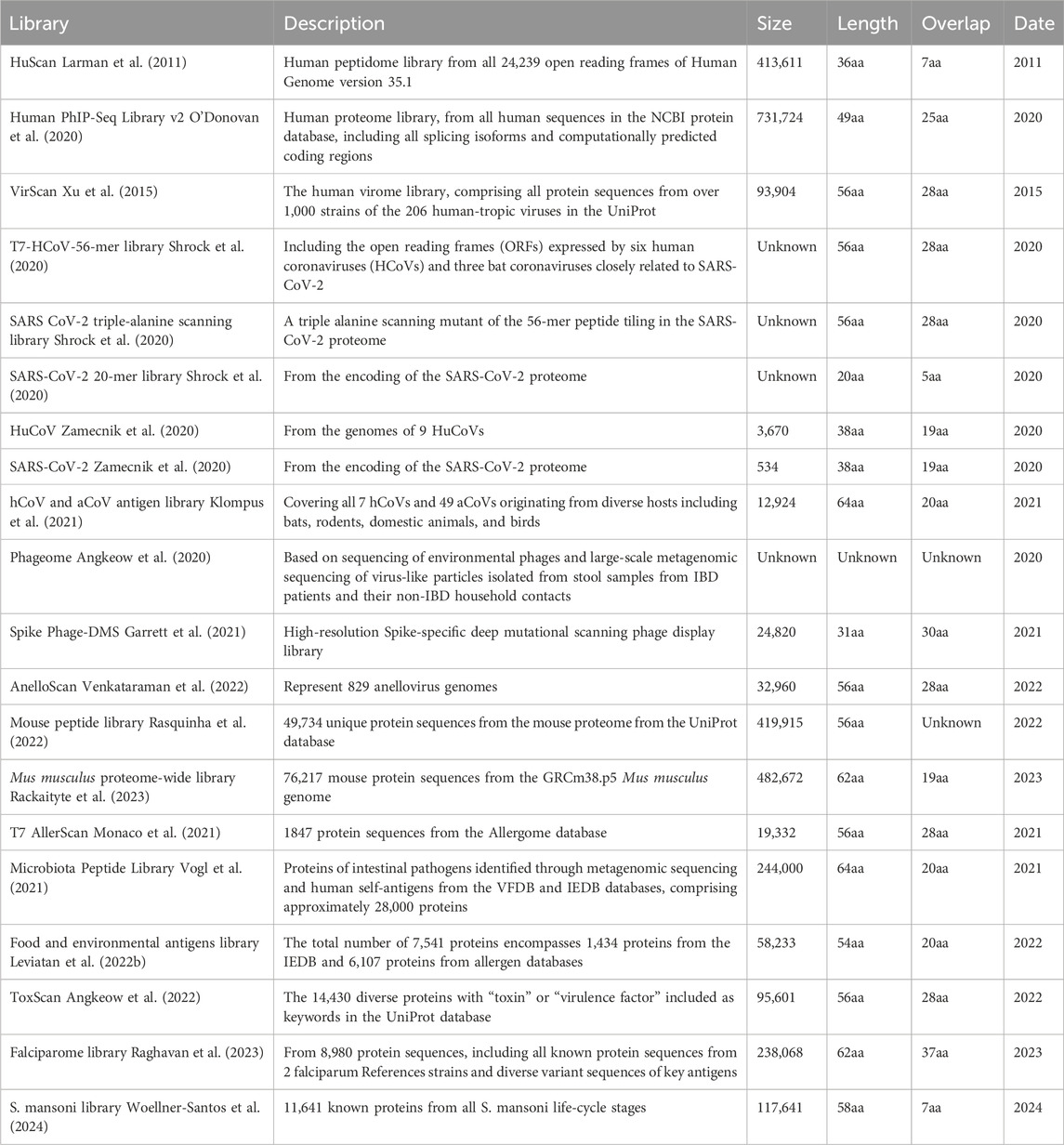 Fig. 2 Details of published PhIP-Seq libraries.1, 3
PhIP-Seq has proven effective in autoimmune research for the identification of autoantibodies. Systemic lupus erythematosus and rheumatoid arthritis involve autoantibodies which target self-antigens resulting in tissue damage and progression of the disease. PhIP-Seq enables high-throughput autoantibody detection which results in new biomarker identification for early diagnosis and disease activity monitoring.
Case Study: PhIP-Seq enabled researchers to pinpoint autoantibodies that target specific double-stranded DNA peptides in SLE which serves as a fundamental disease marker thereby creating new diagnostic markers that enhance SLE detection accuracy.
PhIP-Seq functions as a fundamental instrument to analyze tumor-related antibodies within cancer immunology studies. These antibodies serve dual functions as essential diagnostic markers and potential therapeutic targets. Through this technique scientists discover tumor-binding antibodies which provide deeper insights into cancer immunity and identify potential immunotherapy targets.
Case Study: Researchers utilized PhIP-Seq in an ovarian cancer study to find tumor-related antibodies for developing early detection tests and personalized treatment approaches. The identification of these biomarkers represents progress in enhancing the accuracy of cancer detection and treatment methods.
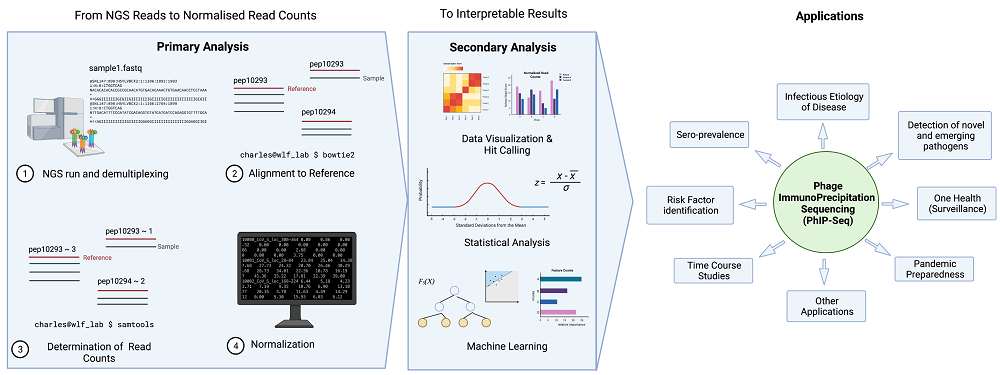 Fig. 3 General data analysis pipeline and applications of PhIP-Seq.2, 3
PhIP-Seq demonstrates significant potential in clinical diagnostics for autoimmune disorders. Through patient sample autoantibody profiling PhIP-Seq allows researchers to identify disease-specific antibodies with great precision. The diagnostic application shows exceptional value in identifying diseases where well-defined biomarkers are absent.
Case Study: The PhIP-Seq technique was used to diagnose Hashimoto's thyroiditis which involves the generation of antibodies against thyroid antigens. The research identified unique antibody patterns that might serve as a foundation for creating a medical diagnostic test.
PhIP-Seq functions as an essential instrument for patient stratification within precision medicine because it enables the identification of patients likely to benefit from designated therapies. Through patient immune response profiling PhIP-Seq assists in devising optimal treatment plans for autoimmune disorders, cancer immunotherapy and infectious diseases.
Case Study: Patient antibodies were assessed with PhIP-Seq in a rheumatoid arthritis clinical trial that used biologic agents. The research findings uncovered biomarkers which predicted treatment results and enabled patient grouping to maximize therapeutic effects.
PhIP-Seq has become a prevalent method in the biopharmaceutical industry for discovering antibodies. The use of PhIP-Seq to detect antibodies which bind disease-specific antigens speeds up therapeutic antibody development. Profiling antibody responses while screening extensive peptide libraries greatly boosts the identification of new therapeutic candidates.
Case Study: PhIP-Seq technology finds rare high-affinity monoclonal antibody candidates that recognize unique targets within pathogens or cancerous cells during antibody development. The application has helped researchers discover antibodies more quickly and increased the positive outcomes of therapeutic development stages.
PhIP-Seq serves multiple functions in drug development with a primary focus on discovering novel drug targets. Through immune response profiling and antibody biomarker identification, PhIP-Seq enables the discovery of therapeutic intervention targets. PhIP-Seq serves as a tool for tracking treatment effectiveness in clinical studies while offering detailed patient response information.
Case Study: The development process of drugs utilizes PhIP-Seq to assess immune responses to potential vaccine candidates. The technology enables researchers to determine the specific antigens that provoke robust immune reactions which assists in creating superior vaccine formulations.
All listed services and products are For Research Use Only. Do Not use in any diagnostic or therapeutic applications.