
Creative Biolabs is offering the most comprehensive services for antibody development projects. With strict regulation and effective execution, we are dedicated to providing the most valuable solutions to complete your projects.
HighlightsCreative Biolabs is offering the most comprehensive services for antibody development projects. With strict regulation and effective execution, we are dedicated to providing the most valuable solutions to complete your projects.
HighlightsCreative Biolabs has established a broad range of platforms for developing novel antibodies or equivalents. These cutting-edge technologies enable our scientists to meet your demands from different aspects and tailor the most appropriate solution that contributes to the success of your projects.
HighlightsWith deep understanding in antibody-related realms and extensive project experience, Creative Biolabs offers a variety of references to help you learn more about our capacities and achievements, including infographic, flyer, case study, peer-reviewed publications, and all kinds of knowledge that can assist your projects. You are also welcome to contact us directly for more specific solutions.
HighlightsGet a real taste of Creative Biolabs, one of the most professional custom service providers in the world. We are committed to providing highly customized comprehensive solutions with the best quality to advance your projects.
HighlightsPhage display involves presenting peptides or proteins on the surface of phages. This approach can match up the genetic data to its phenotype and is thus highly effective in detecting particular protein interactions. At the core of phage display is the screening of peptide or antibody libraries for peptides or antibodies that are very strongly specific to target molecules. Phage display was first reported in 1985 by George P Smith, when phages first revealed they could recognize foreign peptides. It had been deployed for antibody display (and to construct antibody libraries) by the early 1990s. These libraries can be generated from various sources, including raw libraries, vaccines, or synthetic oligonucleotides, allowing for a broad range of potential high-affinity binders to be identified. Phage display technology has since become an indispensable tool in multiple fields, such as therapeutic antibody discovery, vaccine design, and synthetic biology.
Phage display antibody discovery is an iterative process where antibodies with high specificity and affinity for the antigen are sought.
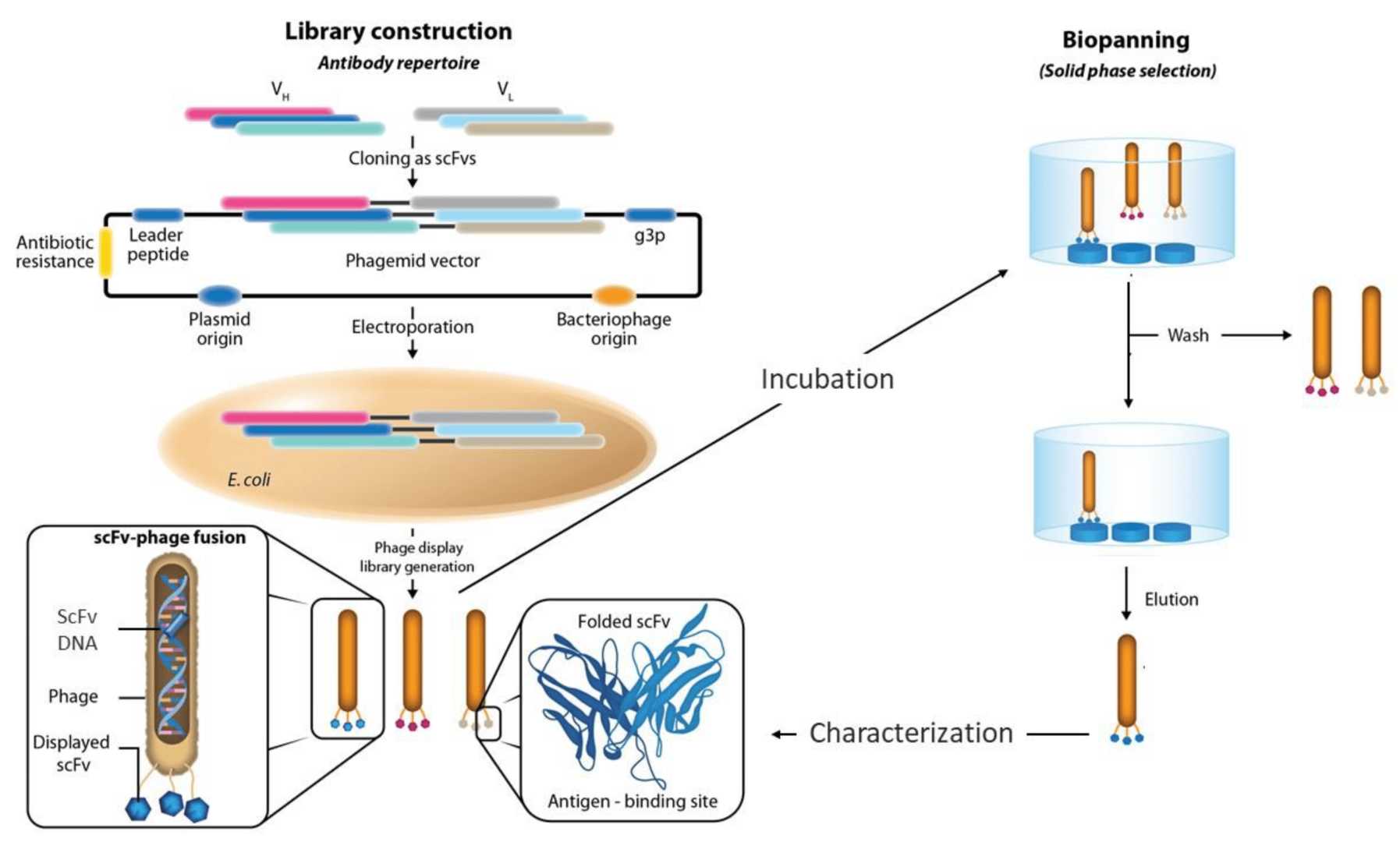 Fig. 1 Phage display methodology.1, 3
A phage display library is a collection of phages, each of which displays a different peptide or antibody fragment on its surface.
Both hybridoma and phage display technologies are pivotal in the production of monoclonal antibodies. Hybridoma technology, first developed in the 1970s, involves the fusion of B cells with myeloma cells to generate hybridomas. These hybridomas can be cultured indefinitely and are capable of producing antibodies.
| Phage Display Technology | Hybridoma Technology | |
| Mechanism | In vitro technique using bacteriophages to display peptides or proteins | In vivo technique using hybrid cell lines (fusion of B cells and myeloma cells) |
| Library Size | Create libraries with billions of variants | Typically smaller, with fewer variants |
| Target Diversity | Naïve, immunized, semi-synthetic or synthetic libraries | Antibodies produced by immune system of animals |
| Applications | Antibody discovery, diagnostics, therapeutic applications | Monoclonal antibody production for therapeutics |
| Advantages |
|
|
| Disadvantages |
|
|
Creative Biolabs will offer customized antibody phage display services to prepare your monoclonal antibodies as fast as possible. We also have a wide range of premade antibody libraries, so we can provide multiple formats to suit a variety of applications.
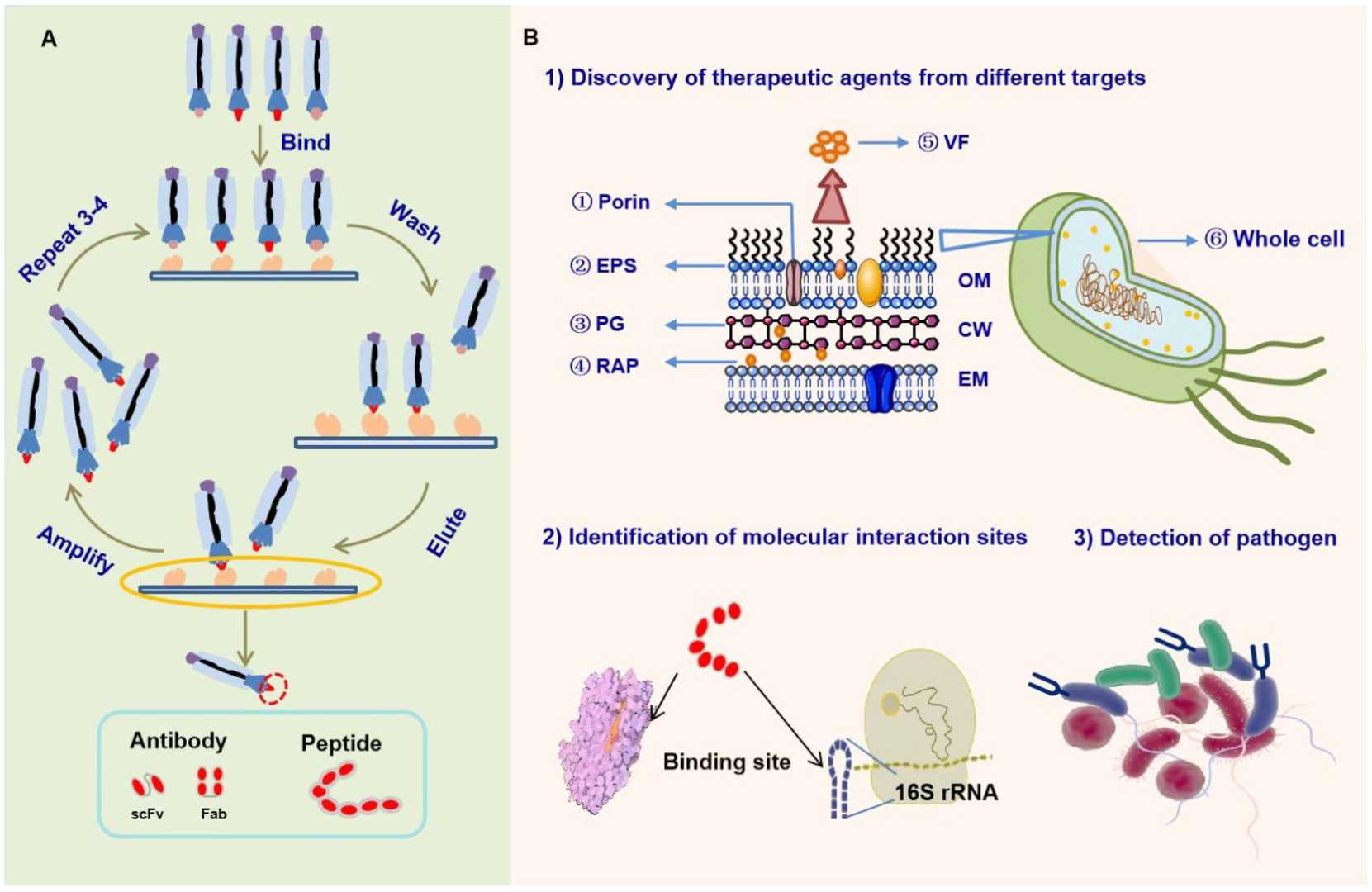 Fig. 2 The overview of phage display technology.2, 3
All listed services and products are For Research Use Only. Do Not use in any diagnostic or therapeutic applications.








