
Creative Biolabs is offering the most comprehensive services for antibody development projects. With strict regulation and effective execution, we are dedicated to providing the most valuable solutions to complete your projects.
HighlightsCreative Biolabs is offering the most comprehensive services for antibody development projects. With strict regulation and effective execution, we are dedicated to providing the most valuable solutions to complete your projects.
HighlightsCreative Biolabs has established a broad range of platforms for developing novel antibodies or equivalents. These cutting-edge technologies enable our scientists to meet your demands from different aspects and tailor the most appropriate solution that contributes to the success of your projects.
HighlightsWith deep understanding in antibody-related realms and extensive project experience, Creative Biolabs offers a variety of references to help you learn more about our capacities and achievements, including infographic, flyer, case study, peer-reviewed publications, and all kinds of knowledge that can assist your projects. You are also welcome to contact us directly for more specific solutions.
HighlightsGet a real taste of Creative Biolabs, one of the most professional custom service providers in the world. We are committed to providing highly customized comprehensive solutions with the best quality to advance your projects.
Highlights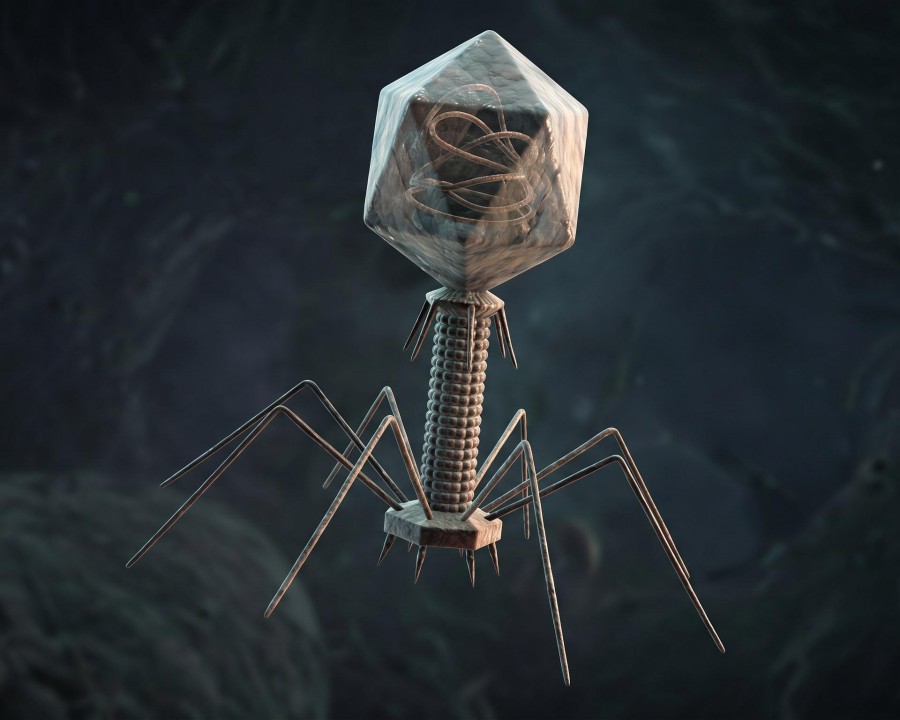
A synthetic antibody library is a collection of antibody genes where the complementarity determining regions (CDRs) are engineered through chemical synthesis rather than biological rearrangement. Unlike semi synthetic libraries that retain portions of natural sequences, a fully synthetic repertoire typically utilizes optimized consensus frameworks derived from human germline genes. These scaffolds are selected based on their superior biophysical properties, including thermal stability and high expression levels in microbial hosts like Escherichia coli.
The construction of these libraries involves the systematic integration of randomized codons into the CDRs, particularly the heavy chain CDR3 (VH CDR3), which serves as the primary determinant of antigen specificity. Modern synthetic strategies often utilize trinucleotide mutagenesis (TRIM) technology. This method employs pre synthesized phosphoramidite trimers representing each amino acid, allowing for the precise exclusion of stop codons and undesirable residues such as unpaired cysteines or asparagine deamidation sites. By mimicking the natural amino acid distribution found in human repertoires, these libraries achieve a high degree of functional diversity, often reaching scales of >1013 unique clones.
| Feature | Specification |
| Framework Origin | Optimized human germline consensus sequences (e.g., VH3, Vκ1) |
| Diversity Source | Trinucleotide based chemical synthesis of all six CDRs |
| Library Scale | 1011 independent transformants |
| Expression System | Codon optimized for E. coli or mammalian secretion |
The adoption of synthetic antibody libraries provides several strategic benefits that enhance the efficiency and success rate of lead discovery. These advantages stem from the total control over the genetic composition of the repertoire.
 Bypassing Immune Tolerance
In vivo immune systems are governed by self tolerance mechanisms that eliminate B cells reactive to host antigens. Synthetic libraries are not subject to these biological filters, making them ideal for isolating antibodies against highly conserved proteins or autoantigens that fail to elicit a response in animals.
Elimination of Animal Dependency
The entire process is conducted in vitro, removing the need for animal immunization, housing, and blood sampling. This not only aligns with ethical research standards but also reduces project timelines.
Optimized Developability
Because the frameworks are preselected for stability and the CDR randomization is controlled, the resulting antibodies often exhibit better solubility and lower aggregation tendencies. This reduces the burden of downstream antibody engineering and humanization.
Precision Diversity Control
Researchers can dictate the exact amino acid composition and loop length distribution within the CDRs. By avoiding redundant codons and stop codons through trimer technology, the proportion of functional, folding competent clones is higher than in libraries generated by random PCR mutagenesis.
The unique properties of synthetic repertoires facilitate their application across a broad spectrum of therapeutic and diagnostic challenges. Their unbiased nature allows for the exploration of chemical spaces that natural immunity cannot reach.
Synthetic libraries are instrumental in identifying binders for tumor specific markers that are poorly immunogenic. These binders serve as the basis for Antibody Drug Conjugates (ADCs) and Chimeric Antigen Receptor (CAR) T cell therapies.
Rapid screening against viral or bacterial surface proteins allows for the identification of neutralizing agents during outbreaks where time is critical.
The ability to manipulate CDR3 length and composition makes these libraries particularly effective at targeting haptens, transmembrane proteins, and complex epitopes that require specific loop topologies.
Synthetic strategies are frequently applied to the development of single domain antibody libraries. By using a stable single domain scaffold, researchers can create compact binders that penetrate tissues more validly than full length IgGs.

At Creative Biolabs, we have engineered a world class Phage Display Platform that serves as the foundation for our synthetic antibody discovery services. The platform is designed to maintain the structural integrity of the library while maximizing the efficiency of the selection process.
Our approach integrates advanced bioinformatics with high throughput screening. We use next generation sequencing (NGS) to validate the diversity and quality of our synthetic libraries, ensuring that the designed amino acid distributions are accurately represented. During the selection phase, we employ various panning techniques, including solution phase selection and panning based on cell, to isolate rare clones with picomolar affinity.

To support the diverse needs of the global scientific community, Creative Biolabs offers an integrated suite of services focused on Phage Display based Binder Discovery. Our pipeline is designed to move projects from target validation to lead characterization with high precision.
We build massive repertoires from unimmunized sources, providing a baseline for comparison with synthetic systems.
Our team utilizes high throughput strategies to identify specific binders from both internal and client provided libraries.
A pathway for the isolation of therapeutic grade mAbs using our optimized synthetic scaffolds.
We provide specialized discovery modules:
Screening for bioactive peptides that act as agonists or antagonists.
Identifying clones with exceptional thermostability for demanding diagnostic or industrial applications.
Engineering antibodies that bind or release their targets in a pH dependent manner, ideal for endosomal escape and prolonged circulation.
By selecting for endocytic activity during phage display, one can obtain antibodies that induce receptor-dependent uptake and support targeted delivery inside cells.
All listed services and products are For Research Use Only. Do Not use in any diagnostic or therapeutic applications.








